



Business travel requires more than booking flights and hotels. Companies also need clear travel policies, expense controls, traveler support, reporting, and reliable systems for handling changes. A Corporate Business Travel Agency can bring these tasks into one managed program, helping companies improve visibility while making business trips easier for employees and finance teams.
The need for better travel management is especially relevant in 2026. Global business travel spending is forecast to reach about $1.71 trillion this year, while business trip volume is expected to reach roughly 1.84 billion trips. Spending is growing faster than trip volume, which makes cost control, planning, and travel value increasingly important.
What Is a Corporate Business Travel Agency?
A Corporate Business Travel Agency helps companies plan, book, manage, and monitor employee business travel. Unlike a traditional leisure travel agency, its services are designed around company policies, budgets, approvals, reporting, traveler support, and business requirements. A corporate agency may manage flights, hotels, rail travel, rental cars, airport transfers, meetings, group travel, and travel changes. It can also connect booking activity with expense management and reporting tools so companies have a clearer view of travel spending. The exact service package varies by provider. Some agencies focus on personalized travel support, while others combine human assistance with online booking platforms and automated expense tools.
Why Corporate Travel Programs Matter in 2026
Corporate Business Travel Agency remains an important part of many companies’ operations. Employees travel for client meetings, sales activity, conferences, training, project work, internal meetings, and international partnerships. At the same time, travel costs remain under pressure. GBTA reported in July 2026 that airfare, hotel rates, ground transportation, and meetings and events costs were expected to remain elevated through the rest of the year. That combination creates a clear need for better planning. Companies can no longer look only at the price of an individual flight. They also need to consider booking behavior, supplier choices, policy compliance, unused travel, traveler productivity, and the total cost of managing trips.
What Does a Corporate Travel Program Include?
A well-designed program can include:
- Flight and hotel booking
- Rail and ground transportation
- Travel policy management
- Approval workflows
- Corporate rates and negotiated agreements
- Expense management
- Travel reporting
- Traveler support
- Duty-of-care tools
- Group travel
- Meeting and event travel
- Executive travel services
- Supplier management
- Travel data and analytics
The best setup depends on company size, travel volume, destinations, employee needs, and internal finance processes.
Corporate Travel Booking Services
Booking is usually the most visible part of a Corporate Business Travel Agency program. Employees may use an online booking platform, a dedicated travel consultant, or both. A centralized booking process gives the company better visibility into where employees are traveling and how much they are spending. It can also make it easier to apply rules for flight class, hotel limits, preferred suppliers, advance booking, and approvals. For employees, convenience matters. A system that is difficult to use may encourage travelers to book outside the approved channel. That can reduce visibility and make expense reconciliation harder.
Flights
Corporate flight booking can cover domestic and international trips. Depending on the program, employees may see approved flight options based on company policy and budget.
Travel managers can review patterns such as:
- Frequently used routes
- Advance booking behavior
- Preferred airlines
- Cabin-class usage
- Changes and cancellations
- Unused tickets
- Out-of-policy bookings
The objective isn’t simply to force employees into the cheapest flight. A cheaper option may create higher costs if it causes excessive travel time, poor connections, or missed meetings.
Hotels
Hotel management is another major part of Corporate Business Travel Agency. A corporate program can establish preferred properties, negotiated rates, spending limits, and booking rules. Companies can then compare hotel spending by destination, department, traveler group, or project. Hotel policies should also consider business needs. A low nightly rate isn’t always the best choice if the property creates expensive ground transportation or makes it difficult for employees to attend meetings.
Corporate Travel Expense Management
Expense management connects travel activity with company finances. Instead of waiting until the end of the month to understand travel spending, finance teams can use centralized information to identify patterns earlier.
A strong expense process can help companies track:
| Expense Area | What Companies Can Monitor |
| Airfare | Ticket cost, route, cabin, changes |
| Hotels | Nightly spending, preferred properties |
| Ground transport | Cars, transfers, taxis, rail |
| Meals | Employee and trip-related spending |
| Meetings | Group and event travel costs |
| Expenses | Receipts, approvals, reimbursements |
The goal is not just to reduce every expense. Companies need enough information to understand whether travel spending supports business objectives.
How Corporate Travel Expense Management Works
The process usually begins before the employee books a trip. A traveler selects an itinerary, follows the company’s policy, and completes any required approval. After booking, the trip information can flow into travel and expense systems. Receipts and other expenses can then be collected and reviewed.
A typical process looks like this:
- An employee creates a travel request.
- The request follows the required approval process.
- The traveler books approved options.
- Trip details are stored centrally.
- Expenses and receipts are recorded.
- Managers review exceptions.
- Finance reconciles expenses.
- Travel managers analyze spending patterns.
Automation can reduce repetitive administrative work, but companies should still maintain clear approval rules and human oversight.
Travel Policy Management
A travel policy defines what employees can book and how business travel expenses should be handled.
A useful policy may cover:
- Approved booking channels
- Advance booking expectations
- Flight cabin rules
- Hotel spending limits
- Preferred suppliers
- Ground transportation
- Meals and incidental expenses
- Approval requirements
- Cancellation rules
- Personal travel
- International travel
- Emergency changes
- Expense documentation
A policy should be practical enough that employees can follow it. Excessively restrictive rules can create frustration and may encourage travelers to book outside the approved system. The strongest programs combine clear rules with convenient booking options.
Corporate Travel Approval Workflows
Approval systems help Corporate Business Travel Agency control spending before money is committed. For example, a company may require manager approval for international trips or travel above a certain budget. Another organization may allow automatic approval when a booking meets predefined policy rules.
Approval workflows can be based on:
- Employee department
- Destination
- Trip cost
- Traveler role
- Project
- Client
- Travel class
- Number of travel days
The right structure depends on how the organization operates. A small company may need only one approval level, while a multinational business may require several.
Traveler Support and Duty of Care
Corporate travel management also involves supporting employees when plans change. Travelers may face flight cancellations, delays, missed connections, hotel problems, or unexpected changes. A corporate travel provider can give employees a central point of contact for assistance. Duty of care is another important consideration. Companies need reasonable systems for knowing where employees are traveling and how to communicate during significant disruptions. The exact safety and traveler-support capabilities vary by provider. Corporate Business Travel Agency should ask what support is available before signing a contract.
Technology in Corporate Business Travel
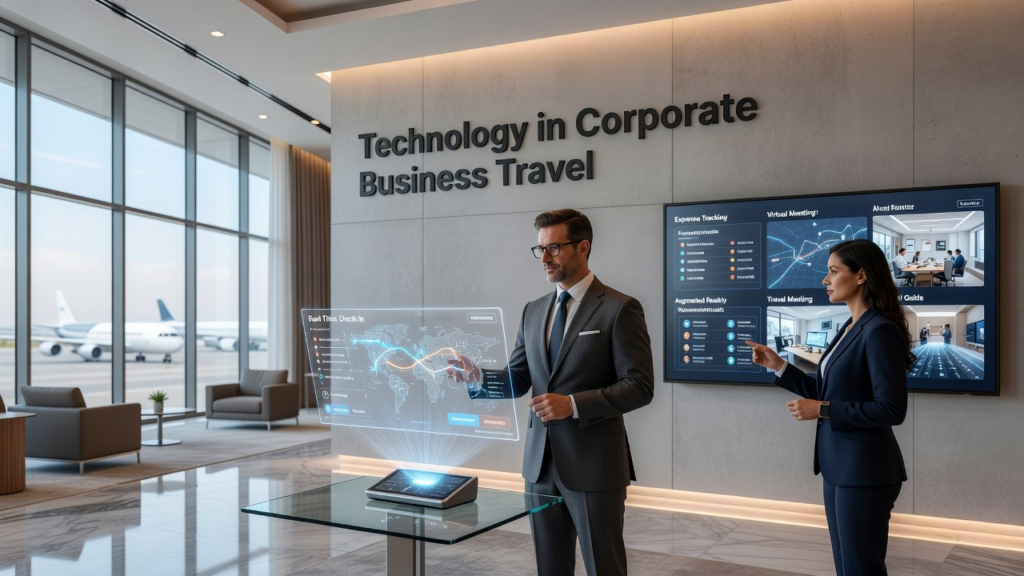
Technology now plays a central role in managing business travel.
Modern programs may combine:
- Online booking
- Mobile access
- Automated approvals
- Travel alerts
- Digital receipts
- Expense integrations
- Reporting dashboards
- Policy controls
- Traveler profiles
- Data analytics
- Support tools
Technology should simplify the travel process rather than create another complicated system for employees. A good platform makes common tasks quick while still giving travel and finance teams the information they need.
How AI Is Changing Corporate Travel
Artificial intelligence is becoming more important across Corporate Business Travel Agency and expense management. Current industry developments include AI-supported booking, traveler assistance, policy guidance, data analysis, and disruption management.AI can help identify unusual spending patterns, suggest suitable travel options, answer routine policy questions, and reduce repetitive administrative work. Industry reporting in 2026 also points to stronger investment in AI within corporate travel technology. However, AI shouldn’t replace human support in every situation. Complex cancellations, sensitive traveler issues, major disruptions, and unusual corporate requirements can still require experienced travel professionals.
Small Business Corporate Travel Programs
Small and medium-sized businesses don’t necessarily need the same travel infrastructure as a multinational company.
For a smaller organization, the most useful features may be:
- Easy booking
- Simple approval rules
- Clear pricing
- Centralized expenses
- Basic reporting
- Traveler support
- Flexible policies
- Access to business travel rates
The right program should match actual travel volume. A company with a few trips each month may need a simpler solution than an organization with hundreds of monthly travelers.
Corporate Travel Programs for Large Companies
Large companies often have more complex requirements. Employees may travel across multiple countries, departments may have different budgets, and the company may work with many suppliers.
A larger program may need:
- Global booking coverage
- Multiple currencies
- Multi-level approvals
- Department-level reporting
- Traveler tracking
- Supplier management
- International support
- Detailed policy controls
- Expense integration
- Centralized data
Large companies should also consider regional differences. A policy that works well in one country may not suit another market.
Managing Business Travel Expenses More Effectively
Expense control starts with visibility.
Companies should know:
- How much they spend
- Where they spend it
- Who is traveling
- Which suppliers employees use
- How early employees book
- How often bookings fall outside policy
- How much travel gets changed or canceled
- Which expenses require manual processing
Once these patterns are visible, managers can make better decisions. For example, if a company discovers that many employees repeatedly book expensive last-minute flights, improving advance planning may create more value than simply lowering hotel limits.
Ways a Corporate Business Travel Agency Can Reduce Costs
A Corporate Business Travel Agency can support cost control in several ways.
1. Better Booking Visibility
Centralized booking helps companies understand where their money goes.
2. Policy Compliance
Travel rules can guide employees toward approved options before a booking is completed.
3. Supplier Management
Companies can evaluate preferred airlines, hotels, car rental companies, and other suppliers.
4. Advance Planning
Earlier bookings can sometimes provide more choice and better prices, although savings vary by route and market.
5. Unused Ticket Management
Companies can track unused travel credits and reduce losses from forgotten tickets.
6. Expense Automation
Digital expense processes can reduce manual work for travelers, managers, and finance teams.
7. Data-Driven Decisions
Reporting can reveal patterns that are difficult to see when bookings and expenses remain scattered across emails, spreadsheets, and separate accounts. Cost savings should always be measured against traveler productivity and business outcomes.
Corporate Travel Expense Policy: What Should It Cover?
A practical expense policy should answer common employee questions before they arise.
It can explain:
- Which expenses qualify as business expenses
- What receipts employees must provide
- Who approves expenses
- How quickly employees must submit claims
- Which meal expenses are covered
- How transportation is handled
- How currency conversion is calculated
- What happens when a traveler exceeds the policy
- How personal expenses should be separated
- How canceled trips are handled
Employees should be able to understand the policy without contacting finance for every routine question.
Corporate Travel Agency vs DIY Booking
Some companies allow employees to book directly with airlines and hotels. Others use a managed travel agency or online corporate booking platform.
| Approach | Main Advantage | Main Limitation |
| Direct booking | Familiar and flexible | Lower central visibility |
| Spreadsheets | Simple to start | Manual and difficult to scale |
| Online corporate platform | Centralized control | Requires setup and adoption |
| Travel agency | Human support and management | Service fees may apply |
| Managed travel program | Strong control and reporting | More planning is required |
There is no single solution for every business. The right option depends on travel volume, employee preferences, financial controls, and operational complexity.
How to Choose a Corporate Business Travel Agency

Choosing a provider should start with business requirements rather than a list of features.
Ask these questions:
Does It Support Your Travel Volume?
A provider should be able to handle your current needs without creating unnecessary complexity.
Does It Cover Your Destinations?
Check whether the agency supports the countries and cities where employees actually travel.
How Does Traveler Support Work?
Ask when support is available and how employees contact the provider during urgent situations.
What Expense Tools Are Included?
Find out whether travel and expenses can connect within one workflow or require separate systems.
How Strong Are the Reports?
Useful reports should help finance and travel managers understand spending, compliance, and supplier performance.
Can the Program Grow With You?
A solution that works for 20 travelers may not work for 200. Consider future growth before selecting a provider.
Questions to Ask Before Signing a Contract
Before choosing a provider, ask for clear answers about:
- Booking fees
- Management fees
- After-hours support
- Cancellation assistance
- International coverage
- Expense integrations
- Reporting
- Traveler tracking
- Policy controls
- Implementation
- Account management
- Contract terms
- Data access
- Service-level expectations
Avoid choosing based only on the lowest visible fee. The total value depends on service quality, technology, savings opportunities, and administrative time.
Corporate Travel Agency Pricing
There is no universal price for corporate travel management.
Providers may use different models, including:
- Per-transaction fees
- Monthly management fees
- Subscription pricing
- Custom contracts
- Service-specific fees
- Combination pricing
Some providers may also negotiate supplier rates or provide corporate travel content through their systems. Ask for a complete pricing explanation before comparing agencies. A low transaction fee does not automatically mean a lower total cost.
Measuring Corporate Travel Program Success
Companies should measure the results of their travel program regularly.
Useful metrics include:
- Total travel spend
- Average trip cost
- Average airfare
- Hotel spending
- Policy compliance
- Advance booking time
- Preferred supplier usage
- Unused ticket value
- Expense processing time
- Traveler satisfaction
- Support response
- Online booking adoption
- Administrative hours saved
These measurements show whether the program is actually improving business travel.A successful program should balance cost, control, convenience, safety, and business value.
Common Corporate Travel Management Problems
Businesses often face similar challenges when managing employee travel.
Employees Book Outside the Program
This reduces visibility and can make expense reconciliation harder.
Policies Are Too Complicated
Employees may ignore rules they don’t understand.
Last-Minute Bookings Increase
Late bookings can reduce options and make cost control harder.
Expense Reporting Takes Too Long
Manual receipts and spreadsheets create extra work for employees and finance teams.
Traveler Support Is Unclear
Employees need to know who to contact when a trip changes unexpectedly.
Data Is Scattered
When travel information sits across multiple systems, managers may struggle to understand total spending.A good program should address these problems without making travel unnecessarily difficult.
Corporate Travel for International Teams
International travel introduces additional complexity.
Companies may need to consider:
- Multiple currencies
- Different supplier markets
- Local travel rules
- Passport requirements
- Visa requirements
- Time-zone differences
- International support
- Traveler safety
- Regional policies
Because entry rules and government requirements can change, employees should verify current requirements through the relevant official authorities before departure.
Group and Conference Travel
Group travel requires more coordination than individual business trips.
Companies may need to arrange:
- Multiple flights
- Hotel room blocks
- Ground transportation
- Meeting venues
- Arrival schedules
- Departure schedules
- Changes for multiple travelers
A corporate travel provider can help centralize these arrangements and reduce communication between several parties.
Executive Business Travel
Executives may have more demanding travel requirements because schedules can be tight and meeting changes may happen quickly.
Executive travel management may involve:
- Flexible flight options
- Premium accommodations
- Ground transportation
- Personalized itinerary management
- Rapid changes
- Dedicated support
The best service should match the executive’s actual needs rather than simply adding expensive options.
Sustainable Corporate Travel
Sustainability is becoming another consideration in corporate travel planning. Companies can review travel emissions and consider whether every trip requires air travel. Depending on the route, rail may provide a practical alternative.
Sustainable travel policies can also encourage:
- Rail where practical
- Efficient itineraries
- Fewer unnecessary trips
- Longer stays for multi-meeting visits
- Virtual meetings when travel adds little value
Sustainability should be balanced with business requirements rather than treated as a one-size-fits-all rule.
Corporate Travel and Traveler Experience
Cost control shouldn’t make Corporate Business Travel Agency unnecessarily difficult. Employees are more likely to follow a travel program when booking is simple, policies are clear, and support is available when something goes wrong. This creates an important balance: Good travel management = cost control + policy compliance + traveler convenience + business value. A company that focuses only on the cheapest possible option may overlook productivity, employee time, and customer relationships.
The Future of Corporate Business Travel in 2026

The corporate travel industry is moving toward more connected and data-driven programs. Corporate Business Travel Agency spending is expected to remain strong in 2026, but higher prices are making companies more selective about how they use travel budgets. GBTA’s 2026 forecast shows spending rising substantially faster than trip volume, reinforcing the need to evaluate the value of each journey. Technology will continue to play a larger role. AI, automated approvals, expense integrations, real-time information, and analytics can reduce manual work and improve decision-making. Human service will still matter. Technology can process information quickly, but travelers may need people when disruptions or unusual situations occur.
What to Look for in a 2026 Corporate Travel Program
Before selecting a provider, prioritize these capabilities:
| Feature | Why It Matters |
| Online booking | Makes reservations easier |
| Policy controls | Helps manage approved spending |
| Expense integration | Reduces manual reconciliation |
| Reporting | Improves financial visibility |
| Traveler support | Helps during disruptions |
| Duty of care | Supports traveler safety processes |
| Mobile access | Helps employees manage trips on the go |
| AI tools | Can automate routine tasks |
| Global coverage | Supports international teams |
| Flexible service | Adapts to company needs |
Not every business needs every feature. Select the capabilities that solve your actual problems.
Is a Corporate Business Travel Agency Worth It?
For companies with regular employee Corporate Business Travel Agency, a managed program can be worthwhile when the benefits exceed the service and technology costs. The strongest reasons include better visibility, easier policy management, traveler support, centralized reporting, and less manual work. For a company with very little travel, a fully managed program may provide less value. A simpler booking and expense process may be enough. The decision should be based on travel volume, complexity, internal workload, employee needs, and measurable business value.
Frequently Asked Questions
What does a Corporate Business Travel Agency do?
A Corporate Business Travel Agency helps businesses manage employee travel, including booking, policies, expenses, reporting, traveler support, and related services.
How can corporate travel management reduce expenses?
It can improve spending visibility, encourage policy compliance, support preferred suppliers, identify inefficient booking patterns, and reduce manual expense work.
What is corporate travel expense management?
Corporate travel expense management is the process of recording, approving, controlling, and analyzing employee travel-related spending.
Should small businesses use a corporate travel agency?
Small businesses can benefit when employee travel creates enough booking, expense, or administrative work to justify a managed solution.
What should a corporate travel policy include?
A policy can cover booking rules, flight and hotel limits, approvals, preferred suppliers, meals, ground transportation, receipts, cancellations, and international travel.
Does AI replace corporate travel agents?
Not completely. AI can automate routine tasks and support booking and analysis, while human agents remain useful for complex travel problems and disruptions.
How do I choose the right corporate travel agency?
Compare service coverage, booking tools, support, expense management, reporting, policy controls, global capabilities, pricing, and the provider’s ability to scale with your company.
Conclusion
A Corporate Business Travel Agency can turn scattered bookings and expenses into a more organized business travel program. Instead of managing flights, hotels, approvals, receipts, policies, and traveler support separately, companies can bring these activities into a coordinated system. This can improve visibility while reducing repetitive administrative work.
The best program isn’t necessarily the one with the most features or the lowest fee. It should fit the company’s travel volume, destinations, budget, employee expectations, and financial controls. As business travel costs remain elevated in 2026, companies have a stronger reason to measure the value of each trip and use data to improve their programs.