


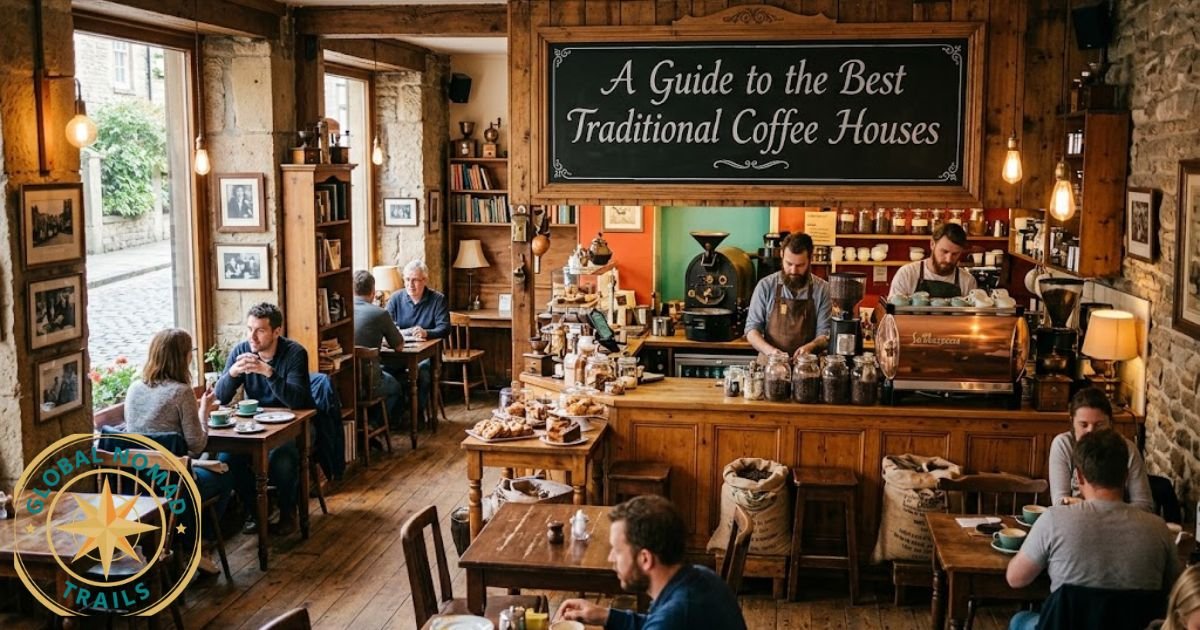
Vienna’s café culture is much more than a place to enjoy a cup of coffee. It is a treasured part of Austrian life, combining history, architecture, literature, traditional pastries, and the pleasure of slowing down. In a traditional Viennese coffee house, guests can sit at a marble-topped table, order a carefully prepared coffee, read a newspaper, and enjoy a conversation without feeling rushed.
Recognized by UNESCO as intangible cultural heritage in 2011, Viennese coffee house culture represents a distinctive social tradition that has developed over centuries. These cafés have welcomed writers, artists, intellectuals, and everyday residents, offering spaces for conversation, creativity, and relaxation. Their elegant interiors, traditional service, and extensive coffee menus continue to attract visitors from around the world.
If you are planning a European city break, explore our guide to the best weekend getaways in Europe for more travel inspiration.
The Historical Roots of Viennese Coffee Culture
Coffee became part of Vienna’s history in the seventeenth century, when the city was connected to expanding trade routes and cultural exchanges across Europe and the Ottoman world. The origins of Vienna’s first coffee houses are often associated with the Ottoman siege of Vienna in 1683. According to a popular legend, Polish-born Jerzy Franciszek Kulczycki obtained coffee beans left behind by retreating Ottoman forces and introduced the drink to the city.
However, the historical record is more complicated than this familiar story suggests. The Austrian UNESCO Commission identifies an Armenian man known as Deodato as the founder of Vienna’s first coffee house. The different accounts illustrate how the city’s coffee tradition developed through several cultural influences rather than a single event.
By the eighteenth century, coffee houses had become established gathering places where people could read newspapers, exchange ideas, discuss public affairs, and meet friends. As their popularity grew, they developed distinctive atmospheres and customs that set them apart from ordinary drinking establishments.
Vienna’s Literary Golden Age
Vienna’s coffee house culture became particularly influential during the late nineteenth and early twentieth centuries. Known as the Fin de siècle period, this era brought artistic experimentation, intellectual debate, and major cultural developments to the city.
Traditional cafés became meeting places for writers, journalists, philosophers, and political thinkers. Café Central, for example, became associated with figures such as Peter Altenberg, Sigmund Freud, and Leon Trotsky. Other establishments attracted their own artistic communities, allowing regular customers to write, read, debate, and exchange ideas.
For many visitors, this literary heritage is still part of the attraction. Sitting in a historic coffee house offers an opportunity to experience an environment that once encouraged creativity and conversation. Even today, the combination of comfortable seating, newspapers, coffee, and pastries reflects the tradition of treating a café as an extension of everyday life.
Why UNESCO Recognizes Vienna’s Café Tradition
UNESCO added Viennese coffee house culture to its intangible cultural heritage inventory in 2011. The recognition focuses on the social customs, atmosphere, and cultural significance of these establishments.
Marble tables, traditional chairs, newspapers, distinctive coffee preparations, and elegant interiors all contribute to the experience. However, the most important feature is the social tradition itself: a coffee house is somewhere to spend time, not simply a place to purchase a drink and leave.
[EXTERNAL LINK: UNESCO’s official information about Viennese coffee house culture]
What Is a Traditional Viennese Coffee House?
A traditional Viennese coffee house, known locally as a Wiener Kaffeehaus, is a hospitality venue shaped by centuries of social and culinary customs. Although individual establishments have their own character, many combine historic interiors, table service, traditional coffee preparations, and a selection of cakes and pastries.
Several features help define the classic Viennese experience.
Marble-topped tables: Small marble tables are a familiar sight in historic cafés. Their polished surfaces contribute to the elegant atmosphere and provide a comfortable place for coffee, cake, reading, or conversation.
Traditional furniture and interiors: Many established coffee houses feature bentwood chairs, decorative mirrors, chandeliers, wooden paneling, or architectural details reflecting their historic origins.
Coffee served with water: A glass of water commonly accompanies coffee. This small detail has become a recognizable part of traditional Viennese service.
Newspapers and reading spaces: Coffee houses have long provided newspapers and comfortable places for reading. Historically, this made them important spaces for following current affairs and exchanging ideas.
Pastries and confectionery: Cakes, strudels, sweet rolls, and other baked treats are central to the experience. Some famous cafés are almost as well known for their confectionery as for their coffee.
Unhurried service: Traditional cafés generally encourage guests to relax rather than rush through their visit. Nevertheless, seating arrangements and service practices differ, particularly during busy periods.
The combination of food, architecture, service, and social atmosphere is what makes a traditional Viennese coffee house special. Visitors are encouraged to appreciate the surroundings as much as the drink in their cup.
Navigating the Coffee Menu: Essential Viennese Styles
Vienna’s traditional coffee menu can appear unfamiliar to first-time visitors. Many drinks have German names that describe their size, preparation, or accompanying milk and cream. Learning a few basic terms makes ordering easier and helps you discover a drink that suits your taste.
Wiener Melange
The Melange is one of Vienna’s best-known coffee specialties. It is generally prepared with coffee and steamed milk, often finished with a layer of milk foam. It resembles a cappuccino, although the proportions and preparation can vary between cafés.
Choose a Melange if you prefer a balanced drink with a smooth, creamy texture. It is an excellent introduction to Viennese coffee culture for visitors who enjoy milk-based coffee.
Einspänner
An Einspänner is a strong coffee traditionally served in a glass and topped with a generous layer of whipped cream, known in Austrian German as Schlagobers. The cream adds richness and creates a contrast with the strong coffee beneath it.
The name is traditionally associated with a carriage drawn by a single horse. The drink is said to have suited carriage drivers who wanted to keep their coffee warm while working outdoors.
Fiaker
A Fiaker is another traditional coffee associated with Vienna’s historic carriage drivers. Versions commonly combine strong coffee with rum and may be served with whipped cream. Recipes can differ between establishments, so ask about the ingredients if you want to know exactly what your drink contains.
Because this preparation contains alcohol, it is best suited to adults who want to explore one of Vienna’s more distinctive traditional beverages.
Großer Schwarzer and Kleiner Schwarzer
These terms describe larger and smaller servings of black coffee. A Kleiner Schwarzer is a small black coffee, while a Großer Schwarzer is a larger serving. The preparation can be similar to concentrated espresso-style coffee, depending on the café.
These drinks are good choices for visitors who prefer their coffee without milk or cream.
Kleiner Brauner und Großer Brauner
A Brauner is coffee served with a small portion of milk or cream, allowing you to adjust the flavor to your preference. The terms kleiner and großer indicate the smaller and larger servings.
If you enjoy black coffee but want the option of softening its intensity, a Brauner is worth trying.
Verlängerter
A Verlängerter is coffee lengthened with hot water. It is a useful option for visitors who want a less concentrated drink than a small black coffee.
Wiener Eiskaffee
A Wiener Eiskaffee is a popular dessert-style coffee, particularly appealing during warmer weather. It typically combines chilled coffee with vanilla ice cream and whipped cream, although presentation and additional ingredients may vary.
If you enjoy both coffee and dessert, this refreshing specialty is an excellent alternative to a hot drink.
Ordering tip: You do not need to memorize the entire menu. Start with a Melange or Einspänner, and ask your waiter for an explanation if an unfamiliar name catches your attention.
The Best Traditional Coffee Houses in Vienna
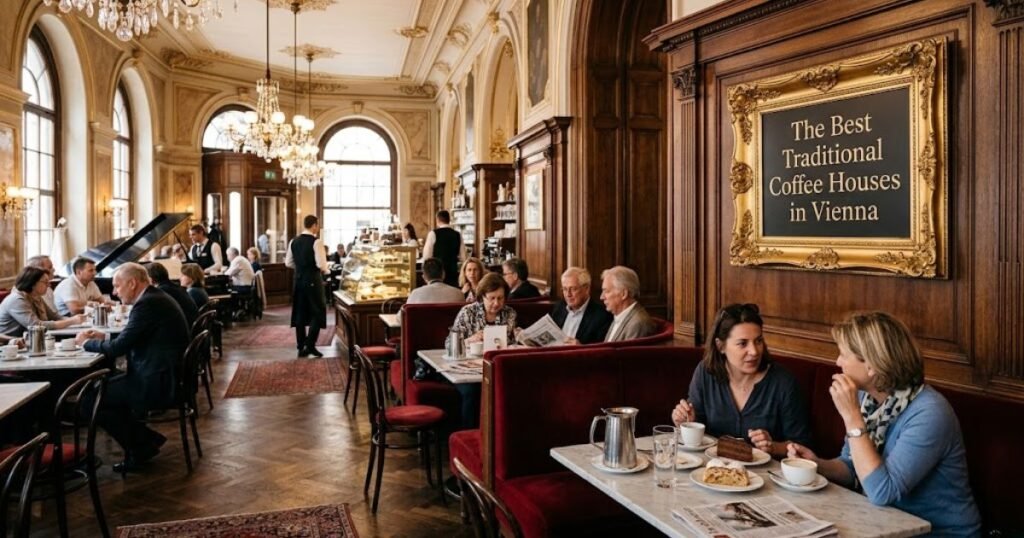
Vienna has many coffee houses, but several are especially popular with visitors interested in historic architecture, famous desserts, and artistic heritage. Each offers a different experience, from grand interiors to a more intimate, traditional atmosphere.
Café Central
Café Central is one of Vienna’s most recognizable historic coffee houses. It opened in 1876 inside Palais Ferstel, a magnificent building known for its impressive architecture and grand interior. During the late nineteenth and early twentieth centuries, the café became associated with writers, intellectuals, and political figures, including Peter Altenberg, Sigmund Freud, and Leon Trotsky.
Its vaulted architecture and elegant setting helped establish Café Central as a symbol of traditional Viennese coffee house culture. The establishment remains closely associated with Vienna’s literary and intellectual history.
What to order: A Wiener Melange with a slice of Apfelstrudel or a cake from the available pastry selection is a classic choice.
Why visit: Café Central is particularly appealing to travelers interested in architecture, literature, and the history of Vienna’s famous cafés.
Practical tip: Café Central announced a major renovation beginning in March 2026, with reopening expected in winter 2026. Because the schedule may change, check its official website before including it in your itinerary. During the renovation, the operator has directed visitors to DECENTRAL at Freyung as an alternative.
[Official Café Central website and current reopening information]
Café Sper
Founded in 1880, Café Sperl is known for its traditional interior and its connection to Vienna’s long-standing coffee house culture. Located in the Mariahilf district, it offers a different atmosphere from the grand cafés around the busiest parts of the historic center.
The appeal of Café Sperl lies in its old-fashioned surroundings, traditional furniture, and relaxed setting. It is a good option for travelers who want to spend time over coffee instead of treating the visit as a quick sightseeing stop.
What to order: Try a Melange or another traditional coffee, accompanied by a pastry from the current selection. Check the menu for seasonal specialties before visiting.
Why visit: Café Sperl suits visitors who enjoy historic interiors, leisurely conversation, and a traditional café experience outside the busiest tourist areas.
Practical tip: Combine your visit with a walk around Mariahilf. Check current opening hours and payment options before you go.
Café Sacher
Café Sacher is internationally famous for the Original Sacher-Torte, one of Austria’s best-known desserts. The cake’s history dates to 1832, when young apprentice Franz Sacher created a chocolate dessert for an occasion involving Prince Metternich.
The cake is made with chocolate sponge, a layer of apricot jam, and a chocolate coating. It is traditionally served with unsweetened whipped cream, which balances the richness of the chocolate.
Located near the Vienna State Opera, Café Sacher combines this confectionery tradition with an elegant setting and formal service.
What to order: Enjoy a slice of Original Sacher-Torte with a Melange or Einspänner.
Why visit: Café Sacher is a strong choice for visitors interested in Austrian desserts, traditional service, and an iconic Vienna food experience.
Practical tip: The café can be busy during popular sightseeing hours. Check the official website for current opening hours, seating information, and options for purchasing cakes to take away.
Café Hawelka
Café Hawelka offers a more intimate contrast to Vienna’s grand, palace-like coffee houses. Opened by Leopold and Josefine Hawelka in 1939, it developed a reputation as a meeting place for writers and artists. The café is known for preserving its traditional atmosphere and connection to Vienna’s artistic communities.
Its historic character makes it particularly appealing to visitors who want to explore a less formal side of Viennese café culture. Rather than focusing on grandeur, Café Hawelka offers a setting shaped by generations of customers and cultural traditions.
What to order: Try a traditional coffee and, if available, the famous Buchteln—soft, sweet yeast rolls associated with Josefine Hawelka’s baking.
Why visit: Café Hawelka is ideal for travelers who enjoy bohemian history, intimate surroundings, and traditional Viennese pastries.
Practical tip: The café is on Dorotheergasse in Vienna’s first district, making it convenient to combine with a walk through the historic center. Check its current opening hours and food availability before visiting.
Café Demel
Café Demel is especially appealing to visitors who appreciate cakes, pastries, and traditional confectionery. Its history reaches back to 1786, when Ludwig Dehne opened a confectionery near Michaelerplatz. The business later became associated with the Demel name and developed a reputation for refined sweets.
Located on Kohlmarkt, Demel combines a historic setting with a selection of cakes, coffee, and Austrian specialties. It is a natural stop for visitors exploring the imperial landmarks and shopping streets around the Hofburg.
What to order: Choose a Melange alongside a slice of cake, or try a traditional Austrian sweet such as Kaiserschmarrn, a fluffy shredded pancake often served with fruit or plum compote.
Why visit: Demel is an excellent choice for anyone interested in Vienna’s pastry-making heritage and elegant confectionery displays.
Practical tip: Seating can be limited during busy periods. Check Demel’s official website for current opening hours, menu details, and its reservation policy before visiting.
Comparing Vienna’s Historic Coffee Houses
| Coffee House | Best For | Signature Experience | Area |
| Café Central | Architecture and literary history | Historic interiors and traditional pastries | Palais Ferstel, city center |
| Café Sperl | Classic, relaxed atmosphere | Traditional furniture and café surroundings | Mariahilf |
| Café Sacher | Famous Austrian dessert | Original Sacher-Torte | Near the State Opera |
| Café Hawelka | Artistic heritage | Intimate atmosphere and Buchteln | Dorotheergasse |
| Café Demel | Cakes and confectionery | Historic pastry-making tradition | Kohlmarkt |
The best café depends on your interests. Café Sacher and Demel are particularly attractive to dessert lovers, Café Hawelka appeals to visitors interested in artistic history, and Café Sperl offers a traditional neighborhood atmosphere. Café Central is a worthwhile architectural and historical stop when it is open to visitors.
Etiquette and Unspoken Rules of Viennese Cafés
Understanding a few local customs can help you feel more comfortable in a traditional coffee house.
Take Your Time
Viennese cafés are traditionally places to linger. You can enjoy your drink, read a newspaper, have a conversation, or simply appreciate the interior. You generally do not need to leave immediately after finishing your coffee, although it is considerate to be aware of other customers when the venue is crowded.
Know How to Ask for the Bill
When you are ready to pay, say “Zahlen, bitte,” which means “The bill, please.” In many traditional cafés, payment is handled by the waiter at your table. If you are unsure whether to pay at the counter or at the table, ask politely.
Understand Tipping Customs
A modest tip is customary in Austrian cafés when you receive table service. Many customers round up the bill or leave a tip that reflects the quality of service. There is no need to follow a rigid percentage in every situation; consider the bill and the service you received.
Ask Before Choosing a Table
Some cafés have hosts or specific seating arrangements, while others allow guests to choose an available table. If the entrance is busy or you are unsure where to sit, ask a member of staff rather than assuming every table is available.
Be Considerate When Using a Laptop
Reading, writing, and conversation have long been part of coffee house culture, but individual venues may have different expectations about laptop use. If you intend to work for an extended period, check the café’s policy and consider whether occupying a table for a long time is appropriate during busy hours.
If you are planning a seasonal trip, discover more international places to visit in summer in our travel guide.
Frequently Asked Questions
Why Is Vienna’s Café Culture Famous?
Vienna’s café culture is famous for its historic interiors, traditional coffee preparations, pastries, and relaxed social atmosphere. UNESCO included the tradition in its intangible cultural heritage inventory in 2011.
What Is the Most Famous Coffee House in Vienna?
Café Central is one of Vienna’s best-known historic cafés, while Café Sacher is particularly famous for its chocolate cake. Check current operating status before visiting, especially for venues undergoing renovation.
What Coffee Should a First-Time Visitor Order?
A Wiener Melange is an excellent introduction to Viennese coffee. If you prefer strong coffee topped with whipped cream, try an Einspänner. Pair either drink with a traditional pastry.
Do You Need to Make a Reservation?
It depends on the café. Some establishments accept reservations, while others operate on a walk-in basis. Check the official website before your visit, especially during busy travel periods.
How Much Time Should You Spend in a Viennese Café?
Allow around 45–90 minutes if you want to enjoy a drink, try a pastry, and appreciate the atmosphere. You can stay longer when the café permits and seating is available.
What Is the Best Time of Day to Visit a Traditional Coffee House?
Morning visits can be ideal for a quieter coffee and breakfast, while afternoons are popular for coffee and cake. The best time depends on the café, its opening hours, and the atmosphere you prefer.
Conclusion
Exploring Vienna’s café culture is an opportunity to experience a meaningful part of Austria’s history and everyday life. From the grand architecture of Café Central to Café Hawelka’s artistic heritage, Café Sacher’s celebrated chocolate cake, Café Sperl’s traditional atmosphere, and Demel’s confectionery craftsmanship, each establishment offers a different perspective on the city.
Take time to explore the menu, try a traditional coffee, and enjoy a slice of Austrian cake without rushing. Check current opening hours before setting out, especially when planning to visit a historic venue undergoing renovation. The real appeal of a Viennese coffee house lies not only in what is served but also in the atmosphere, customs, and traditions surrounding it.