

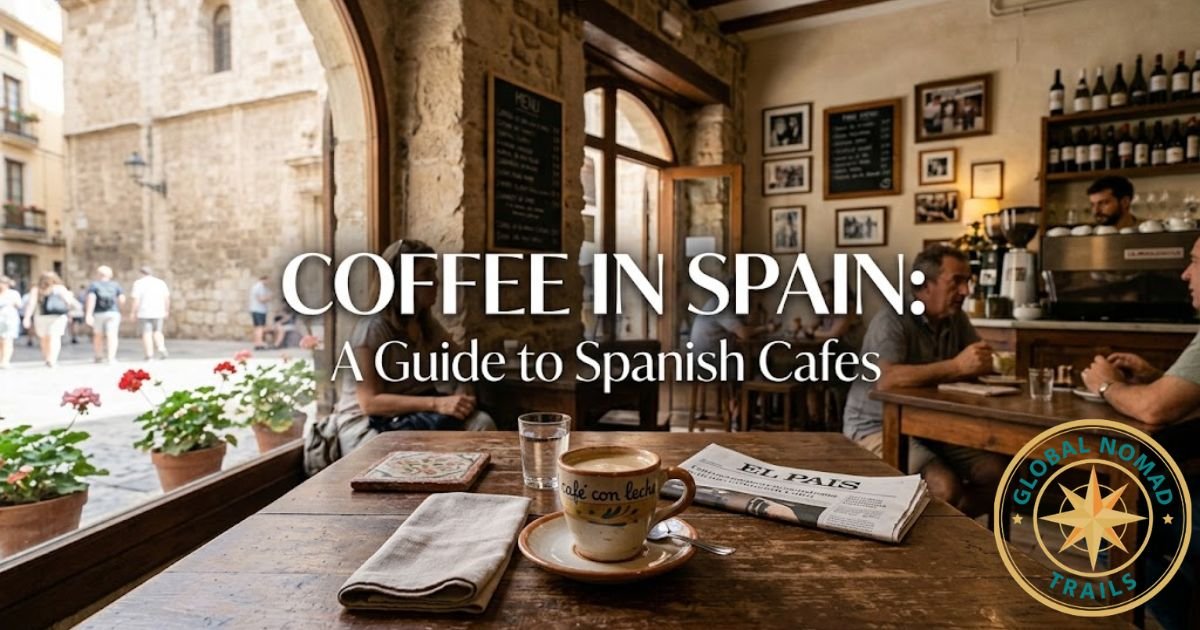
The most popular coffee drinks in Spain include café con leche, cortado, and café solo. If you are visiting Spain for the first time, knowing these names will help you order coffee confidently at almost any traditional café or bar. A café con leche combines espresso and hot milk, a cortado contains a small amount of milk, and a café solo is a straightforward espresso.
Spanish coffee culture is about more than choosing a drink. From quick breakfasts at neighborhood bars to leisurely conversations after lunch, coffee is part of everyday life. You will also find regional specialties, refreshing iced coffee, and modern cafés serving specialty beans and alternative milk.
This guide explains the most popular Spanish coffee drinks, how to order coffee in Spanish, what to expect at a café, how much coffee costs, and where to find good cafés in major Spanish cities.
Exploring Spain’s coffee culture is a wonderful way to experience local traditions, flavors, and everyday life. For travelers who enjoy discovering destinations through food, our guide to food tourism experiences offers more inspiration for planning memorable culinary adventures.
What Is the Most Popular Spanish Coffee?
Café con leche is one of the most popular and widely recognized coffee orders in Spain, particularly at breakfast. It is made with espresso and hot milk, usually in roughly equal proportions.
Many Spaniards enjoy it with toast, a pastry, or a small sandwich before starting their day. After lunch, people often choose a cortado or café solo because these drinks are smaller and contain less milk.
However, there is no single coffee that everyone in Spain prefers. Your choice may depend on the time of day, the region, and whether you enjoy strong espresso or a milder, milk-based drink.
If you are planning a wider trip, explore our guide to the top countries to visit for more travel inspiration.
Spanish Coffee Types: What to Order at a Café
Most traditional Spanish bars use an espresso machine to prepare their coffee. The drink names tell you what is added to the espresso, although serving sizes and recipes can vary between establishments.
| Spanish coffee | What it contains | Best for |
| Café con leche | Espresso and hot milk, usually about half and half | Breakfast and a milder coffee |
| Café solo | A small espresso without milk | A strong, simple coffee |
| Cortado | Espresso with a small splash of milk | A short coffee with less bitterness |
| Café americano | Espresso diluted with hot water | A larger cup of black coffee |
| Café bombón | Espresso with sweetened condensed milk | People who enjoy sweet coffee |
| Café con hielo | Espresso served with a separate glass of ice | Hot weather and summer afternoons |
| Manchado | Mostly milk with a little coffee | A milkier, gentler drink |
| Carajillo | Espresso with a spirit such as brandy, rum, or whisky | An after-meal drink for adults |
Spanish cafes offer a variety of coffee drinks, from café solo to café con leche and cortado. If you want to learn more about Spanish hospitality and local travel experiences, you can explore the Paradores travel guide for additional inspiration.
1. Café con Leche
Café con leche is an excellent starting point if you are new to Spanish coffee. The combination of espresso and hot milk creates a balanced drink that is less intense than a straight espresso.
Order it at breakfast with a tostada (toast), a croissant, or a pastry. If you prefer less milk, tell the server con poca leche. If you want it hotter, ask for muy caliente.
2. Café Solo
A café solo is a small espresso served without milk. It is a popular choice for a quick coffee break or after a meal.
Although the serving is small, the flavor can be intense. If you prefer black coffee but want a larger drink, ask for a café americano instead.
3. Cortado
A cortado is espresso with a small amount of milk. The milk softens the coffee’s sharpness without making it as milky as a café con leche.
It is a useful option when you want something stronger than a milky breakfast coffee but smoother than a straight espresso.
4. Café Americano
A café americano combines espresso with hot water. It is generally less concentrated in flavor than a café solo and is a practical option if you prefer a larger cup of black coffee.
Not every traditional bar serves coffee in the same size, so ask for an americano if that is your preference.
5. Café Bombón
Café bombón combines espresso with sweetened condensed milk. It is rich, sweet, and often served in a small glass so you can see the layers.
This drink is particularly associated with Valencia and other parts of eastern and southern Spain. Because condensed milk is already sweet, taste it before adding sugar.
6. Café con Hielo
Café con hielo is a popular choice during hot Spanish summers. You usually receive a freshly prepared espresso and a separate glass containing ice.
Add sugar to the hot espresso first if you want it sweetened, then pour it over the ice. This is different from ordering a blended iced coffee or a cold milk-based specialty drink.
7. Carajillo
A carajillo is coffee served with a spirit, commonly brandy, rum, or whisky. Recipes differ by region and establishment, and some versions include sugar or citrus peel.
It is traditionally enjoyed after a meal. Because it contains alcohol, it is best treated as an occasional adult drink rather than an everyday coffee order.
How to Order Coffee at a Café in Spanish
Ordering coffee in Spain is easier when you know a few simple phrases. You do not need fluent Spanish; a polite greeting and the name of your preferred drink are usually enough.
| What you want to say | Spanish phrase |
| A coffee with milk, please | Un café con leche, por favor. |
| An espresso, please | Un café solo, por favor. |
| A cortado, please | Un cortado, por favor. |
| A coffee with ice, please | Un café con hielo, por favor. |
| A decaffeinated coffee | Un café descafeinado, por favor. |
| With oat milk, please | Con leche de avena, por favor. |
| With less milk | Con poca leche, por favor. |
| Without sugar | Sin azúcar, por favor. |
| The bill, please | La cuenta, por favor. |
| Thank you | Gracias. |
A Simple Coffee-Ordering Example
You: Buenos días. Un café con leche, por favor.
Barista: ¿Aquí o para llevar? (For here or takeaway?)
You: Para aquí, gracias. (For here, thank you.)
Barista: ¿Algo más? (Anything else?)
You: No, gracias.
This short exchange is enough for many everyday café visits. If you want a pastry, you can add un croissant, por favor.
In a traditional bar, you may also hear ¿Qué te pongo? or ¿Qué te pongo, guapa/guapo? These are conversational ways of asking what you would like. A simple, polite order is perfectly acceptable.
How Spaniards Drink Coffee Throughout the Day
Coffee habits vary across Spain, but certain routines are common.
Breakfast: Café con leche is a frequent choice, often paired with toast, tomato and olive oil, a croissant, or another pastry.
Mid-morning: People may stop for a cortado or café solo during a work break. A small coffee is convenient when there is little time to sit down.
After lunch: Coffee is often part of sobremesa, the time spent chatting at the table after a meal. A café solo or cortado is a common choice.
Afternoon: A café con leche, cortado, or iced coffee can suit a later break, depending on personal preference and the weather.
Evening: Cafés remain social meeting places, although opening hours differ. A carajillo is available in some bars for adults who want coffee with alcohol.
These are general habits, not strict rules. You can order whichever drink you enjoy at any time of day.
Spanish Breakfast and Brunch: What Goes With Coffee?
A traditional Spanish breakfast is often simple rather than elaborate. Ordering coffee with a small bite to eat is a good way to experience everyday café culture.
Popular options include:
- Tostada: Toast, often served with olive oil, crushed tomato, or butter and jam.
- Churros: Fried dough, commonly eaten with thick hot chocolate.
- Croissant: A familiar pastry found in many cafés and bakeries.
- Bocadillo: A sandwich made with Spanish bread.
- Tortilla española: Spanish potato omelet, sometimes served in a slice or sandwich.
- Magdalenas: Small Spanish-style cakes that pair well with coffee.
Brunch is also available, particularly in larger cities such as Madrid and Barcelona. Modern cafés may serve eggs, pancakes, avocado toast, and specialty coffee alongside more traditional Spanish options.
If you want a budget-friendly breakfast, ask whether the café offers a desayuno or breakfast deal. The price and items included vary by establishment.
Coffee Prices in Spain: How Much Should You Budget?
The price of coffee depends on the city, the type of café, and whether you sit at a table or on a terrace. Traditional neighborhood bars are often cheaper than specialty cafés in busy tourist districts.
For general travel budgeting, these are reasonable approximate ranges rather than fixed prices:
| Coffee or café type | Approximate price |
| Café solo at a traditional bar | €1.00–€1.80 |
| Café con leche at a traditional bar | €1.30–€2.20 |
| Coffee in a central or tourist area | €1.80–€3.00 or more |
| Specialty coffee or a modern milk-based drink | €2.50–€4.50 or more |
Prices can fall outside these ranges, particularly at airports, hotels, beachfront cafés, and premium specialty shops. Check the menu before ordering if you are travelling on a tight budget.
Is Coffee Cheaper at the Bar or at a Table?
In some traditional establishments, standing at the counter can be cheaper than sitting at a table or on an outdoor terrace. This is not a universal rule, so check the displayed prices.
To keep costs down, choose neighborhood cafés away from major tourist attractions, look for breakfast combinations, and ask for the price before ordering an unfamiliar specialty drink.
Do You Tip for Coffee in Spain?
Tipping is not generally required when you order coffee at a Spanish café. Most customers pay the bill without adding a tip.
If you receive table service and are happy with the experience, you can leave a little small change as a gesture of appreciation. There is no need to follow a fixed percentage for a routine coffee order.
When paying, you can say la cuenta, por favor to ask for the bill. If you pay with cash and want the change back, simply wait for the server to return it before deciding whether to leave a tip.
Spanish Café Etiquette: What Visitors Should Know
A few simple habits can make ordering coffee in Spain more comfortable.
- Greet the staff. Start with hola or buenos días.
- Know your order. Traditional bars can be busy, especially in the morning.
- Choose your seat carefully. Some places expect you to order at the counter, while others provide table service.
- Check terrace prices. Outdoor seating may cost more in some locations.
- Ask about alternative milk. Oat, soy, and almond milk are more likely to be available in larger cities and modern cafés, but availability varies.
- Specify decaf if needed. Ask for descafeinado de máquina if you want decaffeinated coffee prepared from the espresso machine.
- Check opening times. Independent cafés may close on certain days or for a midday break.
You do not need to copy every local habit. A friendly greeting, a clear order, and a little patience will usually be enough.
Best Cafés in Spain: Where to Try Local Coffee
Spain has everything from traditional neighborhood bars to independent roasters and modern brunch cafés. Madrid and Barcelona have particularly visible specialty-coffee scenes, while other cities offer regional drinks and their own café traditions.
Café names, locations, menus, and opening hours can change. Check each establishment’s official website or current map listing before visiting.
Best Cafés in Madrid
Madrid is a good destination for visitors who want to compare traditional Spanish espresso with specialty coffee.
- Toma Café: Known for its specialty-coffee focus and relaxed café atmosphere.
- Hola Coffee: Associated with Madrid’s specialty-coffee and roasting scene.
- Misión Café: A modern café option for coffee and food.
- Café Comercial: A historic Madrid café worth considering for its atmosphere.
If you want a traditional experience, choose a neighborhood bar and order a café con leche at breakfast. For a different experience, visit a specialty café and ask about its espresso or filter-coffee options.
Best Cafés in Barcelona
Barcelona combines classic cafés with independent coffee roasters and takeaway counters.
- Satan’s Coffee Corner: A recognized name in Barcelona’s specialty-coffee scene.
- Cafés El Magnífico: A long-established coffee business associated with roasting and quality beans.
- Nomad Coffee: Known for its specialty coffee and roasting work.
- Three Marks Coffee: An independent specialty-coffee option.
- Federal Café: A popular option for coffee with a brunch-style meal.
If you are exploring the city, combine a café stop with a walk through a nearby neighborhood rather than planning your whole day around one coffee shop.
Best Cafés in Seville and Málaga
Andalusia is a wonderful region for discovering local café routines, especially in warmer weather.
In Seville, look for independent roasters and traditional bars where you can order a café solo, cortado, or café con hielo.
Málaga is particularly interesting because some cafés use a local system of names to describe the proportion of coffee and milk. You may hear nube, sombra, mitad, and other terms. The precise meanings can vary, so ask the barista to explain the milk-to-coffee ratio.
Coffee Stops in Granada, Toledo, and Ávila
Smaller historic cities are often best explored through a mixture of traditional bars, bakeries, and independent cafés.
In Granada, pair a coffee with a bakery stop while exploring the city. In Toledo, look for cafés near the historic center and try a local marzipan sweet with your drink. In Ávila, a pastry shop or bakery café is a convenient place to try a coffee with yemas de Santa Teresa, a local egg-yolk sweet.
Rather than relying on an unverified list of individual cafés, use current local listings to choose a place near the attractions you plan to visit.
Traditional Spanish Cafés vs. Specialty Coffee Shops
Both traditional bars and modern specialty cafés are worth visiting, but the experience can be different.
| Feature | Traditional Spanish bar | Specialty coffee shop |
| Coffee style | Usually espresso-based | Espresso, filter, and other methods |
| Menu | Often short and familiar | May include single-origin beans and seasonal drinks |
| Atmosphere | Quick breaks and everyday socializing | Often focused on coffee quality and preparation |
| Milk choices | Depends on the establishment | Alternative milk is often easier to find |
| Price | Often more budget-friendly | Can be more expensive |
For your first coffee in Spain, try a café con leche at a traditional bar. If you enjoy exploring coffee flavors, visit a specialty café later and ask which beans or brewing methods they recommend.
How to Find Good and Affordable Coffee in Spain
You do not need to visit famous cafés to enjoy good Spanish coffee. Some of the most memorable stops are small neighborhood bars where locals gather for breakfast or a quick break.
Use these practical tips:
- Look beyond tourist squares. Cafés on side streets may offer better value.
- Check recent reviews. Look for comments about coffee quality, service, and current prices.
- Read the menu. Check whether prices differ for counter service, tables, or terraces.
- Try regional specialties. Café bombón in Valencia and Málaga’s milk-ratio terminology can add variety to your trip.
- Learn two or three Spanish phrases. A simple order makes the experience easier.
- Compare traditional and specialty cafés. Each offers a different view of Spain’s coffee culture.
Frequently Asked Questions
1. What are the top 5 coffee orders in Spain?
Five useful orders to know are café con leche, café solo, cortado, café americano, and café con hielo. Café con leche is a common breakfast choice, café solo is a straightforward espresso, and cortado combines espresso with a small amount of milk. An americano is diluted with hot water, while café con hielo is served with ice on the side.
2. How do I order coffee at a café in Spanish?
Say Un café con leche, por favor for coffee with milk, Un café solo, por favor for espresso, or Un cortado, por favor for espresso with a splash of milk. Begin with hola por buenos días finish con gracias. If you want the bill, say La cuenta, por favor.
3. What is the most popular Spanish coffee?
Café con leche is one of Spain’s best-known and most common coffee orders, especially at breakfast. It combines espresso and hot milk in roughly equal amounts. Cortado and café solo are also widely ordered, particularly for shorter coffee breaks and after meals.
4. How much does a coffee cost in Spain?
A basic coffee at a traditional bar may cost around €1–€2.20, while cafés in tourist areas and specialty shops can charge €2.50–€4.50 or more. These are approximate ranges, not official prices. The exact cost depends on the city, café, drink, and type of service.
5. Is café con leche the same as a latte?
No. Both drinks contain coffee and milk, but café con leche is traditionally made with espresso and roughly equal amounts of hot milk. A latte is generally a larger milk-based drink with a different milk-to-coffee balance and often more steamed milk. Spanish cafés may prepare drinks differently, so ask about the size and milk if you have a particular preference.
Conclusion
Ordering coffee in Spain becomes easy once you learn a few familiar names. Start with a café con leche at breakfast, try a cortado when you want something smaller, or order café con hielo on a hot afternoon.
Use simple Spanish phrases, check prices before choosing a terrace, and explore both traditional bars and specialty cafés. Regional drinks and local customs make each stop a little different, so there is no need to order the same coffee every time.
Whether you are visiting Madrid, Barcelona, Seville, Málaga, or a smaller historic town, a coffee break is an easy way to experience everyday Spanish life. Choose a drink that suits your taste, take your time, and enjoy the café culture.