


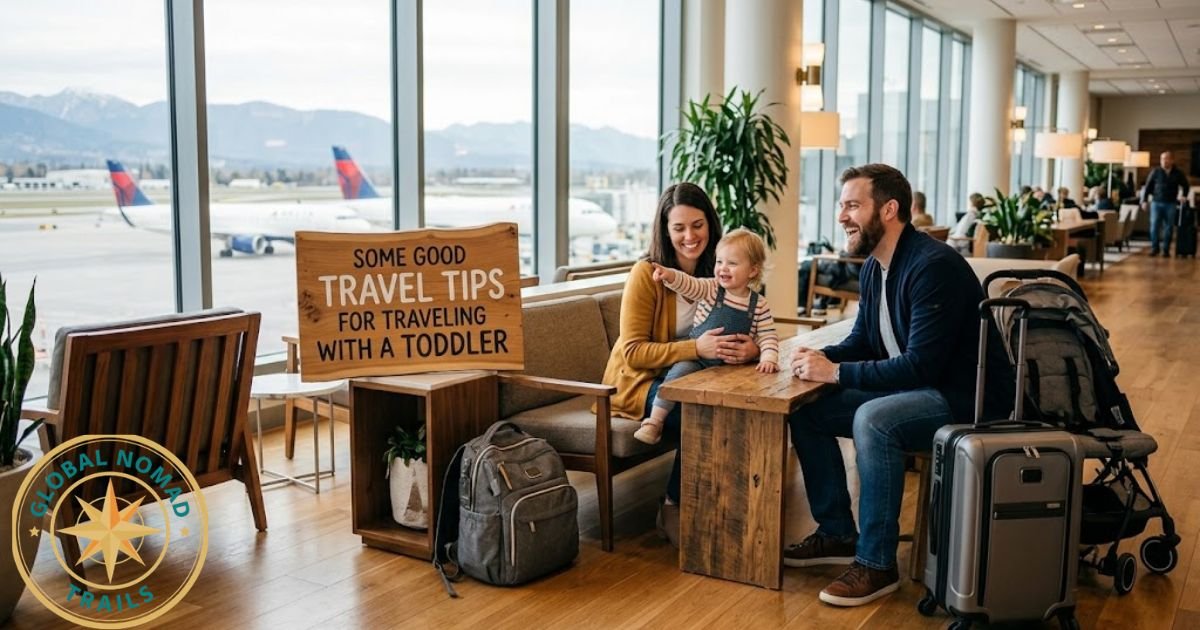
The most useful travel tips for traveling with a toddler come down to five habits: keep the plan short, schedule around naps, pack snacks and familiar comforts, secure your child properly in a car seat or airplane seat, and expect delays. Toddlers cope well with travel when their routine bends instead of breaks. They struggle when adults pack the day too tightly.
This guide covers what to book, what to pack, how to handle flights and car trips, and how to manage meals, sleep, and meltdowns. It treats a toddler as a child of roughly 1 to 3 years old.
Is Traveling With a Toddler Worth It?
Yes, for most families, as long as you plan for less activity. A toddler can’t sit still for long, naps in unpredictable places, and eats only certain foods. That doesn’t make travel impossible. It means one big attraction per day is plenty.
Choose a destination for its ease, not its fame. Look for a short transfer from the airport, a place to nap near the sights, and food your child will eat. A beach town with a kitchen apartment often beats a famous city with long walks. If you need inspiration, explore our guide to family vacation destinations for ideas that can suit different travel styles and family needs.
Plan the Trip Around Your Toddler’s Rhythm
Build the day around naps and meals, then fit sightseeing into the gaps. A tired toddler can undo a good plan faster than any delay.
- Pick flight times with nap and bedtime in mind. Many parents choose a flight that overlaps with a nap. Others avoid it because a child who can’t settle on a plane arrives exhausted. Think about which pattern your child follows.
- Limit transfers. A direct flight, even at a higher price, often saves more stress than it costs.
- Leave buffer time. Add extra time for airport security, bathroom stops, and slow walking.
- Keep one fixed point each day. A morning outing, a midday nap, and a calm evening give the day shape.
- Choose a stay with a kitchen or fridge. You can prepare familiar food and warm a bottle or a meal at odd hours.
Tips for Flying With a Toddler
Should Your Toddler Have Their Own Seat?
A separate seat with an approved car seat is the safest choice. Rules vary by country, so check your airline. In the United States, the FAA allows children under 2 to travel on an adult’s lap, but it strongly recommends an approved child restraint for children of all ages. The FAA’s guide to flying with children explains the options in detail.
| Option | Best for | Main advantage | Main limitation |
| Lap travel (under 2) | Short flights on a tight budget | No extra ticket under many airline policies | Your arms cannot hold a child securely in turbulence |
| Airline seat with an approved car seat | Most toddlers, especially younger children | Familiar seat; stronger protection | You must carry it, and it must fit the seat and have an approval label |
| CARES harness | Children who meet the device’s weight and height requirements | Light and easy to pack | Needs its own seat and is not designed for infants |
| Lap belt only | Children who have outgrown a car seat, depending on applicable rules | Nothing extra to carry | Not suitable for most toddlers |
A few practical rules apply. Car seats usually go in a window seat so they don’t block other passengers’ exit paths. Not every car seat fits a narrow airline seat, so check the label for aircraft approval and measure before you leave. Many airlines let you check a car seat for free, but confirm with yours.
Get Through the Airport
- Bring a stroller to the gate. Most airlines let you gate-check it. It carries your child and your bags, and it makes a convenient place for your toddler to rest.
- Know the liquid rules for toddler food. In the United States, the TSA’s rules for traveling with children allow formula, breast milk, toddler drinks, and baby or toddler food, including puree pouches, in quantities above 3.4 ounces (100 ml). Tell the officer at the start of screening. Rules differ in other countries, so check the airport’s website.
- Let your child burn energy before boarding. Walk the terminal, find a play area, and board later if one parent can handle the bags first.
- Dress in layers. Cabins can run cold, and spills happen. Pack a full spare outfit for your toddler and a spare top for yourself.
Handle Takeoff, Landing, and Ear Pain
Pressure changes can hurt small ears. Offer a drink, a pacifier, a snack, or something to chew during takeoff and descent. Pain usually fades within minutes. If your child has a cold or a recent ear infection, ask your pediatrician before you fly. You can also read Mayo Clinic’s advice on air travel with young children for further guidance.
Skip the Sleep Medicine
Don’t give your toddler an antihistamine to make them sleepy. Mayo Clinic advises against giving diphenhydramine (Benadryl and similar products) to help a young child sleep on a flight and notes that it can have the opposite effect. If you have a medical reason to use any medicine, get the dose and timing from your child’s doctor.
Keep Them Busy
Toddlers lose interest quickly, so rotate small items instead of handing everything over at once.
- A few new, inexpensive toys or stickers
- Board books and a favourite soft toy
- Water-pen colouring pads and reusable sticker books
- Finger foods that take time to eat, such as cereal or safely cut fruit
- A tablet with downloaded shows and child-safe headphones, kept as a backup
Tips for Road Trips With a Toddler
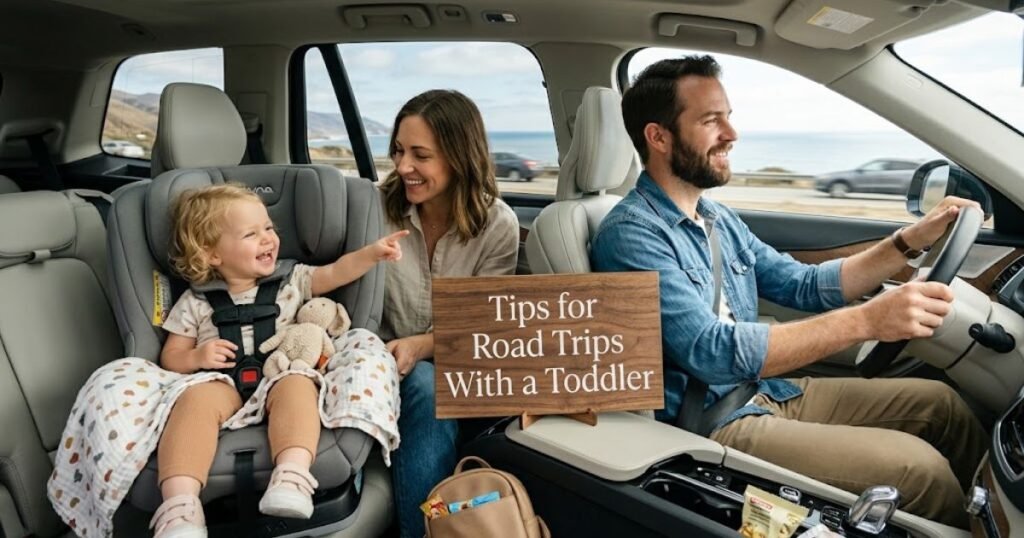
Plan for a stop every couple of hours and drive during nap time. This is general parent advice, not a fixed rule, so adjust to your child.
- Check the car seat fit and installation before you leave. Use a seat that suits your child’s age, weight, and height, and follow the manual.
- Never leave a child alone in a parked car, even briefly. Cars heat up quickly.
- Keep snacks and drinks within easy reach of an adult, rather than buried in the trunk.
- Use sun shades on the windows and keep a cool, soft toy within reach.
- Split the driving so one adult can sit near the child during a rough stretch if needed.
- Carry a spare outfit, wipes, and a bag for car sickness.
Pack Smart for a Toddler
Pack for the trip’s length plus one extra day of clothes. Carry essentials in your hand luggage because checked bags can arrive late. Our essential travel checklist can also help you organise general travel essentials before departure.
Keep in your carry-on:
- Diapers or training pants for the journey, plus a few extra, and wipes
- Snacks, a refillable cup, and familiar foods
- A full change of clothes for your child
- Comfort items, such as a blanket or soft toy
- Any regular medicines, plus a basic first-aid kit
- Copies of your child’s travel documents and vaccination records
- A small night-light or white-noise device if your child needs it for sleep
Consider buying or renting at the destination: diapers, wipes, baby wash, and larger items like a cot or high chair. Ask your hotel or an equipment rental service what they supply, and confirm sizes and safety standards before you rely on them.
Make Meals, Sleep, and Routine Easier
Food
Pack snacks your child already likes because new places mean new foods and fussy eating. Offer something familiar first, then something new. Choose restaurants that serve simple food, such as rice, eggs, bread, fruit, or pasta, and eat early to avoid crowds.
Sleep
- Ask for a crib or travel cot when you book, and confirm it in writing.
- Request a quiet room away from the lift or street.
- Bring blackout curtain clips or a portable blackout cover.
- Keep the bedtime routine the same: bath, book, song, lights out.
- With time-zone changes, shift mealtimes and sleep by small steps, and use daylight in the morning to help your child adjust.
Meltdowns
Meltdowns are normal at this age. Move to a quieter spot, name the feeling in simple words, and offer a snack, a drink, or a cuddle. Don’t try to finish a tour while a child is screaming. Leave and come back later, or skip it.
Keep Your Toddler Safe and Healthy
- See your pediatrician before an international trip. Ask about routine vaccines, destination-specific advice, and what to do if your child gets sick. The CDC’s travel guidance for children is a good starting point for families in the United States, and other countries have their own health authorities.
- Know your child’s regular medicine and fever plan. Get dosing instructions from your doctor or pharmacist before you go, not from a website.
- Check water and food safety at your destination, and wash hands before meals.
- Childproof the room quickly. Cover sockets, move cords, and check balcony doors and windows.
- Watch the water. Stay within arm’s reach of your toddler at pools, beaches, and bathtubs.
- Carry identification. Write your phone number on a wristband or card in your child’s pocket in crowded places.
- Buy travel insurance that covers children and medical care abroad.
For more general advice on planning a smooth trip, see our guide to practical travel tips.
Common Mistakes to Avoid
- Booking tight connections with a Some Good Travel Tips for Traveling With a Toddler in tow
- Planning two or three big sights in a day
- Skipping naps to “save time”
- Assuming the hotel will supply a safe crib or the right car seat
- Trying new foods, a new bed, and a new time zone all at once
- Packing too many toys and too few snacks
- Relying on a screen as the only plan
FAQ,s
What is the 3-3-3 rule for toddlers?
The 3-3-3 rule is a travel guideline suggesting breaks or activities in manageable blocks to help toddlers avoid becoming overwhelmed. Its exact meaning can vary, so it is not a universally established parenting rule.
What is the hardest age to travel with a toddler?
For many parents, ages 18 months to 3 years can be challenging because toddlers are active, curious, and have limited patience. However, every child is different, and preparation can make travel easier.
What is the 80/20 rule for toddlers?
The 80/20 rule generally encourages parents to focus on healthy routines and balanced choices most of the time while allowing some flexibility. It is an informal guideline, not a medically established rule for toddlers.
What are some tips for traveling with a 2-year-old?
Pack familiar snacks, favorite toys, extra clothes, and comfort items, and plan regular breaks around your child’s routine. Keep the schedule flexible and allow extra time for meals, naps, and unexpected delays.
How to survive a 7-hour flight with a toddler?
Bring snacks, water as permitted by airport rules, small toys, books, downloaded videos, and a change of clothes. Choose activities that can be rotated throughout the flight, and plan for naps and movement when safe and permitted.
Conclusion
Traveling with a toddler can be enjoyable when you plan around your child’s needs instead of trying to follow a packed itinerary. Choose convenient accommodation, allow time for naps and meals, pack familiar snacks and toys, and check car-seat and airline rules before departure. Most importantly, stay flexible. A slower pace, a little preparation, and realistic expectations can make family travel less stressful and more memorable.