

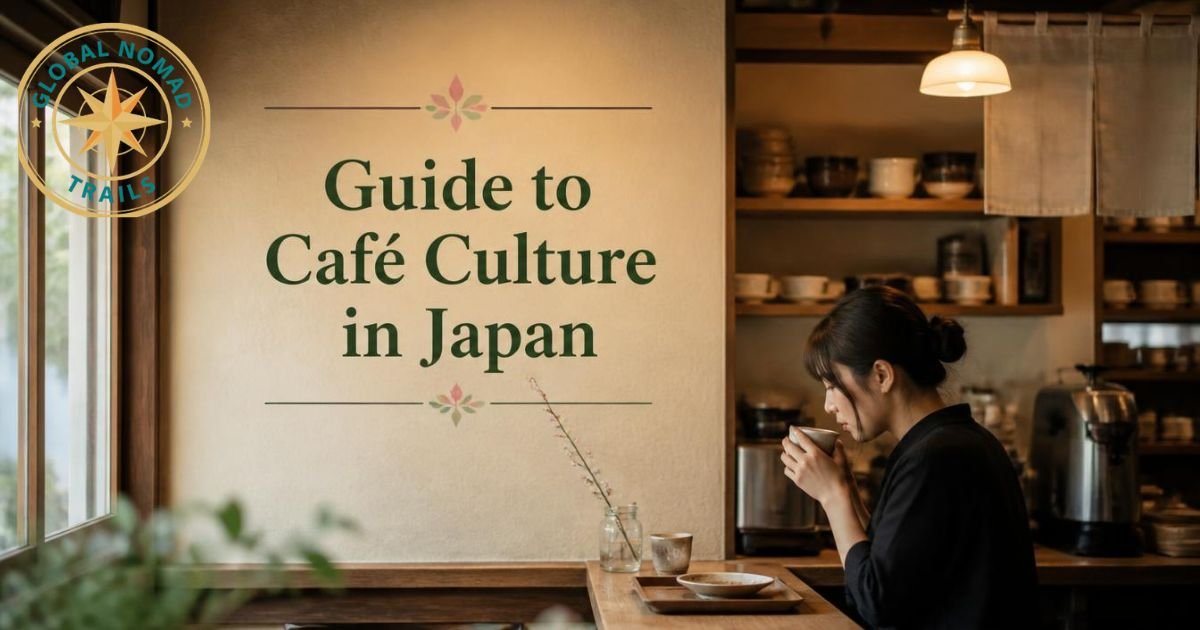
Japan has three café traditions, and each follows its own rules. Kissaten are old-school coffee houses with hand-dripped brews and cheap breakfast sets. Kawaii cafés sell cuteness, from maids to cats. Pancake cafés bake fluffy stacks to order.
This guide to café culture in Japan covers what each type offers, what it costs, and the details that trip up first-time visitors. Those include smoking rules, cash-only counters, and a pancake that takes 20 minutes to arrive. Prices below are typical ranges, and they change often.
Japan’s Café Types at a Glance
| Café type | Best for | Typical cost | Main catch |
| Kissaten | Slow mornings, retro atmosphere, set meals | Coffee about ¥400–900; sets about ¥500–1,200 | Cash is common, smoking is possible, many close early |
| Nagoya morning service | A free breakfast with a drink | Drink price only, roughly ¥450–800 | Mostly before 11 a.m.; strongest in Aichi |
| Maid café | Pop culture and live entertainment | About ¥1,000–2,000 with cover charge and a drink | Strict photo rules and time limits |
| Cat café | Animal lovers, rainy afternoons | About ¥1,200–2,200 an hour; some rescue cafés ask for around ¥1,000 | Shoes off, strict handling rules |
| Soufflé pancake café | Dessert or brunch | About ¥1,000–2,000 | 20-plus minutes of cooking time, plus queues |
Kissaten: Japan’s Old-School Coffee Houses
What is a kissaten?
A kissaten (喫茶店) is a traditional Japanese coffee house. The word literally means “tea-drinking shop,” though coffee became the main draw. Most histories date the first one to Ueno, Tokyo, in 1888.
At their peak, Japan had more than 150,000 kissaten, according to the Japan National Tourism Organization. The same source says pour-over and cold-brew methods were refined in these shops, long before “third-wave coffee” became a phrase.
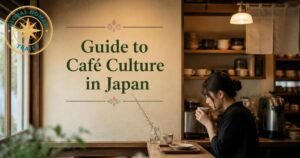
Most kissaten are small and owner-run, with wood paneling, dim lighting, and decades of Showa-era décor. Regulars skew older. Younger travelers and locals have started returning, drawn by nostalgia. If you enjoyed Vienna’s traditional coffee houses, the slow pace and “stay as long as you like” feel will seem familiar.
What to order
Order a set. A coffee alone typically runs about ¥400–900, while a morning or lunch set with coffee often costs about ¥500–1,200. These sets are the best value in the room.
Classic kissaten food includes thick toast, egg sandwiches, omurice, and neapolitan (ketchup spaghetti). Sweet options include custard pudding, parfaits, and cream soda. Morning sets are generally a weekday offer, so a Saturday visit may not include one.
Smoking: what to expect
Some kissaten still allow smoking, but many do not. The rules depend on the shop and on where it sits.
Under national law, existing small restaurants and cafés may allow indoor smoking if they meet three conditions:
- They had a customer area of 100 square meters or less.
- They are run by a small business with capital of ¥50 million or less.
- They were already operating when the rules took full effect in April 2020.
These shops must post a sign at the entrance. The Ministry of Health, Labour and Welfare’s outline of the rules explains the categories.
Tokyo is stricter. Its ordinance bans indoor smoking in restaurants that employ staff. Only owner-operated shops with no employees can choose. That is why Tokyo’s smokiest kissaten are usually tiny, one-person operations. People under 20 cannot enter smoking areas.
Check the sign at the door before you sit. Ask for a non-smoking seat ( kin’en-seki) if you want one. Some old shops have a smoke-free upstairs and a smoky ground floor.
Kissaten worth seeking out
- Café de l’Ambre, Ginza, Tokyo. It has served coffee since 1948 and sells almost nothing else. It is known for aged beans and cloth-filter brewing. It has a retro interior, and the menu is built around bean choices. Hours have shifted over the years, so check before you go.
- Salon de thé François, Kyoto. Established in 1934, its building is a registered tangible cultural property. The domed hall was designed to resemble a room on an ocean liner.
- Smart Coffee, Kyoto. Open since 1932 in the Teramachi covered arcade, it roasts its own beans. It is a good stop for retro hot cakes and French toast.
- Inoda Coffee Honten, Kyoto. Opened in 1947, it is one of the city’s best-known long-running coffee houses.
Kissaten etiquette
- Order one item per person. Most kissaten expect it.
- Do not plan a laptop session. Some shops, including Café de l’Ambre, are known for having no Wi-Fi.
- Carry cash. Many small shops do not take cards.
- Go early. Kissaten often open at dawn and close around 6 p.m., though some stay open later.
Nagoya’s Morning Service: The Free Breakfast Tradition
In Nagoya and across Aichi Prefecture, a morning drink often comes with a free breakfast. This custom is called morning service. You pay for the coffee, and toast and a boiled egg arrive with it.
The Nagoya Meshi official site traces the habit to the postwar textile trade in Ichinomiya and Toyohashi. It says Aichi has about 9,000 coffee shops, so competition pushes cafés to add extras.
Komeda Coffee, which opened its first shop in Nagoya in 1968, is the easiest place to try it. Most branches offer three free sets with a drink: toast with a boiled egg, toast with egg paste, or toast with ogura (sweet red bean). Service usually runs from opening until about 11 a.m.
Independent cafés often do more, such as onigiri, salad, or even steamed egg custard. If you pass through Nagoya by bullet train, a morning here can replace a hotel breakfast.
Kawaii Cafés: Maids, Cats and Character Themes
Kawaii means “cute,” and these cafés sell an experience as much as a drink. Most charge for time or a cover fee, so the menu price is only part of the bill.
Maid cafés
Maid cafés began in Akihabara in the early 2000s, and Cure Maid Café is widely cited as the first, opening in 2001. Staff dress as maids, greet you as a “master” or “princess,” and add playful touches to your order. Omurice decorated with ketchup hearts is a classic.
Expect these costs and rules:
- Cover charge: Many chains charge about ¥500–1,000 per person, often with a one-drink minimum. A few older cafés, such as Cure Maid Café, have no table charge.
- Total spend: A basic visit usually lands around ¥1,000–2,000.
- Photos: Do not photograph the maids without permission. Some cafés also ban photos of the interior, but food photos are generally fine.
- Conduct: No touching and no personal questions. Follow the staff’s instructions.
Solo visitors are common. Choose a café that looks comfortable to you, because the food is rarely the main attraction.
Cat and animal cafés
Cat cafés began in Osaka, where Neko no Jikan opened in 2004. Japan now has hundreds. Pricing falls into three patterns:
- Pay by the minute: About ¥200–250 per 10 minutes, with drinks extra.
- Hourly with a drink: About ¥1,200–2,200 an hour.
- Rescue cafés: A donation or low flat fee, often around ¥1,000, which goes to the cats’ care.
The rules are strict and nearly universal. Wash your hands, take off your shoes, and let sleeping cats sleep. Turn off your flash, and do not chase, carry, or feed the cats. If you want the cats to be well treated, choose a rescue café or one that clearly limits visit times.
Character and themed cafés
Cafés built around anime, games, and characters change often. Some require advance booking, and others close or move with little notice. Search for the café’s current page, confirm it is still open, and book if it takes reservations.
Pancake Havens: Japan’s Soufflé Pancake Cafés
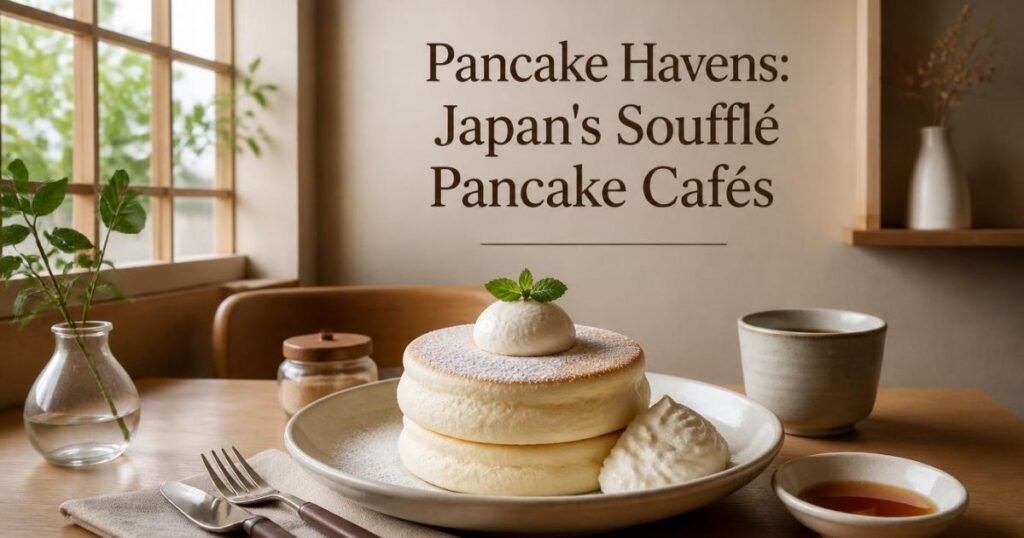
Japan’s soufflé pancakes are tall, jiggly, and cooked to order. Because the batter needs time on the griddle, the wait is part of the experience. Plan on about 20 minutes after ordering, and longer at peak times.
Two names appear most often:
- A Happy Pancake (Shiawase no Pancake). It started in Osaka and now has branches across Japan, including several in Tokyo. It uses Hokkaido butter and Manuka honey. Tabelog lists its Omotesando branch at ¥1,000–1,999 per person, and a visitor reported the signature stack at about ¥1,380 in 2025. The Omotesando branch is in a basement, so ask about step-free access if you need it.
- Flipper’s. This Tokyo-based chain sells a “miracle pancake” with several branches in the city.
Soufflé pancakes are not the only kind. Kyoto’s Smart Coffee serves old-fashioned hot cakes made from its own recipe. They are denser and plainer, and they suit a kissaten morning better than a dessert stop.
How to avoid the longest queue:
- Go on a weekday afternoon. Weekend lines often form before opening.
- Put your name down first, then explore nearby while you wait.
- Order a drink and a main dish together so the kitchen starts early.
- Check each branch for reservation rules. They vary.
Which Café Experience Should You Choose?
The right pick depends on your city and your schedule.
| City | Best café stop | Why |
| Tokyo | Kissaten in Ginza, maid cafés in Akihabara, pancakes in Omotesando | Widest range in one city |
| Kyoto | Salon de thé François, Smart Coffee, Inoda Coffee | Some of Japan’s oldest kissaten |
| Nagoya | Komeda Coffee or a local morning-service shop | The home of free breakfast with a drink |
| Osaka | A cat café or a Happy Pancake branch | Birthplace of both the first cat café and the pancake chain |
By traveler type:
- Budget travelers: Pick kissaten sets and Nagoya morning service.
- Families: Choose pancake cafés and cat cafés with child-friendly rules.
- Solo travelers: Kissaten counters and maid cafés both work well.
- Pop-culture fans: Plan a day in Akihabara.
- Smoke-sensitive travelers: Check the door sign, or choose a non-smoking kissaten.
Practical Rules for Any Japanese Café
Tax. Japan charges 10% consumption tax on food and drink you eat in, and 8% on takeout. The Ministry of Finance explains the reduced rate. At konbini eat-in counters, tell staff you will eat inside (ten-nai de, 店内で).
Tipping. Tipping is not customary, and you do not need to leave extra.
Cash. Carry yen. Cards are common in chains and big cities, but small kissaten and older shops often take only cash.
Ordering. Many cafés use a set menu or a ticket machine at the door. Coffee orders work differently from the café con leche and cortado routine in the guide to coffee in Spain. In Japan, you often pick a set or add a dessert.
Timing. Kissaten opens early and closes early. Pancake cafés fill from late morning. Maid and cat cafés run on time blocks.
Language. Many places have English menus. Pointing at photos works.
Common Mistakes to Avoid
- Ordering coffee alone in a kissaten. A set usually costs little more and gives you food.
- Assuming every café is smoke-free. Check the sign.
- Arriving at a pancake café hungry and impatient. The wait is part of the process.
- Photographing staff in a maid café. Ask first, or skip it.
- Treating a cat café as a petting zoo. Follow the animal rules.
- Relying on old reviews. Prices, hours, and menus shift. Check the café’s current page.
For another city where old coffee habits and modern cafés sit side by side, see our guide to restaurants and cafés in Cairo.
FAQs
What is the difference between a kissaten and a regular café?
A kissaten is a traditional coffee house with a vintage interior and set meals. It often serves hand-dripped coffee and may allow smoking. A modern café focuses on lattes, desserts, or a themed concept, and it is more likely to offer Wi-Fi and card payment.
How much does coffee cost in a Japanese café?
A kissaten coffee generally runs about ¥400–900, while a set meal with coffee often costs about ¥500–1,200. Chain cafés and convenience stores usually charge less. Maid and cat cafés bundle drinks into a time or cover charge.
Is smoking allowed in Japanese cafés?
Sometimes. Existing small cafés that meet the size and capital limits may allow smoking if they post a sign. Tokyo bans it in cafés that employ staff. Always check the sign, and ask for a non-smoking seat.
Do I need a reservation for a pancake café?
Often not, but queues are common. Weekends and lunchtime are the busiest periods. Reservation rules differ by branch, so check the café’s current page. Weekday afternoons usually have the shortest waits.
Are maid cafés and cat cafés suitable for solo travelers and children?
Both welcome solo visitors. Maid cafés are entertainment-focused, so check each café’s age rules and the cover charge first. Cat cafés often set limits for young children to protect the animals, so confirm the policy before you go.
Conclusion
Japan’s café culture is a beautiful blend of tradition, creativity, and unforgettable experiences. From the quiet charm of traditional kissatens, where time seems to slow down over a cup of carefully brewed coffee, to the colorful world of kawaii cafés filled with playful designs and themed treats, every café offers something unique. And for those with a sweet tooth, Japan’s famous fluffy pancakes provide the perfect finishing touch to a memorable café adventure. Each of these places reflects a different side of Japanese culture, making café hopping an exciting way to discover the country beyond its famous landmarks.
Whether you are exploring the bustling streets of Tokyo, discovering hidden coffee shops in Kyoto, or searching for the perfect Instagram-worthy dessert, Japan’s cafés invite you to slow down, enjoy the moment, and experience everyday life from a new perspective. The best part is that there is something for every traveler, from coffee lovers and food enthusiasts to anyone who appreciates beautiful spaces and local traditions. So, on your next trip to Japan, make room in your itinerary for its incredible café scene—you may discover that some of your most cherished travel memories begin with a cup of coffee or a plate of fluffy pancakes.