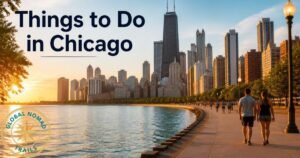

The best things to do in Chicago cluster around five areas. They are the Loop’s skyline and parks, the Museum Campus, the lakefront, the North Side, and a few neighborhoods known for food and music. Most first-time visitors need three to four days to cover the highlights without rushing. This guide lists 25 attractions with current prices, hours and booking notes. It also shows how to group them by area, so you spend less time on trains.
Chicago rewards planning because tickets, seasons and closures shape the day. The Art Institute closes on Tuesdays, the architecture river cruises stop in late November, and the new Obama Presidential Center museum needs a timed ticket. Several top sights cost nothing, including Millennium Park, Lincoln Park Zoo and the Chicago Cultural Center. Use the sections below to pick what fits your time, budget and season.
Skyline and Downtown Icons
1. Millennium Park and Cloud Gate
Millennium Park is free and opens daily from 6 am to 11 pm. Cloud Gate, known as “The Bean,” reflects the skyline and draws the biggest crowds. Go early in the morning for photos with fewer people in the frame. The Crown Fountain, a few steps away, projects faces onto two glass towers and cools kids off in summer.
2. Chicago Riverwalk
The Riverwalk runs about 1.25 miles along the south bank of the Chicago River, from Lake Michigan to Lake Street. It passes cafés, public art and some of the city’s most photographed buildings. If you only have time for one downtown walk, take this one. It also leads straight to the boat docks for the next stop.
3. Architecture River Cruise
A narrated river cruise explains why Chicago is called the birthplace of the skyscraper. The Chicago Architecture Center’s First Lady cruise lasts about 90 minutes and covers all three branches of the river. Other operators run shorter trips of about 75 minutes. Adult tickets typically start around 45–57, depending on the operator. Seasonal warning: the First Lady season runs from March 15 to about November 22–23, 2026, so late October is nearly the last window.
4. Skydeck Chicago at Willis Tower
Skydeck takes you to the 103rd floor, where you can step onto The Ledge, a glass balcony. General admission starts around $32 for adults, and expedited entry costs more. Book a timed slot, and pick a clear day, since fog hides the view.
5. 360 CHICAGO
This observation deck sits at 875 North Michigan Avenue, on the Magnificent Mile. Tickets start around $30, and the TILT ride is an extra. It suits visitors who prefer a view that includes the lake and the Gold Coast. Compare it with Skydeck, and see both only if you have a pass.
6. Navy Pier
Walking onto Navy Pier is free, and the pier’s east end gives a strong view of the skyline. The Centennial Wheel, restaurants and the Chicago Children’s Museum make it a family stop. Adults without children can treat it as an optional hour, not a half day.
7. Chicago Cultural Center
The Cultural Center at 78 E. Washington Street sits across from Millennium Park. Admission is free, and the building holds one of the largest Tiffany glass domes in the world. It opened in 1897 as the city’s first public library. Check the calendar for free exhibits and concerts.
8. Lakefront Trail
The trail follows Lake Michigan for about 18 miles. Walk, jog or rent a bike near Navy Pier or North Avenue Beach. The city beaches sit along this route. If beaches are your main goal on a US trip, our guide to good beaches to visit in the US compares other options.
Museums and Cultural Sites
9. Art Institute of Chicago
If you visit one museum, make it this one. Adult admission is $32, seniors, students and teens 14–17 pay $26, and children under 14 enter free. The museum is closed on Tuesdays. It opens 11–5 most days and until 8 pm on Thursdays. Check the official visitor page for free hours for Illinois residents and exhibition tickets, which cost extra.
10. Field Museum
The Field Museum is home to SUE, one of the best-preserved T. rex skeletons ever found. It also covers Egyptian mummies, gems and evolution. Adult tickets cost around $30, and Illinois residents have free Wednesdays. Allow three hours.
11. Shedd Aquarium
The Shedd is a top choice for families and costs around $40 for adults. It sits on the Museum Campus beside the Field Museum and the Adler Planetarium. Book a timed slot, because weekends sell out.
12. Griffin Museum of Science and Industry
This large museum, in Hyde Park, appears in passes as the Griffin Museum of Science and Industry. It is a good rainy-day pick and pairs well with the Obama Presidential Center. It sits farther south than the Loop, so plan a half day.
13. Adler Planetarium
The Adler sits at the tip of the Museum Campus and gives a classic skyline view across the water. Choose it if you like space and astronomy. Skip it if you are short on time, since the Field and Shedd sit next door.
14. Obama Presidential Center
The center opened on June 19, 2026, at 6001 S. Stony Island Avenue in Jackson Park. The campus is free, with gardens, a playground and a library branch. The museum needs a timed ticket. Launch prices were $30 for adults and $23 for children ages 3–11, and early tickets sold out fast. Check the official tourism guide and the Obama Foundation site for new ticket blocks.
Parks, Zoo and Sports
15. Lincoln Park Zoo and Conservatory
The zoo at 2001 N. Clark Street is free every day of the year. The Lincoln Park Conservatory sits just north and is also free. Combine them for an easy North Side morning.
16. Garfield Park Conservatory
This is one of the largest indoor garden spaces in the country, on the West Side. Take the Green Line to the Conservatory–Central Park Drive stop. Check current admission rules before you go.
17. Wrigley Field
Wrigley Field is the home of the Chicago Cubs and a historic ballpark in Lakeview. Baseball runs from spring to early fall, and stadium tours run outside game days. Check the Cubs schedule and tour times before you plan around it.
18. Maggie Daley Park
This free park in the northeast corner of Grant Park works as a giant playground. It also has a climbing wall and a skating ribbon in winter. It suits families with children who need to burn energy.
Neighborhoods and Food
19. Pilsen
Pilsen is known for colorful murals and Mexican bakeries and restaurants. Take the Pink Line, then walk. Go on a weekend afternoon when shops are open.
20. Chinatown
Chinatown offers dim sum and bakeries along Cermak Road and Wentworth Avenue. The Red Line stops at Cermak–Chinatown. It is an easy add-on after the Museum Campus.
21. Wicker Park
The Blue Line connects Wicker Park to downtown and O’Hare. The area mixes vintage shops, bars and cafés. It works well for an evening meal.
22. Hyde Park
Hyde Park is home to the University of Chicago, the Griffin Museum and the Obama Presidential Center. Group these sights into one South Side day, since they sit far from the Loop.
23. Deep-dish pizza, hot dogs and Italian beef
Chicago deep dish takes 40 minutes or more to bake, so order ahead if you can. Pequod’s is a well-known pan-crust option. A Chicago hot dog usually comes without ketchup. Also try an Italian beef sandwich, and a corned beef sandwich at Manny’s.
24. Live blues and jazz
Chicago-born blues, jazz and house music still fill clubs across the city. Check club calendars for the week you visit. Big events include Lollapalooza, the Chicago Jazz Festival and the Windy City Smokeout.
25. Theater and comedy
The Chicago Theatre and Broadway in Chicago host touring shows. The Second City is the famous home of improv and sketch comedy. Book weekend evenings in advance.
Quick Comparison of Paid Attractions
Prices are typical adult rates and can change. Times are my planning estimates, not official durations.
| Attraction | Typical adult price | Time to allow | Best for |
| Art Institute of Chicago | $32 | 3 hours | Art lovers |
| Skydeck Chicago | From about $32 | 1–1.5 hours | First-time views |
| 360 CHICAGO | From about $30 | 1 hour | Lake and Gold Coast views |
| Field Museum | About $30 | 3 hours | Dinosaurs, families |
| Shedd Aquarium | About $40 | 2–3 hours | Families |
| Obama Presidential Center museum | $30 at launch | 2+ hours | History and architecture |
| Architecture river cruise | About 45–57 | 75–90 minutes | Skyline history |
Is the Chicago City PASS Worth It?
The CityPASS lists adult tickets at about $142 for five attractions over nine consecutive days. It always includes Shedd Aquarium and Skydeck Chicago. You then pick three more from the Field Museum, Art Institute, 360 CHICAGO, the Griffin Museum, the Adler Planetarium and a river tour. Buying those five tickets separately runs roughly $280 or more. It pays off if you plan at least four paid attractions. If you mostly want free sights, skip it.
How to Group Your Days
- Day 1, Loop: Millennium Park, Cultural Center, Riverwalk, architecture cruise
- Day 2, Museum Campus: Field Museum, Shedd, Adler, then the lakefront
- Day 3, North Side: Lincoln Park Zoo, a Wrigley Field area walk, a deep-dish dinner
- Day 4, South Side: Obama Presidential Center, Hyde Park, the Griffin Museum
Getting Around Chicago
The CTA “L” trains and buses reach most sights, and you do not need a car. At the 2026 fare change, CTA reportedly set rail rides at about $2.75, a 1-day pass at $6 and a 7-day pass at $25. Boarding the Blue Line at O’Hare costs $5 unless you use a pass. Verify current prices on the CTA fares page. Download offline maps and a transit app before you land, and see our guide to travel tech tools that improve safety for a simple setup.
Best Time to Visit
Late spring through early fall gives the longest outdoor season, the river cruises and the big festivals. It also brings the largest crowds and higher hotel prices. Winter is cold and windy, but museums and indoor sights stay open, and crowds thin. Fall suits a first visit if you want milder weather. Check each attraction’s seasonal schedule, because boats, gardens and some tours change by month.
.Frequently Asked Questions
How many days do you need in Chicago?
Three to four days cover the main sights comfortably. Two days work if you stick to downtown and one museum.
What are the best free things to do in Chicago?
Millennium Park, Lincoln Park Zoo, the Chicago Cultural Center, the Riverwalk and the Lakefront Trail are all free. The Obama Presidential Center campus is free too, but the museum needs a ticket.
Is the Chicago CityPASS worth it?
Yes, if you plan at least four paid attractions in nine days. It costs about $142 and covers five.
What is the best time to visit Chicago?
Late spring to early fall offers boats, festivals and long days. Winter is quieter and colder.
Do you need a car in Chicago?
No. The CTA “L” trains and buses cover most sights, and the Blue Line runs from O’Hare to downtown.
Conclusion
Chicago works best when you group sights by area and book timed tickets early. Pair the free highlights, like Millennium Park, the Riverwalk and Lincoln Park Zoo, with a few paid anchors such as the Art Institute and an architecture cruise. That mix keeps costs down without skipping the sights that define the city.
Check hours, prices and seasonal schedules before you travel, because many change each year. With the Obama Presidential Center now open and the cruise season ending soon, the next few weeks suit a trip planned around the Loop and the lakefront. Choose your must-see list, group it by neighborhood and leave room for one long meal.