


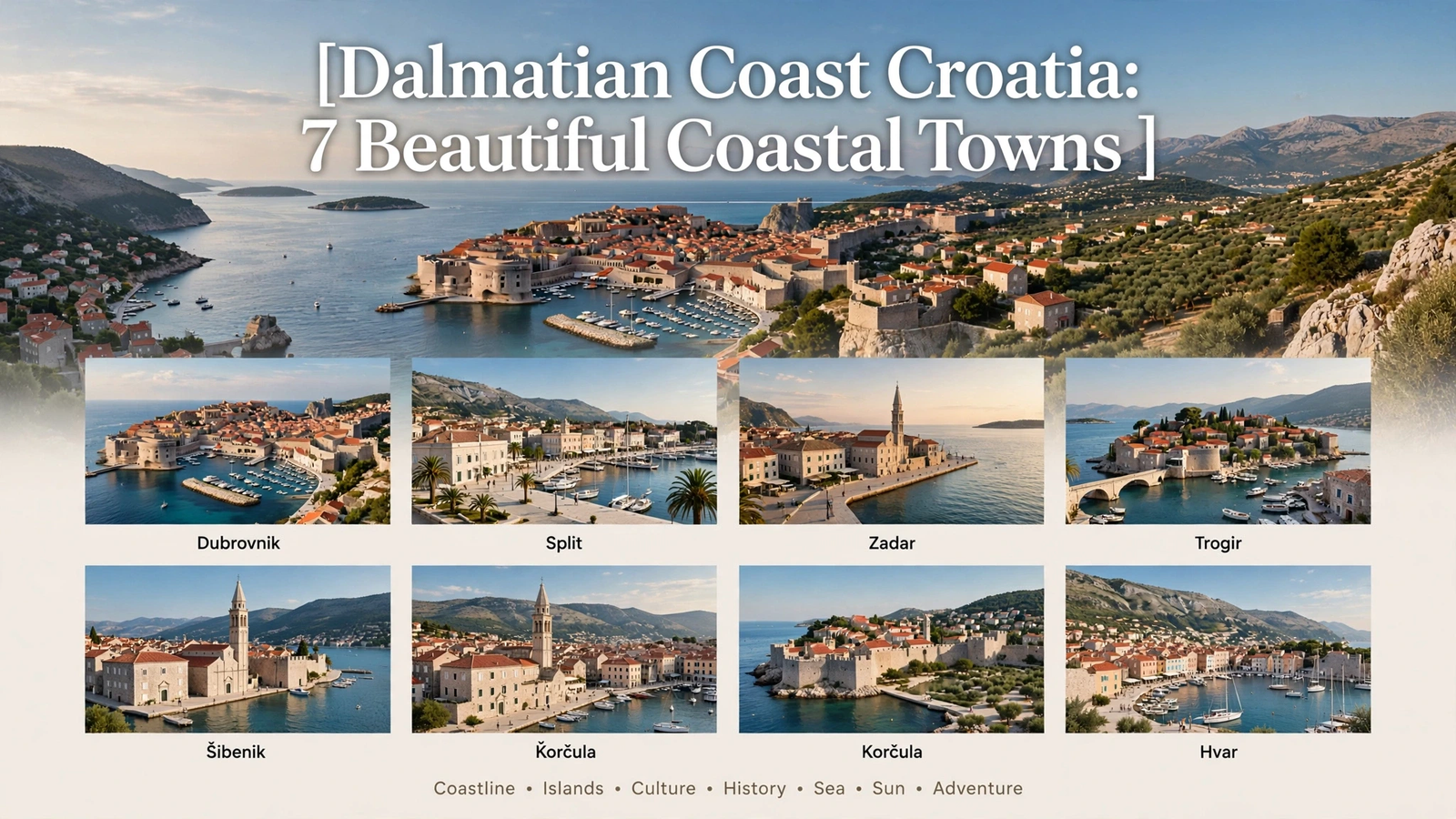
Dalmatian Coast Croatia is a wonderful choice for travelers who love clear water, historic towns, island views, and relaxed seaside days. Moreover, this famous Croatian coast combines old stone streets with beautiful beaches, local food, and stunning Adriatic scenery. From the historic streets of Split to the charming harbor of Hvar Town, each destination offers a different travel experience. Therefore, exploring several coastal towns can make a Croatia trip more varied and memorable.
Furthermore, the Dalmatian Coast Croatia region stretches along the Adriatic Sea and includes some of the country’s best-known destinations. Split, Trager, Šibenik, Zadar, Mahaska, Hvar Town, and Dubrovnik each have their own character and attractions. In addition, the coast provides easy opportunities for island trips, swimming, sightseeing, hiking, and enjoying fresh seafood. Therefore, this guide covers seven beautiful coastal towns and includes practical advice about transport, budgets, the best time to visit, families, accessibility, and planning your trip.
Why Visit the Dalmatian Coast Croatia?
The Dalmatian Coast Croatia offers a strong mix of history, nature, beaches, and island life. Moreover, travelers can enjoy ancient buildings in the morning and swim in the Adriatic Sea later the same day. The region also works well for different travel styles. Couples can enjoy romantic waterfront walks, families can choose easy coastal activities, and solo travelers can explore historic centers at their own pace. Furthermore, the coast has many islands close to the mainland. Therefore, travelers can build a trip that includes both coastal towns and island adventures. The region is also known for its Mediterranean food and relaxed lifestyle. Fresh fish, seafood, olive oil, local produce, and regional wines are common parts of the dining experience.
7 Coastal Towns to Visit in Dalmatia
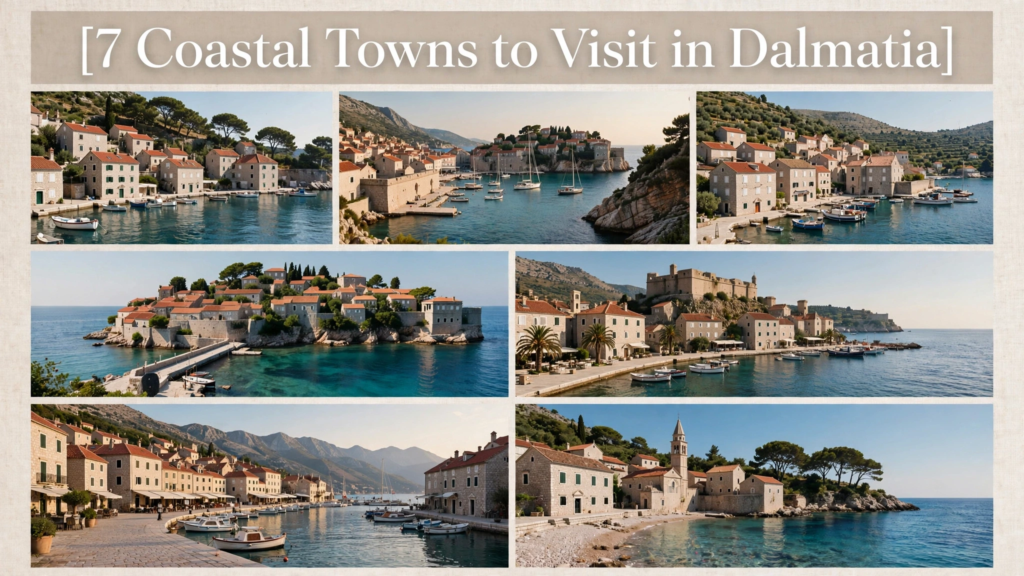
Each town along the Dalmatian Coast Croatia offers something different. Some are best for history, while others are better for beaches, nightlife, or island trips.
| Coastal Town | Best For | Main Highlight |
| Split | First-time visitors | Diocletian’s Palace |
| Trogir | History lovers | Medieval old town |
| Šibenik | Architecture | St. James Cathedral |
| Zadar | Sunsets and history | Sea Organ |
| Makarska | Beaches | Mountain and sea views |
| Hvar Town | Island trips | Harbor and historic center |
| Dubrovnik | History and scenery | Old City walls |
Therefore, your ideal town depends on your interests, trip length, and travel budget.
Split: The Best Starting Point
Split is one of the most important places to visit on the Dalmatian Coast Croatia. Moreover, it combines a lively modern city with a historic center built around Diocletian’s Palace.The old town is the heart of Split. You can walk through narrow stone streets, visit historic squares, and enjoy restaurants inside and around the palace area.
Explore Diocletian’s Palace
Diocletian’s Palace is one of Split’s biggest attractions. Furthermore, the palace forms a major part of the city’s historic center.Rather than being a separate building, the palace is woven into modern Split. Therefore, you can find shops, cafés, homes, and restaurants within the historic area.
Walk Along the Riva
After exploring the old town, walk along Split’s waterfront promenade. The Riva offers views across the harbor and creates a pleasant place for a relaxed break.Moreover, the promenade is close to many restaurants and cafés. You can sit down for coffee or enjoy an evening meal beside the water.
Why Stay in Split?
Split is also a useful base for exploring nearby islands. Ferries and boat services connect the city with several island destinations, although schedules vary by season.Therefore, Split is particularly useful for first-time visitors who want history and easy access to island trips.
Best for: First-time visitors, history lovers, families, and island hopping.
Trager: A Charming Historic Town

Trager is a beautiful choice for travelers exploring the Dalmatian Coast Croatia. Moreover, its historic center is compact, making it easy to explore on foot. The town sits near Split and can work well as a day trip or short stay. Its stone streets, historic buildings, waterfront, and small squares create a peaceful atmosphere.
Discover the Old Town
Trogir’s historic center is one of its main attractions. You can walk through narrow streets and admire old stone architecture.Furthermore, the town’s historic importance has earned it UNESCO World Heritage status. Therefore, history lovers have plenty to enjoy during a short visit.
Visit Kamerlengo Fortress
Kamerlengo Fortress stands near the waterfront and offers a glimpse into Trogir’s defensive past. Moreover, the location provides attractive views across the town and surrounding water.Check current opening information before visiting because access and hours may change.
Enjoy the Waterfront
Trogir’s waterfront is perfect for a relaxed walk. You can watch boats move through the harbor and stop at a local restaurant.Therefore, Trogir is ideal when you want a smaller and slower historic town experience.
Best for: History lovers, couples, photographers, and short trips.
Šibenik: History and Adriatic Views
Šibenik adds a different experience to your Dalmatian Coast Croatia itinerary. Moreover, the town has a beautiful historic center filled with stone streets, stairways, churches, and old buildings.Šibenik is also known for the Cathedral of St. James. The cathedral is one of the city’s most important landmarks and is part of the UNESCO World Heritage Site.
Explore St. James Cathedral
The Cathedral of St. James is famous for its stone construction and detailed design. Furthermore, its architecture makes it one of the most impressive sights in Šibenik.Take time to walk around the surrounding historic streets. You can also find cafés and restaurants nearby.
Visit St. Michael’s Fortress
St. Michael’s Fortress sits above the old town and provides wide views across Šibenik. Therefore, it can be a good stop for travelers who enjoy history and photography.The climb may feel steep in places. However, the views can make the effort worthwhile.
Why Visit Šibenik?
Šibenik can be a good alternative to Croatia’s busiest coastal destinations. Moreover, it provides easy access to nearby natural attractions and islands.
Best for: Architecture, history, photographers, and travelers seeking a quieter city.
Zadar: Famous for Its Sunset
Zadar is another excellent destination on the Dalmatian Coast Croatia. Moreover, it offers a mix of Roman remains, medieval streets, modern art, and beautiful sea views.The old town sits on a peninsula surrounded by the Adriatic. Therefore, you can explore historic attractions and enjoy the waterfront within a relatively small area.
See the Sea Organ
The Sea Organ is one of Zadar’s most unusual attractions. It uses the movement of the sea to create sounds through pipes built into the waterfront.Furthermore, the experience changes with the waves and wind. This makes it different from a normal sightseeing attraction.
Visit the Greeting to the Sun
Near the Sea Organ, you’ll find the Greeting to the Sun installation. It uses solar energy to create a colorful light display after dark.Therefore, visiting the waterfront around sunset can give you two memorable experiences in one stop.
Explore the Old Town
Zadar’s old town includes historic churches, Roman remains, cafés, and narrow streets. You can spend several hours walking without needing a strict schedule.
Best for: Sunsets, history, couples, photographers, and families.
Mahaska: Beaches and Mountain Views

Mahaska is a strong choice for travelers who want both beaches and mountain scenery. Moreover, the town sits between the Adriatic Sea and the dramatic Bokova mountain range. This combination gives Mahaska a different look from many other towns along the Dalmatian Coast Croatia.
Relax by the Adriatic
Makarska has several beaches and coastal areas where travelers can enjoy swimming and sunbathing. However, beach conditions and crowds can vary by season.Therefore, summer visitors should expect busier beaches and higher demand for accommodation.
Explore the Waterfront
The Makarska waterfront has restaurants, cafés, and places to enjoy views of the sea. You can take a slow evening walk and watch boats return to the harbor.Moreover, the town has a lively summer atmosphere without feeling like a huge city.
Visit Biokovo Nature Park
For outdoor lovers, Biokovo Nature Park is an important nearby attraction. The mountain landscape offers hiking opportunities and impressive views.However, mountain weather can change quickly. Therefore, check conditions and trail information before heading into higher areas.
Best for: Beach lovers, families, hikers, and nature travelers.
Hvar Town: Island Beauty and History
Hvar Town is one of the most famous destinations on the Dalmatian Coast Croatia. Moreover, it combines historic architecture, a beautiful harbor, beaches, restaurants, and access to nearby islands.Hvar Island is popular with both luxury travelers and visitors seeking outdoor adventures. Therefore, the town can fit many different travel styles.
Explore Hvar’s Historic Center
Start your visit in the old town. Walk through stone streets and explore the main square around St. Stephen’s Cathedral.Furthermore, the waterfront is lined with boats, restaurants, and cafés. It’s an excellent place for an evening walk.
Visit Fortica Fortress
Fortica Fortress sits above Hvar Town. The climb provides beautiful views over the town, harbor, and nearby islands.Therefore, bring comfortable shoes if you plan to walk uphill.
Enjoy Island Life
Hvar is also a good base for boat trips. Nearby islands and smaller coastal areas can be reached through seasonal tours and boat services.However, availability varies by season and weather. Check schedules before making fixed plans.
Best for: Couples, island lovers, nightlife, luxury travelers, and photographers.
Dubrovnik: The Famous Historic City
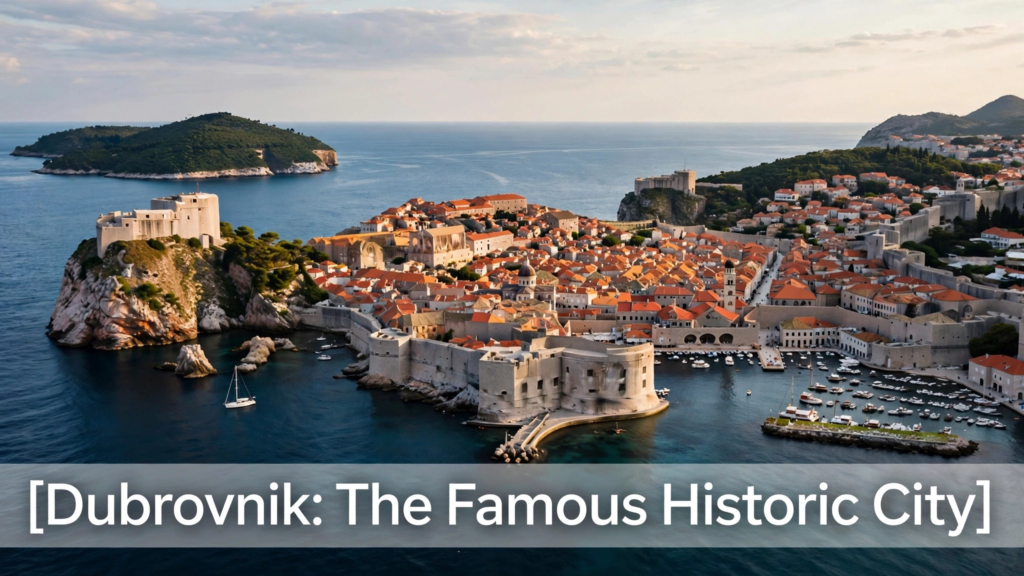
Dubrovnik is one of the most recognizable destinations on the Dalmatian Coast Croatia. Moreover, its historic Old City, stone walls, sea views, and historic architecture attract travelers from around the world. Although Dubrovnik can be more expensive and crowded than smaller towns, its unique setting makes it worth considering.
Walk the Old City Walls
The city walls are one of Dubrovnik’s signature experiences. Walking along them gives you views over the red rooftops, Adriatic Sea, and surrounding landscape.Therefore, wear comfortable shoes and bring water, especially during warm weather.
Explore Stradun
Stradun is the main street through Dubrovnik’s Old City. It connects important landmarks and provides an easy route through the historic center.Moreover, the surrounding streets contain shops, restaurants, churches, and historic buildings.
Ride the Cable Car
The Dubrovnik cable car provides elevated views over the Old City and Adriatic. However, schedules and operating conditions can vary.Therefore, check current information before planning your visit around the cable car.
Best for: History lovers, couples, photographers, and first-time Croatia visitors.
Best Time to Visit the Dalmatian Coast
The best time to visit the Dalmatian Coast Croatia depends on your preferred weather and travel style. Moreover, the summer months are usually the busiest period along the coast.
Spring
Spring can be a pleasant time for sightseeing and outdoor activities. Temperatures are generally milder than in peak summer.Furthermore, towns may feel less crowded than during July and August.
Summer
Summer is the main beach season. The weather is generally warm, and many seasonal services operate at full capacity.However, popular destinations can become very busy. Accommodation prices may also be higher during peak periods.
Autumn
Early autumn can provide warm conditions and fewer crowds. Therefore, it can be a good choice for travelers who want a balance between beach weather and quieter towns.
Winter
Winter is much quieter along the coast. Some seasonal businesses may have reduced hours or close entirely.Therefore, winter is better for travelers focused on local life and historic sightseeing than beach activities.
How to Travel Around the Dalmatian Coast
Getting around the Dalmatian Coast Croatia can be easy when you plan your route carefully. Moreover, the best transport depends on whether you’re visiting mainland towns, islands, or both.
By Car
A rental car gives you flexibility to visit smaller towns and scenic areas. You can stop whenever you find a beautiful viewpoint or village.However, parking can be difficult in historic centers during busy periods. Therefore, check parking arrangements before driving into old towns.
By Bus
Buses connect many coastal towns. They can be a useful option for travelers who don’t want to drive.Schedules can change by season, so check current routes before booking accommodation around a specific departure.
By Ferry
Ferries and passenger boats are important for island travel. Split, Dubrovnik, and other coastal locations have connections to various islands.However, schedules can change because of weather and seasonal demand. Therefore, leave some flexibility when planning island connections.
How Many Days Do You Need?
A trip along the Dalmatian Coast Croatia can last anywhere from a few days to several weeks. Your ideal length depends on how many towns and islands you want to visit.For a short trip, choose two or three bases. For example, you could stay in Split and Dubrovnik while taking one island day trip.For a longer holiday, add Hvar, Šibenik, Zadar, or Makarska. Moreover, staying several nights in each place allows you to travel at a slower pace.
| Trip Length | Suggested Plan |
| 3–4 days | Split + one nearby destination |
| 5–7 days | Split + Hvar + Dubrovnik |
| 8–10 days | Split + Šibenik + Hvar + Dubrovnik |
| 10–14 days | Add Zadar, Makarska, or extra islands |
Therefore, don’t try to visit every town if you only have a few days.
Where to Stay on the Dalmatian Coast
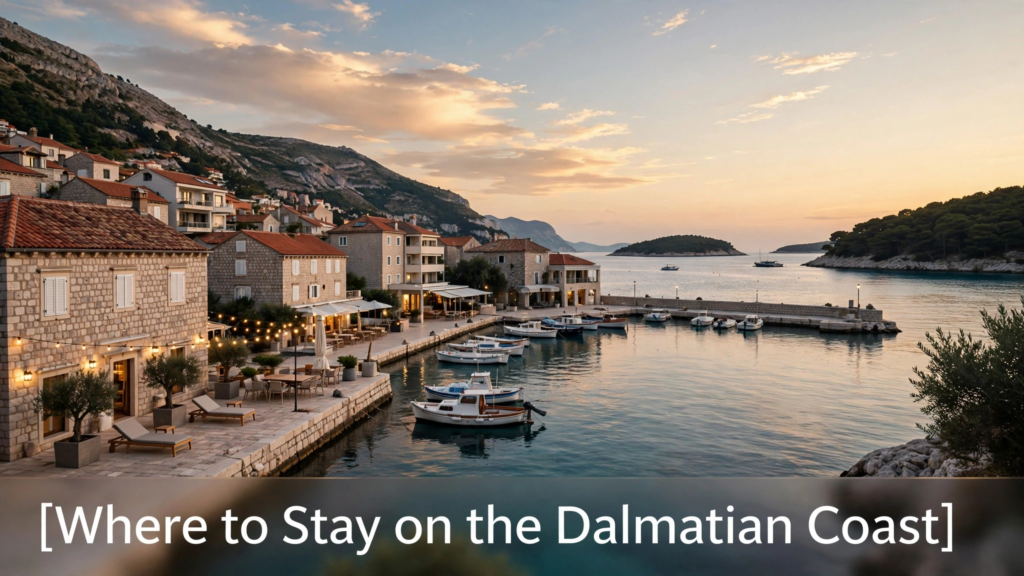
Choosing the right base can make your Dalmatian Coast Croatia trip much easier. Moreover, each town suits a different travel style.
Split
Choose Split if you want history, restaurants, nightlife, and ferry connections. It’s one of the most practical bases for first-time visitors.
Hvar Town
Choose Hvar if you want island scenery, beaches, restaurants, and a lively summer atmosphere.
Dubrovnik
Choose Dubrovnik for historic sightseeing, dramatic views, and the famous Old City.
Zadar
Choose Zadar if you want a smaller city with historic attractions and memorable sunsets.
Makarska
Choose Makarska if beaches and mountain scenery are your main priorities.
Budget Tips for Croatia
The cost of visiting the Dalmatian Coast Croatia varies by season, destination, hotel type, food, and transport. Therefore, it’s better to plan a flexible budget than rely on one average price.
Ways to Save Money
- Travel during shoulder seasons.
- Compare accommodation before booking.
- Stay outside the busiest old-town areas.
- Use buses when convenient.
- Eat at local restaurants.
- Book ferries and popular stays early.
- Choose free walking routes and public viewpoints.
Moreover, island destinations can cost more during peak summer. Therefore, compare several bases before deciding where to stay.
Best Beaches Along the Coast

The Dalmatian Coast Croatia has many beautiful beaches, although the beach experience differs from sandy tropical destinations. Most Croatian beaches are pebbly or rocky rather than wide sandy beaches. Therefore, water shoes can be useful for travelers who prefer extra comfort.
Beach Tips
Choose beaches based on access, shade, water conditions, and nearby facilities. Furthermore, arrive early during busy summer days if you want more space.
Always follow local safety signs. Avoid swimming in areas with strong currents or dangerous conditions.
Food to Try
Food is an important part of the Dalmatian Coast Croatia experience. Moreover, the region has strong Mediterranean influences.
Seafood
Fresh fish, grilled seafood, and shellfish are common choices along the coast. Local restaurants often serve seafood with simple ingredients.
Peka
Peka is a traditional cooking style where meat or seafood cooks slowly under a covered bell. Availability varies by restaurant and usually requires planning.
Pašticada
This traditional Dalmatian dish is made with slow-cooked beef and a rich sauce. It is often served with gnocchi.
Local Olive Oil
Croatia’s coastal regions are known for olive growing. Therefore, local olive oil is worth trying with bread, salads, or seafood.
Family Travel on the Dalmatian Coast
Families can enjoy the Dalmatian Coast Croatia with a mix of beaches, historic towns, boat trips, and outdoor activities. However, parents should consider walking distances and heat during summer. Split and Zadar can be practical for families because they offer many services. Mahaska can work well for families who want more beach time. Furthermore, choose accommodation with easy access to restaurants and transport. This can reduce the need for long walks with young children.
Accessibility Tips
Accessibility varies across the Dalmatian Coast Croatia. Historic centers often have stone streets, stairs, uneven surfaces, and limited step-free access.Therefore, travelers with mobility needs should contact hotels and attractions before booking. Ask about elevators, accessible rooms, step-free entrances, and transport.Modern areas may be easier to navigate than historic centers. Moreover, ferry access can vary between ports and vessels.
Safety Tips for Coastal Towns

The Dalmatian Coast Croatia is popular with international travelers, but normal travel precautions still matter. Keep your belongings secure in crowded areas and avoid leaving valuables unattended. Moreover, take care around wet stone streets and steep steps. Comfortable footwear can reduce slips and falls. When swimming, follow local warnings and check sea conditions. Furthermore, stay hydrated and protect yourself from the strong summer sun.
Booking Tips for Your Trip
Book accommodation early if you’re traveling during peak summer. Moreover, popular towns such as Dubrovnik, Split, and Hvar can have strong demand.If you’re planning island hopping, check ferry schedules before booking hotels. This helps prevent difficult connections.Therefore, create your route first and book accommodation second. A simple route can save both time and money.
A Simple 7-Day Itinerary

If you’re planning your first Dalmatian Coast Croatia trip, a week can provide a good introduction.
Days 1–2: Split
Explore Diocletian’s Palace, the old town, and the waterfront. Take time to enjoy local food and the relaxed atmosphere.
Day 3: Trogir
Take a day trip to Trogir. Explore the historic center and waterfront before returning to Split.
Days 4–5: Hvar
Travel to Hvar Island and spend two nights exploring Hvar Town. Add a boat trip if weather and schedules allow.
Days 6–7: Dubrovnik
Finished in Dubrovnik. Explore the Old City, walk the walls, and enjoy views across the Adriatic.This route gives you history, islands, beaches, and beautiful coastal scenery without visiting too many places.
Frequently Asked Questions
What is the Dalmatian Coast Croatia known for?
The Dalmatian Coast Croatia is known for historic towns, Adriatic beaches, islands, seafood, old stone architecture, and beautiful coastal scenery.
Which town is best for first-time visitors?
Split is one of the best choices for first-time visitors. It offers historic attractions, restaurants, waterfront areas, and useful transport connections.
Is the Dalmatian Coast good for families?
Yes. Families can enjoy beaches, historic towns, parks, boat trips, and local food. However, check walking conditions and summer temperatures before planning.
What is the best time to visit?
Late spring and early autumn can offer a good balance of weather and fewer crowds. Summer is best for classic beach weather but is usually busier.
How do you travel between coastal towns?
Travelers can use buses, rental cars, ferries, and passenger boats. The best option depends on your route and whether you’re visiting islands.
Is Dubrovnik worth visiting?
Yes. Dubrovnik offers a famous Old City, historic walls, sea views, and beautiful architecture. However, it can be busy during peak summer.
How many days are enough for the Dalmatian Coast?
A week is a good starting point for first-time visitors. However, 10 to 14 days allows you to explore more towns and islands.
Conclusion
The Dalmatian Coast Croatia offers an excellent mix of historic towns, beautiful beaches, island adventures, local food, and Adriatic views. Split is a practical starting point, while Trager offers a charming historic experience. Šibenik is ideal for architecture lovers, Zadar is famous for its waterfront attractions, and Mahaska combines beaches with mountain scenery. Hvar Town brings island beauty and a lively atmosphere, while Dubrovnik provides one of Europe’s most memorable historic coastal settings.
Overall, Dalmatian Coast Croatia is best enjoyed at a comfortable pace. Therefore, choose a few towns that match your interests instead of trying to see everything quickly. Moreover, check seasonal transport, accommodation availability, weather, and ferry schedules before your trip. With thoughtful planning, you can enjoy historic streets, peaceful beaches, island views, fresh seafood, and unforgettable sunsets along one of Europe’s most beautiful coastlines.