


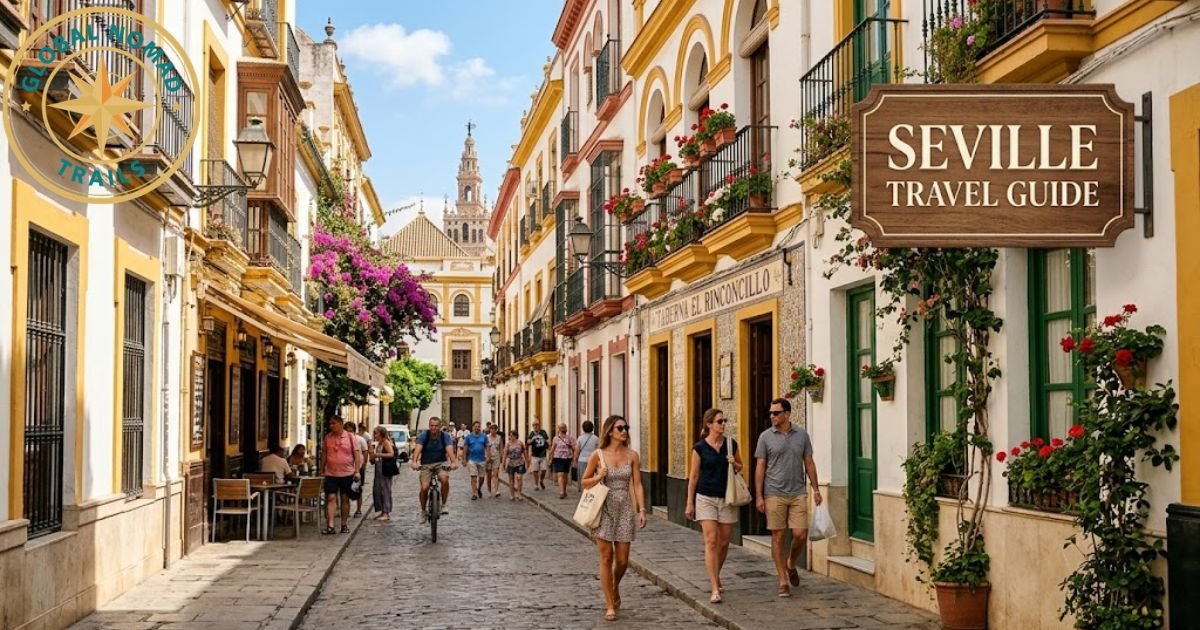
This Seville travel guide helps you decide how long to stay, when to go, where to sleep, and which sights need a booking. Seville is compact and walkable, but its biggest sights sell timed tickets, and its summer heat can shape your whole day. A little planning goes a long way.
Seville is the capital of Andalusia in southern Spain. It sits on the Guadalquivir River, about 90 km from the Atlantic coast. Its three headline sights are the Real Alcázar, the cathedral with the Giralda tower, and the flamenco scene in Triana.
How Many Days to Spend in Seville
Two full days is the minimum. Three days is the sweet spot. Four days works if you want a day trip.
The historic centre is small, so you can walk between most major sights in 10–20 minutes. The limiting factor is booking slots and midday heat, not distance.
| Trip length | What it covers | Best for |
| 2 days | Alcázar, cathedral and Giralda, Santa Cruz, Plaza de España, one evening of tapas, one flamenco show | First-timers on a short city break |
| 3 days | All of the above, plus Triana, the Setas viewpoint, the Archivo de Indias, and slow evenings | Most travelers |
| 4 days | Three days plus a day trip to Córdoba, Cádiz or Jerez | Repeat visitors and history lovers |
If you have only one day, book the Alcázar for opening time. Then see the cathedral, walk through Santa Cruz, and finish with tapas in Triana. To discover more ways to explore local cuisine while traveling, read our guide to Food Tourism Experiences.
When to Visit Seville
The best months are March to May and October to November. Days are warm, evenings are pleasant, and terraces are open.
- Spring (March–May): Orange blossom scents the streets, and the city feels at its liveliest. Holy Week (Semana Santa) and the April Fair (Feria de Abril) fill hotels and raise prices, so book early. Both follow a moving calendar tied to Easter, so confirm the dates for your year.
- Summer (June–August): Expect extreme heat. Daytime highs often pass 38°C in July and August. Visit sights at opening time, rest in the afternoon, and go out after sunset.
- Autumn (October–November): Temperatures drop to comfortable levels, and crowds thin. Some days bring rain.
- Winter (December–February): Days are mild but can be cool at night. This season is the cheapest and quietest, although some outdoor spaces feel less inviting.
If you dislike crowds, avoid Holy Week and the April Fair. If you love the atmosphere, those weeks are the reason to come.
Where to Stay in Seville: Accommodation Guide
Stay in Santa Cruz, Arenal, or El Centro for sightseeing. Choose Triana for a local feel. Your choice depends on whether you want convenience, quiet, or atmosphere.
| Area | Best for | Pros | Trade-offs |
| Santa Cruz | First-time visitors, couples | Next to the Alcázar and cathedral; atmospheric lanes | Higher prices; crowded in the day; narrow streets are hard with big suitcases |
| Arenal | Walkers, short stays | Central; close to the river, bullring, and cathedral | Busier and noisier on event nights |
| El Centro / Alameda | Nightlife, budget travelers | Lively bars, good value | Some streets get loud late at night |
| Triana | Food lovers, flamenco fans | Authentic feel, river views, great tapas | A 10–15 minute walk from the main sights |
| Macarena | Longer stays, budget travelers | Local life, lower prices | Farther from major attractions |
Two practical points matter. Many old-town hotels sit on pedestrian streets, so confirm how to reach the entrance with luggage. Also, if you visit in summer, check that the room has working air conditioning, and ask about noise if you are a light sleeper.
How to Get to Seville
Seville has an international-capable airport, a high-speed rail hub, and good road links. For most travelers, the train or a flight is easier than driving.
Taking a Train to Seville
The train is the best way to arrive from Madrid, Córdoba, or Málaga. High-speed AVE trains arrive at Santa Justa station, about 2.5 km from the old town.
- Madrid to Seville takes roughly 2.5 hours.
- Córdoba is about 45 minutes away, and Málaga is around 2 hours.
- Regional trains connect to destinations such as Cádiz and Jerez.
Book AVE tickets in advance on the official Renfe website for better prices. From Santa Justa, you can walk, take a bus, or ride a taxi to the centre. A taxi takes about 10 minutes, depending on traffic.
Flying to Seville
Seville Airport (SVQ, San Pablo) is about 10 km from the centre. It handles many direct European flights, though long-haul travelers usually connect through Madrid, Barcelona, or another hub. Check airline schedules, because routes change by season.
How to Get from Seville Airport to the City Center
- EA airport bus: This is the standard budget option. It takes roughly 35 minutes and stops at Santa Justa station and near the centre. Recent fare reports put a single ticket at around €6, with a slightly cheaper return, but fares change. Confirm the current price before you travel.
- Taxi: Taxis run from the airport to the centre on a regulated fare structure. Expect roughly €25–35 depending on time and luggage. Confirm the fare with the driver before you start.
- Rideshare: Apps operate in Seville, but pickup rules at the airport vary.
There is no metro or train link to the airport at the time of writing.
Hiring a Car to Get to Seville
Hire a car only if you plan day trips beyond the city. Driving in the old town is stressful. Streets are narrow, many are restricted to residents, and parking is scarce and expensive.
A better plan is to collect the car on the day you leave Seville. If you stay in the centre, ask your hotel about parking before you book. Never leave luggage visible inside a parked car.
Getting Around in Seville
Walk whenever you can. The old town, Santa Cruz, Arenal, and the river promenade all connect on foot. Use public transport for longer jumps, such as María Luisa Park, Cartuja Island, or the outer neighborhoods.
If you take a break at a local café during your sightseeing, our guide to Coffee in Spain: A Guide to Spanish Cafes and What to Order explains popular Spanish coffee drinks and how to order them.
Public Transport in Seville
Tussam runs the city bus network, and a small metro line and a short tram line cover limited routes. The buses are the most useful option for visitors. Most tourists use them for a handful of trips, for example from the cathedral area to the Plaza de España or to a distant restaurant.
Seville Public Transport Tickets
- Single bus ticket: About €1.40 in 2026, according to reported fares.
- Rechargeable card (Tarjeta Multiviaje): Cuts the cost per ride substantially. Reports put a ride at well under €1. It needs a refundable deposit and is sold at tobacco shops and kiosks.
- Tourist pass: Tussam also offers 1-day and 3-day unlimited passes. They pay off only if you plan many rides.
Fares and card rules change, so check the current prices before you travel. For a short walking-focused trip, single tickets are usually enough.
Seville Taxis
Taxis are easy to find at ranks and by phone or app. They cost far less than in northern European capitals. Use a taxi late at night, when buses are infrequent, or when the heat makes walking unpleasant. Check that the meter is running.
Hop-on Hop-off Bus
A hop-on hop-off bus is optional and rarely essential. The most interesting areas are walkable. The bus suits travelers with limited mobility, families with young children, or anyone who wants to cover María Luisa Park, Plaza de España, and the riverfront on a hot afternoon with minimal walking. If you are fit and staying central, spend the money on a flamenco show or a good dinner instead.
What to Book in Advance for Visiting Seville
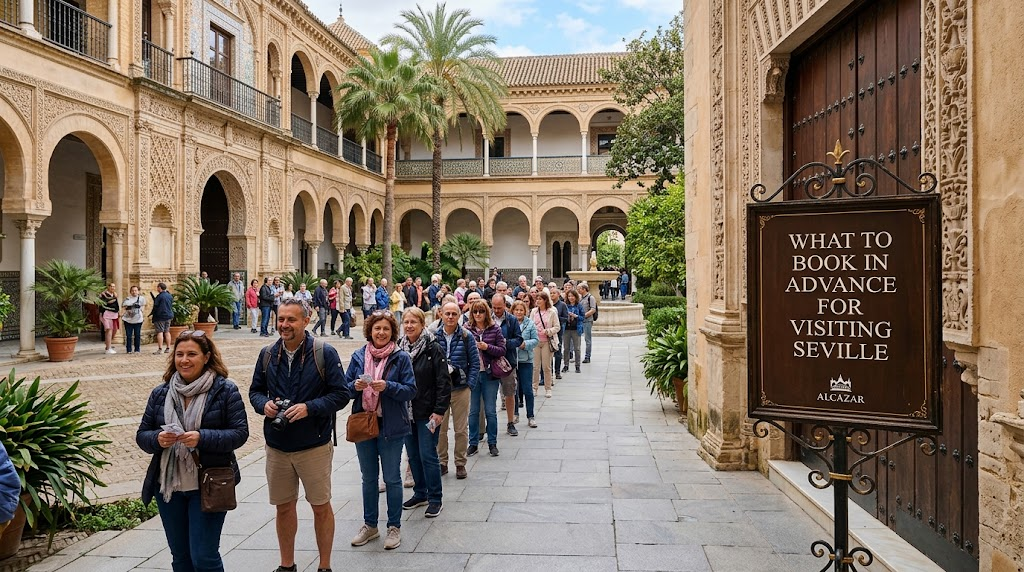
Book the Alcázar, the cathedral, and any flamenco show before you arrive. These sell out, especially in spring and on weekends. Tickets for the Alcázar are named and timed, so check your ticket details carefully before visiting.
Prices below come from recent reports and may vary. Use them as a rough guide and check the official sites before you pay.
Real Alcázar
The Real Alcázar is the one sight worth planning your whole trip around. This royal palace blends Moorish and Christian architecture. Highlights include the Patio de las Doncellas, the Hall of Ambassadors, and the large formal gardens, which appear in the TV series Game of Thrones as the Water Gardens of Dorne.
- Hours: It generally opens at 9:30. Closing time is usually 17:00 from October to March and 19:00 from April to September.
- Price: Adult tickets are around €15.50 according to the official website. Reduced tickets and additional visits may have different prices.
- Time needed: Allow at least 2 hours, and up to 3–4 if you want to enjoy the gardens.
- Free entry: Free hours may exist on certain days, including a Monday slot that needs an online reservation. Check the current rules before planning around free admission.
- Extra: The upper royal apartments (Cuarto Real Alto) need a separate supplement and a timed visit. Check access details before booking.
- Best tip: Book the 9:30 slot. The first hour is calmer, and the gardens are cooler.
Buy tickets through the official Real Alcázar website to check current ticket prices, opening hours, and booking information.
Seville Cathedral and Giralda Tower
Yes, visit it. Seville’s cathedral is often described as the largest Gothic cathedral in the world. It holds a monument tomb associated with Christopher Columbus, the Patio de los Naranjos, and the Giralda, a former minaret turned bell tower.
- Price: The general ticket is around €13 online, according to the 2026 official rates. Confirm the current price before booking.
- Giralda climb: The tower uses 35 ramps rather than stairs. It is steady, not steep, though it takes effort in summer.
- Time needed: About 75–120 minutes.
- Dress code: Cover shoulders and knees. Staff can refuse entry if visitors do not follow the dress requirements.
- Hours: They change on Sundays and holidays, so check the official page.
Book on the official Seville Cathedral website. A good plan is to climb the Giralda first, while you are fresh, then explore the interior.
Setas de Sevilla (Metropol Parasol)
The Setas is worth it if you want a skyline view, especially near sunset. This wooden, mushroom-shaped structure stands in Plaza de la Encarnación. You can walk its rooftop paths for views over the old town, the cathedral, and the Giralda.
- The plaza underneath is free. The rooftop walkway needs a ticket, and prices may vary depending on the ticket type.
- Below ground, a small archaeological museum (Antiquarium) shows Roman remains found during construction.
- Booking is rarely essential, but a sunset slot can fill up on warm evenings.
Flamenco Shows
See at least one flamenco show, and choose a small venue. Seville is one of flamenco’s historic homes, and the intimacy changes the experience. In a small room, you hear the singer’s breath and see the dancer’s footwork up close.
- Where: Triana and the old town host most venues. The Museo del Baile Flamenco runs regular shows in a historic building, and many smaller tablaos sell limited seats.
- Cost: Prices vary widely, often from the low €20s to around €40 or more, depending on venue and whether drinks are included.
- Choosing: Smaller rooms usually offer a more intimate atmosphere than large dinner-show spaces. Read recent reviews and check the show length.
- Timing: Evening shows often start between 19:00 and 21:30. Book ahead for weekends.
FAQs
How many days do you need in Seville?
Two full days are enough to see Seville’s main attractions, but three days are ideal for exploring its historic neighborhoods, enjoying tapas, and watching a flamenco show.
What is the best month to visit Seville?
March, April, May, October, and November are generally good months to visit Seville because temperatures are more comfortable for sightseeing than during the hot summer.
What is Seville famous for?
Seville is famous for the Real Alcázar palace, Seville Cathedral and Giralda Tower, flamenco dancing, traditional tapas, and its beautiful historic streets.
Is Seville a walkable city?
Yes, Seville is a very walkable city. Many major attractions are close to one another, especially in the historic centre, although buses and taxis can help with longer journeys.
What should you book in advance in Seville?
It is best to book tickets for the Real Alcázar, Seville Cathedral, and popular flamenco shows in advance, particularly during spring, weekends, and major festivals.
Conclusion
Seville is a wonderful destination for travelers who love history, architecture, culture, and delicious Spanish food. From exploring the beautiful Real Alcázar and climbing the Giralda Tower to enjoying tapas in Triana and experiencing an authentic flamenco performance, the city offers something memorable around every corner. Plan your visit during spring or autumn for more comfortable sightseeing, book popular attractions ahead of time, and leave room to enjoy the city’s relaxed evenings. Whether you stay for two days or three, Seville can make your trip to southern Spain truly special.