

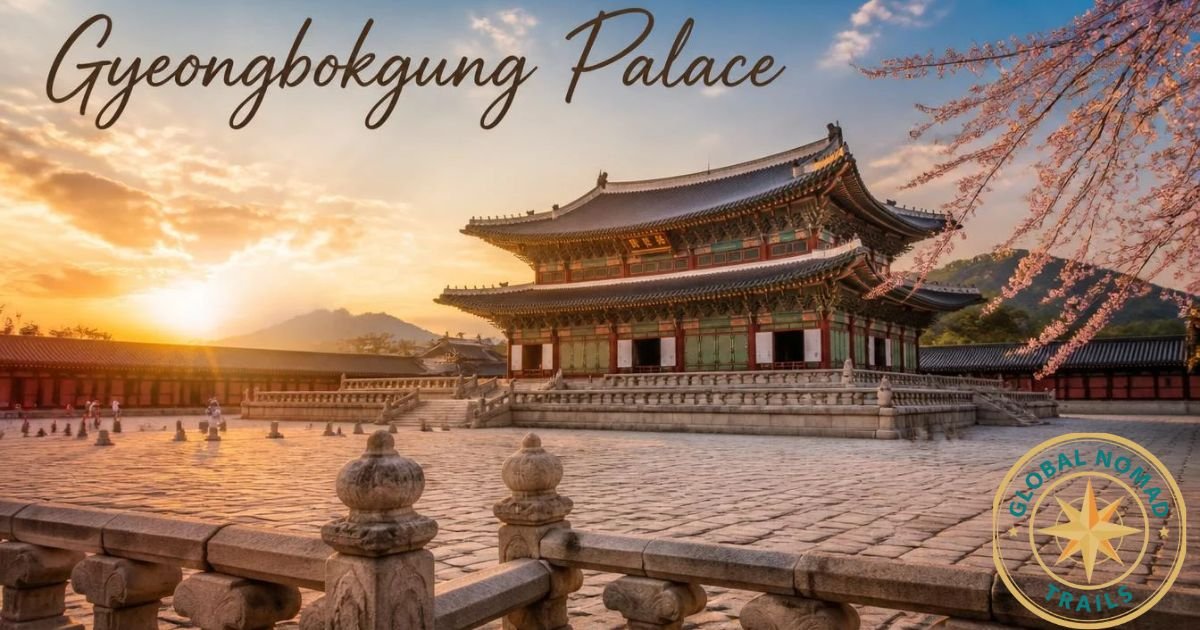
Gyeongbokgung Palace is Seoul’s main Joseon-era palace, and most visitors need two to three hours to see it. Adult admission costs 3,000 won, the palace usually closes on Tuesdays, and visitors wearing a qualifying hanbok enter free. This guide covers opening hours, tickets, the guard ceremony, the main halls, and nearby attractions.
It is also very popular because it was a filming location for various K dramas, including Goblin, The Last Empress and The Moon Embracing the Sun. Korean series are also one of the reasons I was so excited to see Seoul palaces.
Quick Facts
| Detail | Information |
| Address | 161 Sajik-ro, Jongno-gu, Seoul |
| Built | 1395, as the main palace of the Joseon dynasty |
| Closed | Tuesdays, with possible public-holiday exceptions |
| Adult admission | 3,000 won |
| Time needed | About 2–3 hours |
| Nearest station | Gyeongbokgung Station, Line 3, Exit 5 |
| On the grounds | National Palace Museum of Korea and National Folk Museum of Korea |
Opening Hours and Tickets
The palace opens at 9:00 a.m., and closing time changes with the season:
- November to February: 5:00 p.m.
- March to May: 6:00 p.m.
- June to August: 6:30 p.m.
- September to October: 6:00 p.m.
Last admission is one hour before closing. Hours can change, so check the official Gyeongbokgung Palace website or call the management office at +82-2-3700-3900 before you go.
Adult admission for foreign visitors aged 19–64 is 3,000 won. Children and some other age groups qualify for free entry, and group discounts may apply. Check the official website for current eligibility and ticket rules.
Free Entry With a Hanbok
Visitors wearing a qualifying hanbok, the traditional Korean dress, can enter free. Rental shops near the palace typically charge about 13,000–20,000 won and may include accessories and roughly four hours of wear. Rental prices vary, so check what is included before booking.
The savings on entry are small, so rent one for the experience and the photos, not just the discount. Check the official palace guidance for the requirements that qualify an outfit for free admission.
How to Get to Gyeongbokgung Palace
Take Seoul Subway Line 3 to Gyeongbokgung Station and leave through Exit 5. The walk to the palace takes about five minutes. Gwanghwamun, the main gate, faces the wide boulevard and plaza to the south.
Watch the Royal Guard Ceremonies
Gyeongbokgung hosts several guard performances on operating days. The regular schedule includes:
- Royal Guard Changing Ceremony: 10:00 a.m. and 2:00 p.m., about 20 minutes
- Gwanghwamun Gate guarding ceremony: 11:00 a.m. and 1:00 p.m., about 10 minutes
- Public training of the guard soldiers: 9:35 a.m. and 1:35 p.m., about 15 minutes
The changing ceremony takes place around Heungnyemun Gate. You can watch the ceremony without a palace admission ticket. Rain and other weather conditions can cancel performances, and schedules may change, so check the official ceremony information before your visit.
For a clear view, avoid standing directly beside Gwanghwamun, where crowds can block the central action. The area near Heungnyemun offers another viewing angle.
What to See Inside the Palace
Gyeongbokgung’s name means “Greatly Blessed by Heaven.” People call it the Northern Palace because it sits north of the other royal palaces. It is the largest of Seoul’s Five Grand Palaces.
- Gwanghwamun: The main south gate and the setting for the guard ceremonies.
- Geunjeongjeon: The throne hall, where important royal ceremonies took place.
- Gyeonghoeru Pavilion: A pavilion beside a pond, popular with photographers.
- Royal living quarters: Halls such as Gangnyeongjeon and Gyotaejeon show where the king and queen lived.
- Amisan Garden: A terraced garden behind the queen’s quarters.
The palace has a long history of destruction. It burned during the Imjin War (1592–1598), and rebuilding took place later, including under King Gojong in the 19th century. Many of the buildings visitors see today are reconstructions rather than original structures.
Museums on the Grounds
The National Palace Museum of Korea and the National Folk Museum of Korea are located within the palace grounds. The National Palace Museum has its own free admission. If you add a museum visit, plan at least another hour on top of your palace visit.
Night Viewing
The Korea Heritage Service runs ticketed evening openings during selected periods. The second-half 2026 session ran from September 2 to October 2, from 7:00 to 9:30 p.m., with last entry at 8:30 p.m. That session has ended, so check the official Gyeongbokgung Palace website for future dates, ticket availability and current rules.
Suggested Half-Day Plan
- Arrive near 9:00 a.m. and watch the public guard training or the 10:00 a.m. ceremony from the plaza.
- Walk through Heungnyemun to Geunjeongjeon, then continue to Gyeonghoeru.
- See the living quarters and Amisan Garden.
- Visit a museum if you have time.
- Continue to nearby sights such as Bukchon Hanok Village, Insadong, Jongmyo Shrine or Jogyesa Temple.
Visitors who prefer a shorter day can enter after the 10:00 a.m. ceremony ends and finish by early afternoon. The palace also offers guided tours from the Information Center that last around 1–1.5 hours. Check current tour times and languages there.
For more planning ideas, see our guides to 25 Unique Travel Tips for Smarter Adventures and 15+ Top Countries to Visit.
Gyeongbokgung or Changdeokgung?
Choose Gyeongbokgung if this is your first palace visit. It is the largest of Seoul’s Five Grand Palaces and is well suited to visitors who want to see grand royal architecture and the guard ceremony.
Changdeokgung is a good alternative if you are especially interested in palace gardens and a setting that blends with the surrounding landscape. Bukchon Hanok Village lies between the two palace areas, making it possible to plan these sights together. Check each palace’s official information for opening days and admission details.
Common Mistakes to Avoid
- Arriving on Tuesday. Gyeongbokgung usually closes on Tuesdays, and regular guard ceremonies do not run on its closure day.
- Assuming ticket details never change. Check the official website for current fees and entry rules.
- Standing too close to Gwanghwamun. Try viewing the ceremony from near Heungnyemun.
- Arriving near closing time. Last admission is one hour before closing.
- Skipping weather checks. Rain and other weather conditions can cancel ceremonies.
FAQs
What is so special about Gyeongbokgung Palace?
Gyeongbokgung is the largest of Seoul’s Five Grand Palaces and was built in 1395 as the main palace of the Joseon dynasty. Its royal halls, Gyeonghoeru Pavilion, traditional architecture and guard-changing ceremony make it one of Seoul’s most notable historic attractions.
Is Gyeongbokgung Palace free entry?
Entry is free for visitors wearing a qualifying hanbok. Some age groups and other eligible visitors also qualify for free admission. For most foreign adults aged 19–64, the standard ticket costs 3,000 won. Check the official website for the current rules.
Which is better, Changdeokgung or Gyeongbokgung Palace?
Gyeongbokgung is a strong choice for first-time visitors who want grand palace architecture and the royal guard ceremony. Changdeokgung is particularly appealing to visitors interested in gardens and a palace landscape that blends with its surroundings. The better choice depends on your interests and available time.
How much time is needed for Gyeongbokgung Palace?
Most visitors need about two to three hours to see the main palace buildings and grounds. Allow extra time if you want to visit the museums or join a guided tour.
How much does it cost to enter Gyeongbokgung Palace?
Standard admission for foreign adults aged 19–64 is 3,000 Korean won. Qualifying hanbok wearers and some other visitors can enter free. Confirm the latest ticket prices and eligibility rules on the official website before visiting.
Can I walk from Gyeongbokgung to Bukchon Hanok?
Yes. Bukchon Hanok Village is within walking distance of Gyeongbokgung Palace, and the neighborhood lies between Gyeongbokgung and Changdeokgung. The exact walking time depends on your palace exit and which part of Bukchon you want to visit. Remember that Bukchon is a residential neighborhood, so respect residents’ privacy and follow local visitor rules. See the official Korea Tourism Organization guide to Bukchon Hanok Village.
Conclusion
Gyeongbokgung Palace is an excellent place to explore Seoul’s royal history, traditional architecture and cultural ceremonies. Set aside two to three hours, check the current opening schedule, and consider wearing a hanbok if you want to experience traditional Korean clothing and qualify for free entry. If time allows, continue on foot to Bukchon Hanok Village to see another side of historic Seoul.
Opening hours, fees and ceremony schedules can change, so confirm details with the Korea Heritage Service before you go.