



Road trip planning made easy comes down to five decisions: where you stop, how far you drive each day, what fuel will cost, whether your car is ready, and what you pack. Get those right and the rest is flexible. Fuel is the decision most travelers get wrong right now. The AAA national average for regular gas was $4.10 a gallon on 5 November 2026. A year earlier it was about $3.07, so a budget copied from an older guide will run short.
This guide gives you a step-by-step plan, a daily driving limit, a fuel formula with worked numbers, a pre-trip car check and a packing list sorted by purpose. It also answers the questions people search most: how many miles a day is reasonable, how often to stop, and how much a road trip costs. Prices and rules change, so check time-sensitive details before you leave.
How Do You Plan a Road Trip?
Plan a road trip in seven steps, in this order:
- Set your dates and your group size. Both decide your vehicle, your lodging and your daily distance.
- Pick two or three anchor stops. One trip planner advises building the route around two or three must-see stops and letting the rest fill in. Over-planned days cause most of the stress.
- Map the route and cap the daily drive. Use the pacing table below.
- Build the budget. Start with fuel, then add lodging, food, tolls and parking.
- Book key stays. Reserve nights in busy areas first. Choose free-cancellation rates where you can.
- Check your vehicle. Do this a week before departure, not the night before.
- Pack by category. Keep safety items and daily essentials within reach.
How to Plan Your Route and Daily Driving
Start with the places you cannot skip, then connect them with the most direct roads. Add scenic detours only after the schedule works.
Google Maps handles basic multi-stop routes. Roadtrippers and Furkot also help you plan stops and attractions. Electric vehicle drivers can use A Better Route Planner or PlugShare to find chargers. Look for long gaps between fuel or charging stops, especially in desert and mountain areas.
How Many Miles Should You Drive Per Day?
The right distance depends on how much you want to see. These ranges are an editorial guideline, not a fixed rule:
| Pace | Driving time per day | Best for |
| Relaxed | 3–4 hours | Families, sightseeing-heavy trips |
| Balanced | 5–6 hours | Most first road trips |
| Push | 7–8 hours | Getting to a far destination fast |
Avoid going past about eight hours in one day. If your route is longer, split it with an overnight stop.
How Often Should You Stop?
AAA advises a break every two hours or every 100 miles, and stopping sooner if you feel sleepy. Timing matters too. NHTSA identifies midnight to 6 a.m. and the late afternoon as common periods for drowsy-driving crashes. NHTSA reported 633 drowsy-driving deaths on U.S. roads in 2023. Read NHTSA’s drowsy driving guidance before a long drive. Sleep at least seven hours the night before, and share the driving if you can.
Two Routes to Start With
A short Midwest trip shows how this works. Chicago to Detroit is roughly 280 miles, which fits one relaxed day with a lunch stop. Read our guides to things to do in Chicago and things to do in Detroit, Michigan to choose your anchor stops at each end.
For a coastal drive, California offers several regions in one state. Our best vacation spots in California guide helps you pick one or two regions instead of trying all of them.
Road Trip Budget: What Will It Cost?
Fuel is the line you can calculate exactly. Use this formula:
Miles ÷ miles per gallon × price per gallon = fuel cost
Here is the cost of driving 1,000 miles at $4.10 a gallon:
| Vehicle fuel economy | Gallons used | Fuel cost |
| 20 mpg (large SUV) | 50 | about $205 |
| 28 mpg (midsize car) | 36 | about $146 |
| 35 mpg (hybrid) | 29 | about $117 |
Gas prices vary by state and change weekly. Check the AAA gas price tracker for your route before you finalize the number. AAA reported public EV charging at about 41 cents per kilowatt-hour in mid-October 2026, so electric drivers should price charging the same way.
Then add the rest:
- Lodging for each night
- Food, split into restaurant meals and groceries
- Tolls and parking, which add up in cities
- Attraction tickets and park entry fees
- A buffer for repairs and surprises. I suggest 10–15% of the total, as an editorial rule of thumb.
Saving money on the road is usually about lodging and food. Pack a cooler, stay outside city centers, and book free-cancellation rooms that you can drop if plans change.
Check Your Vehicle Before You Leave
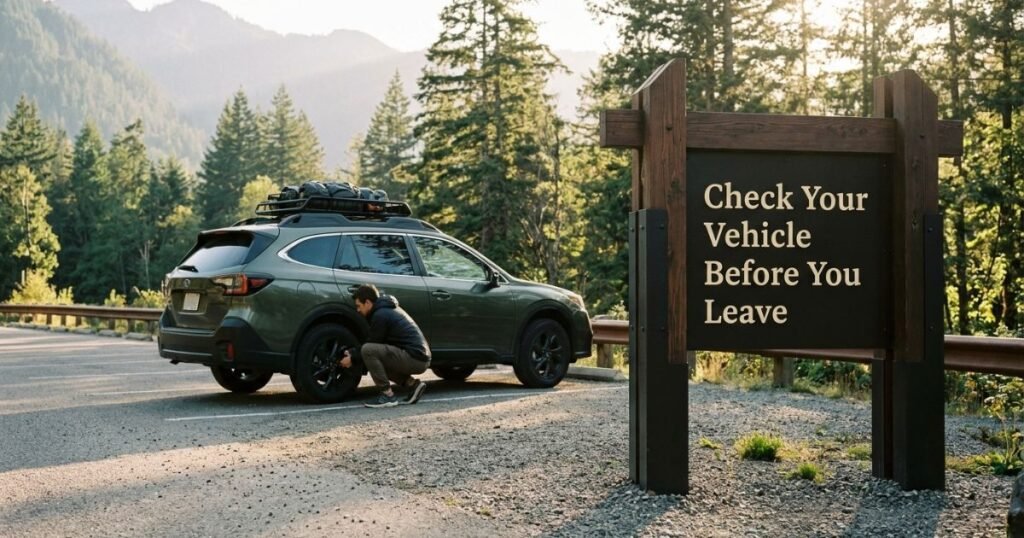
A breakdown costs more than any maintenance you skip. Do these checks about a week before departure:
- Tires: Check the pressure, the tread depth and the spare. One planning guide recommends the penny test for tread and looking for damage.
- Oil and fluids: Top up the oil, coolant and washer fluid.
- Brakes, lights and wipers: Replace worn wipers before rain finds you.
- Battery: Have it tested if it is more than a few years old.
- Recalls: Search your VIN on NHTSA’s recall tool.
- Roadside coverage: Confirm your insurance or membership covers towing.
Road Trip Packing Checklist
Pack what you will use on the road. Keep the list short and sorted.
Documents and money
- Driver’s license, registration and insurance proof
- Hotel confirmations and a paper copy of your route
- Cards plus some cash for tolls and small towns
Car safety kit
- Jumper cables or a jump starter
- Tire inflator and tire gauge
- First-aid kit, flashlight and spare batteries
- Water and a few non-perishable snacks
Comfort and tech
- Phone charger and a car mount
- Offline maps, in case coverage drops
- A small cooler, a refillable bottle and a trash bag
- Layers, sunglasses and a light rain jacket
- Medications and sunscreen
Space-saving tip: Use soft bags and packing cubes. Keep the daily-use bag on top.
Common Road Trip Planning Mistakes
- Scheduling too much driving. A packed route leaves no room to enjoy any stop.
- Using old fuel numbers. Check current prices, as shown above.
- Driving at night to save time. The sleepiest hours are the riskiest ones.
- Skipping the car check. Tires and batteries cause many avoidable breakdowns.
- Booking nothing in busy areas. Popular regions fill up in peak months.
FAQs
How far in advance should I plan a road trip?
Plan a few weeks ahead for a short trip. Book lodging in popular areas two to three months out.
How much does a road trip cost?
It depends on distance, vehicle and style. Calculate fuel first, then add lodging, food, tolls and a 10–15% buffer.
How many miles a day is reasonable on a road trip?
Most travelers do well with five to six hours of driving a day. Stay under about eight hours.
How often should I stop on a long drive?
Stop every two hours or 100 miles. Stop sooner if you feel tired.
What is the best app to plan a road trip?
Google Maps works for simple routes. Roadtrippers and Furkot help with multi-stop trips.
Conclusion
A good road trip plan is simple. Choose a few anchor stops, cap each day’s driving, and price your fuel with today’s numbers. Then check your car and pack by category. That order keeps the trip flexible without leaving anything important to chance.
Before you set off, confirm current gas prices, book your busiest nights and plan your first break. Leave room in the schedule for one stop you did not plan. That is usually the one people remember.