

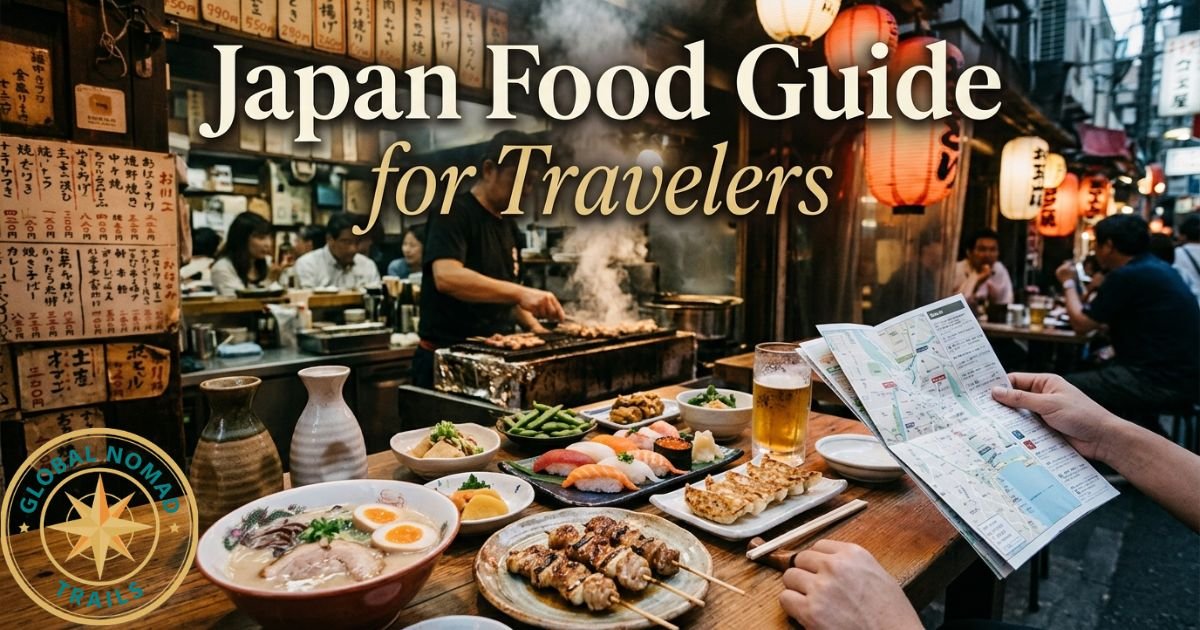
Travelers who do not plan trips around food can eat well in Japan with a short, repeatable system. Eat breakfast at a convenience store or hotel, lunch at a set-meal shop or noodle counter, and dinner at a family restaurant, a curry or tonkatsu chain, or a department store food floor. As a typical guide for mid-2026, food costs roughly 3,000 to 6,000 yen a day if you mix convenience stores, casual chains and one sit-down meal. You do not need a restaurant list, a reservation app or an adventurous palate.
The real friction is not the food. It is the system around it: ticket machines, a few cash-only counters, seat charges at pubs, unclear allergen rules and restaurants that close between meals. This guide covers each one, plus easy dishes for cautious eaters, typical prices, tipping and etiquette, and dietary needs. It is written for travelers who care more about temples, trains and time than about food reviews. Prices change, so check current menus before you rely on any figure.
Can You Enjoy Japanese Food If You Are Not a Foodie?
Yes. Japan makes it easy to eat well without effort, because many everyday meals follow a simple pattern: a main dish, rice, soup and a few small sides. You can order the same safe choices in every city and still eat well.
Many of the most common dishes are also the least risky for cautious eaters. One first-timer guide lists ramen, udon, curry rice, tonkatsu and yakitori as safe first orders. None of them requires raw fish or unfamiliar ingredients.
You can skip raw fish, organ meats and tasting menus completely and miss nothing important. That is an editorial view, but it holds up in practice: Japan has far more cooked, familiar-style dishes than most visitors expect.
A Simple Eating Plan for Each Day
| Meal | Easy choices | Typical cost | Why it works |
| Breakfast | Konbini egg sandwich, onigiri, yogurt, fruit; or hotel breakfast | Often under 600 yen | Fast, no ordering, open early |
| Lunch | Teishoku set, ramen, udon, gyudon, curry rice | About 800–1,500 yen | Fixed set, often cheaper than dinner |
| Dinner | Tonkatsu, yakitori, okonomiyaki, family restaurant, department store food floor | About 1,500–3,500 yen | Photo menus and cooked dishes |
| Snacks | Konbini fried chicken, bakery items, fruit | A few hundred yen | Cheap and easy |
These are typical 2026 ranges from travel guides, not official prices. One budget guide notes that many restaurants charge 30 to 50 percent less for a lunch set than for dinner, so make lunch your main meal when you want to save.
Easy Dishes for Cautious Eaters
- Curry rice: Mild, sweet and filling. Chains such as CoCo Ichibanya let you choose the spice level.
- Tonkatsu: A breaded, fried pork cutlet with rice, cabbage and miso soup.
- Gyudon: Beef over rice. Chains such as Yoshinoya, Sukiya and Matsuya serve it fast.
- Ramen and udon: Choose a plain shoyu or shio broth, or a simple udon, to keep flavors mild.
- Okonomiyaki: At restaurants that cook it in front of you, you can easily refuse ingredients like ginger or seaweed.
- Yakitori: Grilled chicken skewers. Order salt-grilled if you dislike sweet sauces.
- Spaghetti Napolitan and Western-style dishes: Japanese family restaurants serve familiar options like these, which helps when you want a break from rice.
Konbini: Your Backup Plan
Convenience stores such as 7-Eleven, FamilyMart and Lawson sell hot and cold meals that suit cautious eaters. Options include bakery items, fresh fruit and vegetables, and quick meals. One 2025 guide lists bento boxes at about 500 to 750 yen and sandwiches at about 250 to 450 yen.
Many stores have a small eat-in area. Otherwise, eat near the shop entrance or at your hotel. Avoid eating on trains and buses.
How to Order Without Speaking Japanese
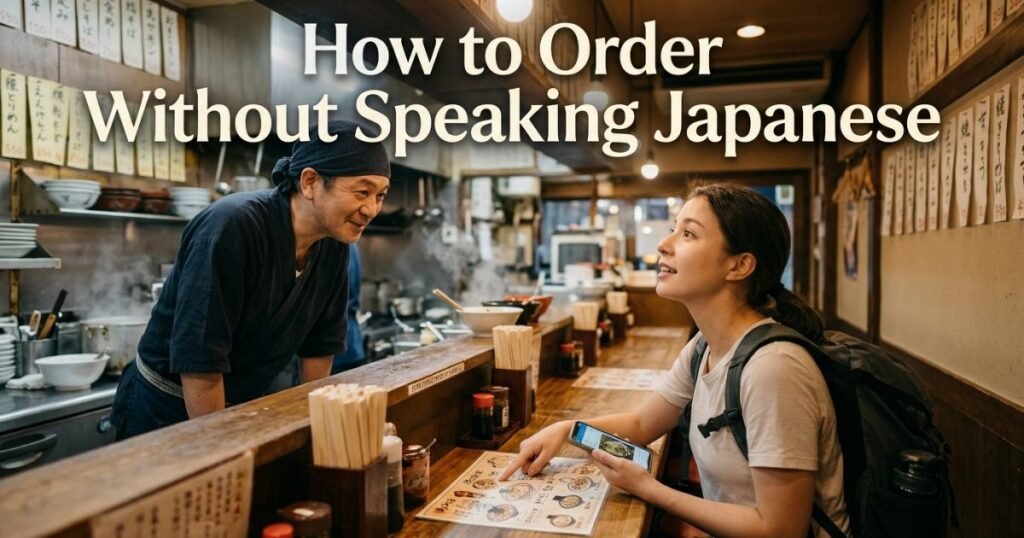
Four patterns cover most casual meals:
- Ticket machine. Many casual restaurants, especially ramen shops, have a machine at the door where you pay first and hand the ticket to staff. Most machines have pictures. Take your ticket and sit.
- Photo or plastic-food menus. Point at the dish you want.
- Tablet or QR ordering. Many chains offer English on the screen.
- Call the server. Staff often do not come to your table, so press the button or say “sumimasen.”
Payment is simple. The bill often sits on your table, and you pay at the counter when you leave. Cards work at larger places, but some small shops still prefer cash, so carry some.
Dining Etiquette That Actually Matters
Most rules are simple. These four matter most:
- Do not tip. Tipping is not customary, and leaving extra money may cause confusion.
- Avoid eating while walking. Walking and eating, called tabearuki, is a taboo travelers often hear about. Stand near the stall, or find a seat.
- Slurp noodles if you like. Slurping noodles is accepted and can signal that the food tastes good.
- Hold your rice bowl. Picking up the bowl helps you avoid spills.
For a fuller list, see the Japan National Tourism Organization’s guide to Japanese etiquette. Staff do not expect perfection from visitors, and nobody will mind if you ask for a fork.
How Much Does Food Cost in Japan?
| Meal type | Typical price per person |
| Konbini meal | About 500–800 yen |
| Ramen, gyudon or teishoku | About 800–1,500 yen |
| Conveyor-belt sushi meal | About 1,500–2,500 yen |
| Izakaya dinner with drinks | About 2,500–5,000 yen |
These are 2026 estimates from travel sources, and prices vary by city and season. Cities such as Tokyo and Kyoto cost more than smaller towns. Watch for hidden extras at pubs. Many izakaya add a small automatic appetizer, called otoshi, as a seat charge. It is normal, not a scam.
Food Allergies, Vegetarian Meals and Dietary Needs
Japan’s rules protect you better in shops than in restaurants. As of April 2026, mandatory allergen labeling covers shrimp, cashew, crab, walnut, wheat, buckwheat, egg, milk and peanut. Cashew labeling is part of a recent change, and companies have a transition period, so read packaging carefully. Learn the Japanese words for “contains” and “allergen,” or use a translation app. For background on the changes, see the USDA’s report on Japan’s allergen labeling updates.
Restaurants, izakayas and food stalls do not have the same legal duty to disclose allergens. Chain restaurants, hotel restaurants and department store dining floors are usually safer bets. Carry an allergy card in Japanese, and ask the staff directly.
Two traps are worth knowing. Buckwheat is a mandatory allergen, and soba shops are difficult for serious buckwheat allergies, because some udon shops also serve soba. Vegetarians should also know that many soups and sauces use fish-based dashi, even when a dish looks meat-free. Ask before you order.
Common Mistakes Non-Foodies Make
- Skipping lunch and arriving hungry at 3 p.m. Some restaurants close between lunch and dinner, so check hours and eat when kitchens are open.
- Not booking a popular dinner. Reservations matter at busier restaurants, so ask your hotel to help.
- Carrying no cash. Small counters and some temples’ food stalls may not take cards.
- Eating on public transport. It is frowned upon, and many travelers avoid it.
- Assuming every menu item is safe. Check ingredients if you have allergies.
Where to Stay and Where to Add a Café Stop
A hotel near a station makes the eating plan easier, since konbini, noodle shops and chains cluster around stations. Our guide to Japanese business hotels explains what to expect from these compact rooms. If you want a relaxed café stop in between sightseeing, read our guide to the cutest cafes in the Japanese Alps.
FAQ,s
Is Japanese food good for picky eaters?
Yes. Ramen, udon, curry rice, tonkatsu and konbini meals all suit cautious eaters.
Do I need to tip in Japan?
No. Tipping is not customary, and the listed price is what you pay.
How much should I budget for food in Japan per day?
Expect about 3,000 to 6,000 yen a day if you mix konbini, casual chains and one sit-down meal.
Can I eat convenience store food every day?
Yes, and many travelers do. Mix in a hot meal now and then for variety and nutrition.
Can I order food without speaking Japanese?
Yes. Ticket machines, photo menus and tablets handle most orders. Point and smile if you need to.
Conclusion
Japan rewards travelers who keep eating simple. Build your day around three reliable choices: a konbini or hotel breakfast, a set lunch, and a familiar, cooked dinner. That system handles the hardest parts of the trip, which are saving time and money and avoiding menu stress.
Before you go, carry some cash, learn the ticket machine routine, and prepare an allergy card if you need one. Skip the long restaurant lists. If you stumble on something good, treat it as a bonus, not a requirement. Check current prices and hours before you travel.