

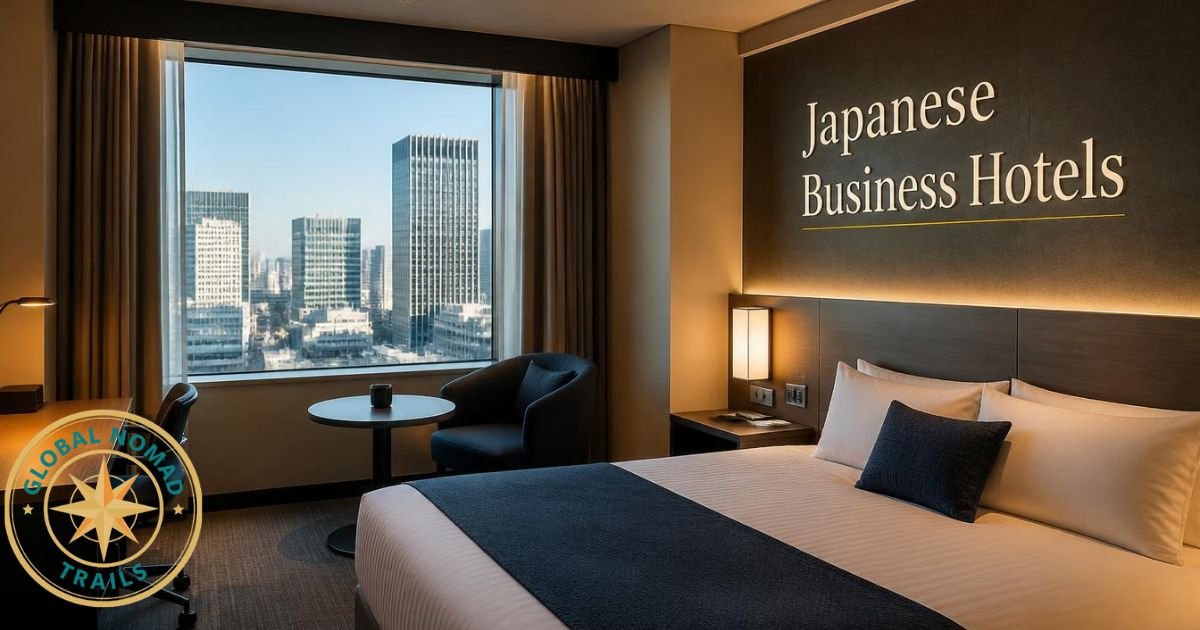
Japanese business hotels are compact, clean city hotels, usually next to a train station, with a private room and en-suite bathroom. In 2026 they typically cost about ¥8,000–¥15,000 a night in Tokyo, Kyoto and Osaka. Prices are lower in smaller cities and off-peak, and higher in cherry blossom and autumn leaf seasons.
They suit travelers who want a safe, central bed and plan to spend most of the day outside. They suit you less if you need space, a view or a quiet hotel stay. This guide covers what the rooms are like, which chains to compare, how the extra taxes work and the mistakes that trip up first-timers.
Quick Answer: Are Japanese Business Hotels Worth It?
Yes, for most budget travelers. You get a private room, a bathroom, free Wi-Fi and a location near rail lines, usually at lower prices than mid-range hotels. The trade-off is size. Rooms are small, and some chains charge extra for breakfast.
They work well for solo travelers and couples who travel light. They are harder for families, groups with large suitcases and anyone who plans to spend long hours in the room.
What Is a Japanese Business Hotel?
The name comes from Japan’s salaried workers, who use these hotels on work trips. The hotels keep costs down by trimming extras. Most have a small lobby, a front desk or check-in machine, vending machines and a breakfast room. Many skip the pool, spa and room service.
You’ll find them clustered around major stations such as Tokyo’s Ueno and Shinjuku, Kyoto Station and Osaka’s Namba and Umeda. That location is the main selling point for travelers, because it cuts transfer time.
What You Get Inside the Room
Expect a compact space with a bed, a small desk, a TV, a kettle and a portable “unit bath” with a toilet, sink and shower or tub.
- Room size: Often around 11–16 square meters. Some APA Hotel rooms sit near the lower end of that range.
- Beds: A “double” can be narrow. Check the bed width, not just the label, if you share.
- Luggage: Floor space is tight. A large suitcase may not open flat next to the bed.
- Extras: Slippers, a toothbrush set and sleepwear are common, though policies vary by hotel.
- Smoking: Many hotels keep separate smoking floors. Choose a non-smoking room when you book.
Walls can be thin. Pack earplugs if you are a light sleeper.
Major Chains Compared
Prices change by city, date and room type, so treat these as rough guides rather than quotes.
| Chain | Typical Style | Breakfast | Notable Feature |
| Toyoko Inn | Simple, widespread | Free simple breakfast at many hotels | Club Card for member discounts |
| APA Hotel | Compact, central | Often paid | Locations near stations; points program |
| Super Hotel | Eco-minded | Often included | Hot spring baths at some locations |
| Dormy Inn | Higher comfort | Often paid | Large public baths at many hotels |
| Sotetsu Fresa Inn | Newer-feeling rooms | Varies | Many sites in Tokyo, Osaka and Kyoto |
| Route Inn, Daiwa Roynet | Mid-range business | Varies | Good in regional cities |
Chains differ by property, so read each hotel’s page. Breakfast, baths and check-in times are not the same at every branch.
How Much Do Japanese Business Hotels Cost?
Plan on roughly ¥8,000–¥15,000 per night for a private room in the big three cities. Single rooms can start lower, especially at off-peak times or in smaller cities.
Three things change the price:
- Occupancy. Many Japanese Business Hotels price per person, so a double for two can cost more than a single for one. Compare the full two-guest total.
- Season. Cherry blossom weeks, autumn leaves, holidays and big events push rates up.
- Booking type. Non-refundable rates cost less but give you no flexibility.
The Extra Charge Many Travelers Miss: Accommodation Tax
Some cities add a small per-person, per-night tax at check-in. Rules vary by city and room price, and they change, so check the local authority before you travel.
- Tokyo: Currently exempt under ¥10,000 per person per night. Above that, small flat amounts apply.
- Osaka: Exempt under ¥5,000 per person, then small amounts above that.
- Kyoto: Revised in March 2026 into five price bands. Even budget stays pay ¥200 at the lowest band, and mid-range rooms pay more. See Kyoto City’s accommodation tax page for the current table.
The tax is usually based on the room-only price per person, not the total. Hotels often collect it on the spot, so keep a little cash or card balance ready.
How to Choose the Right Business Hotel
Match the hotel to your trip, not just the price.
- Short stay, early train: Pick the hotel closest to your departure station. Saved transfer time matters more than a ¥1,000 difference.
- Winter or tired legs: Dormy Inn or a Super Hotel with a bath can be worth the extra cost.
- Several nights in one city: Compare chain points programs. They can pay off over a longer stay.
- Couples: Check the bed size and room size before you pay for a “double.”
- Late arrival: Confirm check-in hours and whether the front desk is staffed late.
If you plan a rail-focused trip, a station-side hotel pairs well with day trips. Our guide to joyful trains in Kyushu shows how scenic rides can anchor a regional route. For food stops between sights, see our guide to café culture in Japan.
Booking Tips That Save Money

- Book directly when it helps. Toyoko Inn runs a Club Card with member perks. Read the terms on the official Toyoko Inn Club page, because fees and discounts depend on how and where you book.
- Choose flexible rates for uncertain plans. Prices drop with strict cancellation rules, but you lose money if your plans change.
- Check what is included. A cheap rate with a ¥1,500–¥2,000 breakfast may cost more than a pricier rate with free food, if you eat there.
- Compare nearby stations. A hotel one or two stops from a busy hub can cost noticeably less, as long as the train line is direct.
- Book early for peak seasons. Spring and fall rooms near central stations go first.
Common Mistakes to Avoid
- Ignoring check-in times. Standard check-in is usually mid-afternoon, with check-out around 10:00. Chains and membership tiers differ, so verify yours.
- Reading “double” as roomy. Always check square meters and bed width.
- Forgetting the tax. Add a few hundred yen per person per night in some cities.
- Packing too much. Smaller suitcases make narrow rooms and train stairs easier.
- Skipping safety basics. Keep valuables secure and know your hotel’s address in Japanese. Our guide to travel tech tools that improve safety covers helpful apps.
Who Should Skip Business Hotels
Skip them if you want a pool, a large room or space for a family of four. Consider a larger hotel, a serviced apartment or a family-style room instead. If you want a traditional Japanese Business Hotels stay, a ryokan gives a different experience, though at a higher cost.
For a wider look at where to go, browse our Japan and Asia travel guides.
Frequently Asked Questions
What is a business hotel in Japan?
It is a compact, affordable city hotel built for work trips. It has a private room and bathroom, usually near a train station, with few extras.
Are Japanese business hotels clean and safe?
Yes, they are generally clean and well run. Use normal city precautions and keep valuables in the room safe or on you.
Do business hotels in Japan include breakfast?
It depends on the chain. Toyoko Inn and Super Hotel often include a simple breakfast. APA Hotel and Dormy Inn often charge extra, so check your booking.
How big are the rooms?
Often about 11–16 square meters. Single rooms are very small, and double beds can be narrow.
Do I have to pay accommodation tax?
In some cities, yes. Tokyo and Osaka exempt low-priced rooms under set thresholds, while Kyoto charges a tax in every band. Check the local city rules before you go.
Conclusion
Japanese business hotels give budget travelers a clean private room in the right place, usually at a lower price than mid-range hotels. The main costs are space and extras. Read room sizes, breakfast terms and tax rules before you book, and pick the station that fits your route.
Compare two or three chains rather than defaulting to the cheapest listing. A hotel with a bath, free breakfast or a better location can save time and money across a longer trip. Verify prices, check-in rules and tax rates before you travel, because they change with season and city.