

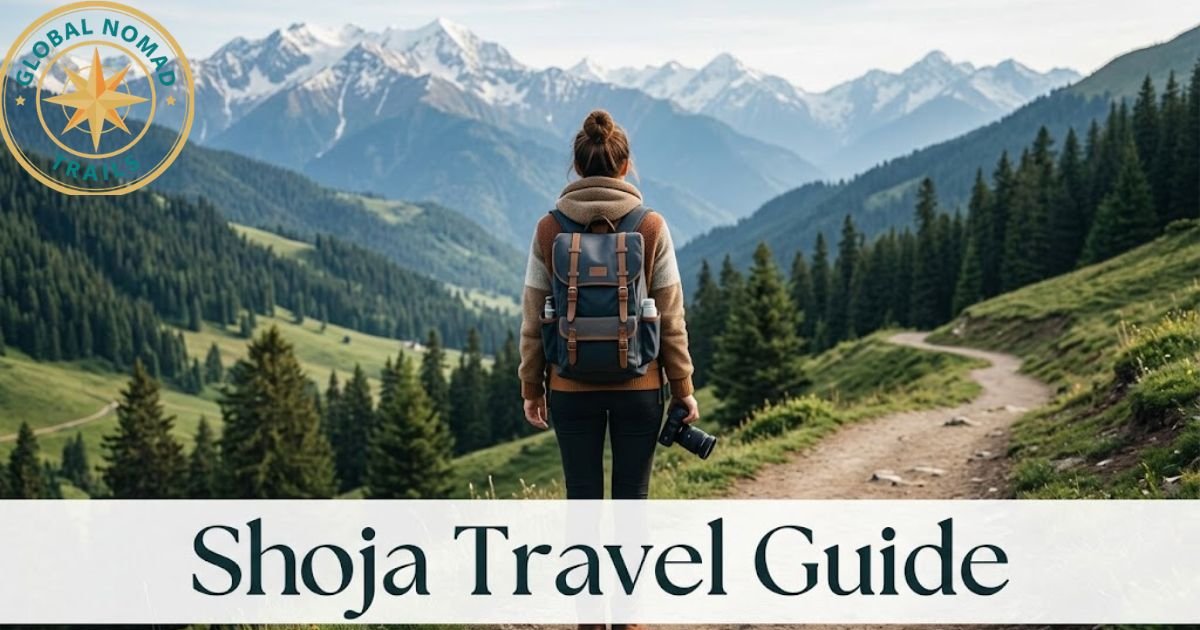
Shoja is a quiet mountain village in Himachal Pradesh’s Kullu district, known for its deodar forests, wooden cabins, mountain views, and access to Jalori Pass. This Shoja Travel Guide covers the best time to visit, snowfall, forest stays, nearby hikes, road conditions, travel costs, and a relaxed three-day itinerary. Whether you want a snowy winter escape or a peaceful summer break, choosing the right season makes a big difference.
Shoja is best for travelers who enjoy nature, slow mornings, forest walks, and quiet evenings. It has fewer cafés, shops, and tourist facilities than busier mountain destinations. Plan for changing weather, limited services, and possible road delays, and you can enjoy Shoja without rushing from one attraction to another.
Shoja at a Glance
| Travel detail | What to know |
| Location | Seraj region, Kullu district, Himachal Pradesh |
| Elevation | Around 2,700 meters; published figures vary |
| Nearby destination | Jibhi, Banjar, and Tirthan Valley |
| Nearest airport | Bhuntar Airport, subject to flight availability |
| Main attraction | Forest scenery, quiet stays, and mountain views |
| Snowfall season | Usually winter, with timing and depth varying |
| Best months for outdoor activities | Generally May to June and September to October |
| Recommended stay | Two to three days |
| Travel style | Slow travel, nature walks, and short hikes |
Use these details as planning estimates. Check your exact route, accommodation location, and current road conditions before departure.
Is Shoja Worth Visiting?
Yes, Shoja is worth visiting if you want a quieter alternative to busy Himalayan tourist towns. The village is not packed with major attractions, shopping streets, or nightlife. Its appeal lies in the surrounding forest, mountain air, peaceful accommodation, and access to nearby outdoor activities.
Shoja suits couples, solo travelers, photographers, nature lovers, and families who enjoy a slower holiday. It can also work for a short digital detox or a workation, provided your accommodation has reliable internet and electricity.
However, Shoja may not suit travelers who need a wide choice of restaurants, dependable mobile coverage, easy winter driving, or a full schedule of activities. If you prefer cafés, markets, and more services, consider staying in Jibhi and visiting Shoja as a day trip.
Best Time to Visit Shoja
The best time to visit Shoja depends on whether you want comfortable weather, clear mountain views, green forests, or snowfall. Late spring and early autumn are generally practical choices for sightseeing and outdoor activities. Winter is more suitable for travelers who can adapt to snow and road changes.
| Season | What to expect | Best for |
| March–April | Winter conditions gradually ease; higher areas may retain snow | Flexible travelers and quiet stays |
| May–June | Pleasant daytime conditions and better access for outdoor activities | First-time visitors, families, and hikers |
| July–August | Lush forests, mist, and heavy monsoon rain | Flexible trips with careful weather checks |
| September–October | Post-monsoon scenery and often clearer views | Photography, forest walks, and hiking |
| November | Colder weather and possible early snowfall at higher elevations | Travelers seeking early winter scenery |
| December–February | Freezing conditions and a chance of snow in the village and higher areas | Snow lovers prepared for disruption |
These are general seasonal patterns, not a forecast. Snowfall, road access, and trail conditions can change from year to year.
Shoja in Spring and Summer
Spring brings a gradual change from winter conditions to greener slopes and more comfortable days. April can still be cold, especially at night, and higher trails may retain snow. May and June are generally better for exploring the surrounding area when roads and trails are accessible.
Pack light layers, a warm jacket, and comfortable walking shoes. Even in summer, mountain weather can change quickly.
Shoja During Monsoon
July and August bring greener forests, misty hills, and a different kind of mountain scenery. This can be attractive for photography, but heavy rain can also cause landslides, falling rocks, slippery trails, and road delays.
Do not choose the monsoon only for foggy photographs. Check the weather and local road reports, avoid unnecessary travel during heavy rain, and keep your itinerary flexible.
Shoja in Autumn
September and October are good months to consider for forest walks, photography, and trips toward Jalori Pass, depending on road and trail conditions. After the monsoon, clearer skies may improve mountain views.
October can be especially appealing if you want a quiet stay without relying on winter snowfall. Carry warm clothing because evenings can become cold.
Shoja Snowfall Season
Winter is the main attraction for travelers hoping to see snow. Snowfall may occur from late autumn into winter, with December through February often offering better chances than the warmer months. January can bring significant snow, but the exact timing and depth are never guaranteed.
Shoja village and Jalori Pass do not always have the same road conditions. The village may remain accessible while the higher pass road is closed or unsafe. Confirm the latest conditions with your host before traveling.
Does It Snow in Shoja?
Yes, Shoja receives snowfall during winter. Its higher elevation makes snow more likely than in lower nearby settlements, although the amount varies each year. The surrounding high ground near Jalori Pass may receive heavier snowfall than the village itself.
If snowfall is your main reason for visiting, contact your accommodation shortly before departure. Ask whether fresh snow has fallen, whether vehicles can reach the property, and whether nearby walking routes are safe.
Keep these winter travel tips in mind:
- Allow at least one flexible day in your schedule.
- Avoid driving unfamiliar mountain roads during fresh snowfall.
- Carry warm layers, gloves, suitable footwear, and a power bank.
- Do not assume Jalori Pass or its trekking routes are accessible.
- Follow local advice about snow-covered paths and changing weather.
Important: No travel guide can guarantee snowfall on your dates. Book with clear cancellation terms and avoid non-refundable plans if snow is essential to your trip.
How to Reach Shoja
Shoja is reached by road through the Kullu–Banjar region of Himachal Pradesh. Most travelers first reach Aut or Banjar and then continue toward Shoja. The final mountain roads are winding, so travel time depends on traffic, weather, road conditions, and your starting point.
By Air
Bhuntar Airport near Kullu is a possible air gateway, but flight availability can be limited. From the airport, arrange a taxi or other suitable road transport to Shoja. Confirm the actual driving distance and journey time for your accommodation before booking flights.
By Road From Delhi or Chandigarh
Travelers from Delhi or Chandigarh can take a bus or drive toward the Mandi–Kullu corridor, then continue through Aut and Banjar toward Shoja. An overnight bus followed by a pre-arranged taxi may be convenient for people who do not want to drive the mountain section themselves.
The overall journey from Delhi is long. Avoid planning the final climb late at night, especially in winter or during the monsoon.
From Jibhi or Manali
Jibhi is a useful nearby base, while travelers from Manali generally need to plan their route through the wider Kullu and Banjar road network. Actual distance and driving time vary by route and road conditions.
Official Himachal Pradesh Tourism website — https://himachaltourism.gov.in/]
Check regional travel information before departure, and ask your accommodation for current road advice. In winter, the route to Shoja and the higher road toward Jalori Pass may have different access conditions.
Shoja vs Jibhi: Which Place Should You Choose?
Shoja and Jibhi suit different types of mountain holidays. Shoja is generally quieter and higher, while Jibhi offers more convenient access to cafés, accommodation choices, and everyday services.
| Feature | Shoja | Jibhi |
| Atmosphere | Quiet, forested, and secluded | More lively, with visitor facilities |
| Accommodation | Smaller selection of homestays and cabins | A wider range of stays |
| Food | Fewer nearby dining choices | More cafés and places to eat |
| Winter experience | Better potential for a snowy mountain setting | Snow depends on weather and elevation |
| Outdoor activities | Forest walks and access toward Jalori Pass | Waterfall visits, village walks, and valley outings |
| Best for | Solitude, slow stays, and nature | Convenience, cafés, and a broader base |
Choose Shoja if your priority is silence, forest views, and a slower pace. Choose Jibhi if you want more dining options and easier access to services. You can also spend a night or two in each place if your schedule allows.
Things to Do Around Shoja
1. Take a Forest Walk
Forest walks are among the simplest ways to enjoy Shoja. The surrounding woodland, mountain air, and changing light make short walks rewarding without requiring a demanding trek.
Ask your host about suitable local paths, especially after rain or snowfall. Stay on established routes and avoid entering unfamiliar forest areas alone.
2. Visit Jalori Pass
Jalori Pass is one of the main reasons travelers use Shoja as a base. It connects routes across the surrounding mountain region and provides access to trekking routes and elevated views.
In suitable weather, you may be able to travel toward the pass and enjoy the scenery. During winter, snow can close the road, while monsoon rain may affect access. Check conditions before setting out rather than assuming the pass is open.
3. Hike to Serolsar Lake
Serolsar Lake is a popular trekking destination reached from the Jalori Pass area. The walk passes through forested terrain and is known for its peaceful setting. It is often described as a moderate outing, but the actual effort depends on weather, trail conditions, and your fitness.
Allow enough time for the return journey, carry water and snacks, and start early when conditions are suitable. Snow and ice can make the route unsafe in winter.
4. Explore Raghupur Fort
Raghupur Fort is another hiking option from the Jalori Pass area. Travelers visit for the open mountain views and the remains associated with the historic fort site.
The climb can feel steep, and route conditions may be difficult to judge in poor visibility. Avoid attempting the hike during heavy rain, fresh snowfall, or when local advice indicates unsafe conditions.
5. Spend Time in a Cabin
A forest cabin stay can be an experience in itself. Enjoy a slow breakfast, read beside a window, watch the mist move through the trees, or spend a quiet evening after a short walk.
Before booking, check whether the property is genuinely surrounded by forest or is simply marketed as a cabin. Photos, exact location, heating, meals, and winter road access can make a big difference.
6. Take a Day Trip to Tirthan Valley
Tirthan Valley offers a different setting, with river scenery, village life, and access to outdoor experiences around the Great Himalayan National Park region. It can be a useful addition to a longer stay, depending on travel time and weather.
The Great Himalayan National Park is a UNESCO World Heritage site. Access rules, permitted routes, and guide requirements depend on the activity, so check the official information before planning a park trek.
[ UNESCO World Heritage Centre — https://whc.unesco.org/en/list/1406/]
Shoja Stay Guide: Forest Cabins, Homestays, and Workations
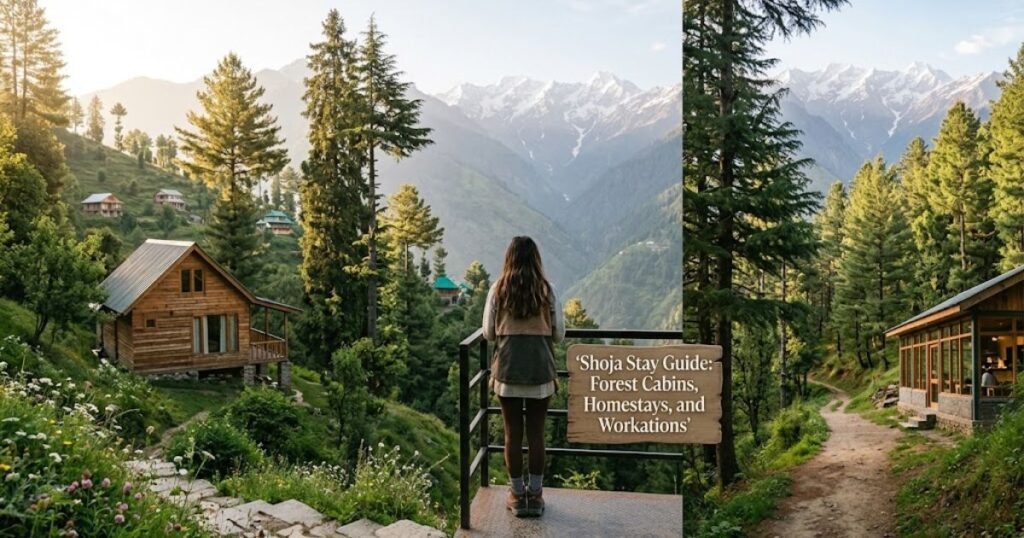
Shoja has a relatively small accommodation scene compared with major tourist destinations. Options may include wooden cottages, homestays, guesthouses, and other small properties. Availability and facilities vary, so choose based on your needs rather than photographs alone.
What to Check Before Booking
Ask the property these questions before paying:
- Is heating available, and is it included in the room price?
- When is hot water available?
- Can a taxi or regular car reach the property in winter?
- Are meals available on-site?
- Is there a power backup?
- Which mobile networks work at the property?
- Is Wi-Fi available, and what speeds can guests realistically expect?
- What is the cancellation policy if snowfall or road closures affect travel?
Government rest houses may also exist in the wider region, but availability and booking rules can change. Confirm directly with the relevant authority rather than relying on old travel information.
Is Shoja Good for a Workation?
Shoja can suit a short workation if you want a quiet setting, but it should not be treated as a guaranteed remote-work destination. Internet speed, mobile reception, electricity, and backup power differ from one property to another.
If you have important meetings or deadlines, request a recent internet speed test and confirm the mobile network signal before booking. Keep a backup plan in case connectivity fails.
Connectivity, UPI, and Cash in Shoja
Do not assume that every digital service will work reliably in the mountains. Mobile coverage may be weak in some locations, and internet performance can vary with weather, power supply, and the accommodation.
UPI may work where mobile data or Wi-Fi is available, but a successful payment cannot be guaranteed. Carry enough cash for meals, local transport, and small purchases. Download offline maps and save your booking details, host’s phone number, and essential travel information before leaving a better-connected town.
Shoja Travel Costs: What Should You Budget?
Your Shoja budget depends on the season, room type, meals, transport, and whether you hire a local driver or guide. Winter demand and limited room availability can affect accommodation prices.
Rather than relying on outdated online prices, calculate your trip using these categories:
| Expense | What affects the cost |
| Transport | Bus tickets, taxi hire, fuel, and route conditions |
| Accommodation | Room type, heating, season, and location |
| Food | Included meals versus separate restaurant or café spending |
| Activities | Local transport, guide fees, and any permitted activities |
| Emergency buffer | Extra night, delays, or unexpected transport changes |
Ask for the complete price before booking, including heating, meals, taxes, and cancellation terms. Keep extra money available for unexpected delays, particularly during winter and the monsoon.
A Slow Three-Day Shoja Itinerary
Day 1: Arrive and Settle In
Reach Shoja during daylight, check into your accommodation, and ask your host about local conditions. Spend the afternoon walking around the village or relaxing at your cabin. Keep the first evening free rather than planning a demanding hike after a long drive.
Day 2: Choose a Mountain Outing
During a clear season, head toward Jalori Pass if the road is open and conditions are safe. If trail access is suitable, choose either Serolsar Lake or Raghupur Fort based on your fitness and available daylight.
In winter, do not build the day around reaching the pass. Enjoy a safe village walk or stay close to your accommodation if snow or ice makes outdoor travel difficult.
Day 3: Enjoy a Quiet Morning
Have breakfast, take a short walk, and enjoy the forest views before leaving. If you have extra time and the roads are clear, consider a trip toward Tirthan Valley. Otherwise, keep the final day simple and allow enough time for the return journey.
Slow-travel tip: One main activity each day is enough. Shoja is best enjoyed when you leave space for rest, changing weather, and unexpected delays.
Packing and Safety Tips for Shoja
Pack according to the season, but always prepare for cooler mountain conditions than you may experience in the plains.
- Warm layers, a waterproof jacket, and extra socks
- Comfortable shoes with good grip
- Gloves and a warm hat for winter
- A torch, power bank, and essential medicines
- Cash, offline maps, and saved booking details
- Water and snacks for longer walks
- Sun protection for clear days at higher elevations
Tell your host before setting off on a hike and share your expected return time. Do not continue onto a trail if visibility drops or the weather deteriorates. Avoid driving unfamiliar mountain roads during darkness, heavy rain, or snowfall.
Frequently Asked Questions
How many days are enough for Shoja?
Two to three days are enough to explore Shoja, visit Jalori Pass, and enjoy a nearby hike. Add an extra day if you want to explore Tirthan Valley at a relaxed pace.
Is there any snow in Shoja?
Shoja receives snowfall between late autumn and winter, especially from December to February. Snow is not guaranteed, so check local weather and road conditions before your trip.
Which is better, Jibhi or Shoja?
Shoja is better for quiet forest stays, mountain views, and a peaceful atmosphere. Jibhi is a better choice if you prefer cafés, more accommodation options, and easier access to local facilities.
Final Thoughts
Shoja is a destination for travelers who value quiet forests, mountain views, simple cabins, and time away from busy tourist areas. The right season depends on your priorities: choose warmer months for outdoor activities, autumn for scenic walks, or winter for a chance of snowfall.
Before leaving, confirm your accommodation, check the road conditions, carry cash, and keep your itinerary flexible. With sensible planning and realistic expectations, Shoja can offer a rewarding Himalayan escape without the pressure of a packed holiday.