



Travel Medical Insurance Cost depends on several factors, including your age, trip length, destination, medical limit, deductible, and policy type. In 2026, medical-only travel insurance can be a relatively affordable option for international travelers who mainly want protection against unexpected medical emergencies. Moreover, recent industry data shows that medical-only plans can cost around $5 per day on average, while the total premium varies based on the traveler and trip details. Therefore, your own quote may be higher or lower than the average.
Moreover, Travel Medical Insurance Cost is usually much lower than comprehensive travel insurance because medical-only plans focus mainly on emergency medical care and evacuation. Therefore, travelers who have already booked flexible flights and hotels may prefer medical-only coverage for added medical protection. Meanwhile, travelers who want trip cancellation, trip interruption, baggage protection, travel delays, and medical benefits may need a comprehensive travel insurance plan instead. Understanding these differences can help you choose coverage that matches your trip, budget, and personal needs.
What Is Travel Medical Insurance?
Travel medical insurance helps protect you from unexpected medical costs while traveling outside your home country. It can cover eligible emergency treatment, hospital care, and medical evacuation, depending on the policy.Moreover, many plans are designed for short international trips. They can be useful when your regular health insurance offers limited coverage abroad.
What Does Travel Medical Insurance Usually Cover?
Coverage varies by provider and plan. Therefore, always read the policy certificate before buying.
Common benefits may include:
- Emergency medical treatment
- Hospital stays
- Emergency dental treatment
- Ambulance services
- Prescription medicine related to a covered emergency
- Emergency medical evacuation
- Repatriation benefits in eligible situations
- 24-hour emergency assistance
However, not every plan includes every benefit. Therefore, compare the actual policy wording rather than choosing based only on price.
How Much Does Travel Medical Insurance Cost?

A typical medical-only policy can cost around $10 to $150 per trip, depending on the traveler and coverage. Squaremouth’s 2026 data shows an average medical-only premium of $87, with an average trip length of 17 days.Moreover, Squaremouth reports an average cost of about $5 per day for medical travel insurance. Its data also shows that medical-only plans are substantially cheaper than comprehensive travel insurance because they do not insure the cost of the trip itself.
Average Cost by Trip Length
| Trip Length | Average Medical-Only Cost |
| 4–7 days | About $53 |
| 8–14 days | About $71 |
| 15–30 days | About $88 |
These figures come from Squaremouth sales data covering policies purchased from July 2025 through July 2026. Actual quotes vary by age, destination, coverage, and other factors. Therefore, a short vacation can cost less to insure than a month-long international trip.
How Age Changes Travel Medical Insurance Cost
Age is one of the biggest factors affecting Travel Medical Insurance Cost. Older travelers generally pay more because insurers consider medical risk when calculating premiums. For example, Sabretooth’s recent data shows average premiums of $44 for travelers aged 22–34 and $198 for travelers aged 80 and older. Therefore, two people taking the same trip can receive very different quotes.
Average Cost by Age
| Age | Average Medical Premium |
| 0–21 | $47 |
| 22–34 | $44 |
| 35–49 | $64 |
| 50–59 | $76 |
| 60–69 | $95 |
| 70–79 | $135 |
| 80+ | $198 |
These are averages from Squaremouth’s recent medical-only policy sales. Your actual premium may differ.Moreover, senior travelers should compare several plans before purchasing. A lower premium may come with lower limits or more exclusions.
Does Trip Length Affect Insurance Cost?

Yes, trip length can directly affect Travel Medical Insurance Cost. Longer trips require more days of coverage and may expose the traveler to more potential risks. Sabretooth’s recent data shows average medical-only premiums of about $53 for four-to-seven-day trips, $71 for eight-to-14-day trips, and $88 for 15-to-30-day trips. Therefore, extending a trip can increase the insurance premium. However, the increase is not always perfectly proportional to the number of days.
Does Your Destination Affect the Price?
Your destination can also influence Travel Medical Insurance Cost. Medical treatment prices, local healthcare systems, evacuation needs, and travel risks can differ greatly between countries. Moreover, remote destinations may require more expensive medical transportation. Therefore, insurers may consider the destination when calculating a quote.
Why Destination Matters
Consider these factors before purchasing:
- Local medical costs
- Availability of hospitals
- Distance from major medical centers
- Emergency evacuation needs
- Adventure activities
- Regional travel risks
- Policy restrictions for certain countries
For example, a remote trekking trip may need stronger evacuation protection than a city vacation.
How Coverage Limits Affect the Price
Coverage limits are another important part of Travel Medical Insurance Cost. A policy with a higher medical maximum can cost more than basic coverage. Moreover, you should not choose a plan based on the premium alone. A very cheap policy may have a medical limit that does not suit your destination or activities.
What Is a Medical Coverage Limit?
The medical coverage limit is the maximum amount the insurer may pay for eligible medical expenses under the policy.For example, a policy might offer a stated medical maximum. However, individual benefits may have separate limits.Therefore, read the policy carefully to understand the overall maximum and individual benefit limits.
What Is Deductible?
A deductible is the amount you may need to pay before the insurer pays eligible covered expenses. Therefore, a policy with a higher deductible may sometimes have a lower premium.For example, you might compare two similar policies with different deductibles. The cheaper premium may come with a higher amount you must pay yourself.Moreover, the best choice depends on your budget and risk tolerance.
Medical-Only vs. Comprehensive Travel Insurance
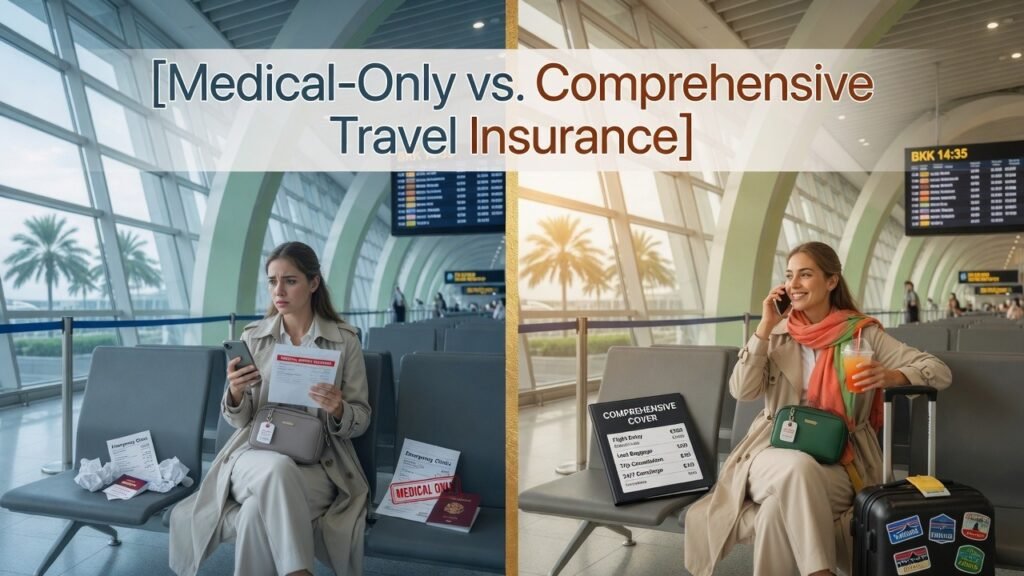
Understanding the difference can help you control Travel Medical Insurance Cost. Medical-only insurance focuses mainly on medical emergencies and related benefits. Comprehensive travel insurance can add trip cancellation, interruption, baggage, delays, and other protections.
| Feature | Medical-Only | Comprehensive |
| Emergency medical | Usually included | Usually included |
| Medical evacuation | Often included | Often included |
| Trip cancellation | Usually not included | Often included |
| Trip interruption | Usually not included | Often included |
| Baggage benefits | Usually limited or absent | Often included |
| Trip delay | Usually absent | Often included |
| Typical price | Lower | Higher |
Therefore, medical-only coverage can make sense when your main concern is healthcare abroad.
Why Medical-Only Plans Can Be Cheaper
Medical-only plans can have a lower Travel Medical Insurance Cost because they do not usually insure your prepaid trip expenses. Squamous says medical-only plans are about 80% less expensive on average than comprehensive policies. Moreover, this difference can matter when your flights and hotels are refundable or inexpensive. However, a medical-only policy may not help if you need to cancel your vacation before departure.
How Much Is Comprehensive Travel Insurance?
Comprehensive travel insurance is usually priced differently because it can cover the cost of the trip itself.For example, Forbes Advisor’s 2026 analysis found travel insurance averaging about 7% of a $1,000 trip and about 4% of a $20,000 trip for the specific traveler profiles it studied.Therefore, comprehensive insurance should not be compared directly with medical-only coverage.
Example of Comprehensive Insurance
If your vacation costs $5,000, the premium may be several hundred dollars. However, the exact price depends on your age, destination, trip cost, coverage, and policy options.Therefore, always get a personalized quote rather than relying on a general percentage.
What Makes Travel Medical Insurance More Expensive?
Several factors can increase Travel Medical Insurance Cost.
The main factors include:
- Traveler age
- Trip length
- Destination
- Medical coverage limit
- Deductible
- Adventure activities
- Pre-existing condition options
- Additional coverage
- Policy type
- Number of travelers
Moreover, insurers may use different pricing models. Therefore, two companies can quote different prices for similar coverage.
Pre-Existing Medical Conditions
Pre-existing conditions require special attention when comparing travel medical insurance. Some policies exclude them, while others may provide limited coverage or offer a waiver under specific conditions.Therefore, never assume that a medical condition is automatically covered.
Why the Policy Wording Matters
A plan may use specific rules to define a pre-existing condition. It may also require certain conditions to be met before coverage applies.Moreover, some benefits may depend on when you purchase the policy. Therefore, read the plan’s eligibility rules carefully and provide accurate information when requesting a quote.
Emergency Medical Evacuation Coverage
Emergency medical evacuation can be one of the most valuable benefits in an international medical policy.If suitable treatment isn’t available nearby, an insurer may arrange eligible transportation under the policy terms. However, evacuation benefits often have specific rules and approval requirements.
Therefore, check:
- The evacuation maximum
- Who arranges transportation
- Whether prior approval is required
- Whether repatriation is included
- Whether remote locations are covered
- Whether adventure activities are excluded
Moreover, don’t assume that every medical-only policy provides unlimited evacuation.
Does Travel Insurance Cover Adventure Activities?
Adventure activities can change your Travel Medical Insurance Cost and eligibility. Some policies may cover normal tourist activities but exclude higher-risk sports. Therefore, check the activity list before traveling.
Activities that may need special attention include:
- Scuba diving
- Skiing
- Snowboarding
- Mountaineering
- Rock climbing
- Paragliding
- Motorbike riding
- Trekking at high altitude
However, coverage varies by provider. Therefore, read the exclusions before paying for a policy.
Is Travel Medical Insurance Worth It?
Travel medical insurance can be worthwhile when your regular health insurance does not provide strong international coverage.Forbes Advisor notes that travelers may benefit from medical coverage abroad, including emergency assistance and help finding medical care.Moreover, medical emergencies can create unexpected costs far from home. Therefore, a relatively small premium may provide useful financial protection.However, the value depends on your destination, existing insurance, trip type, and personal needs.
Does Your Regular Health Insurance Cover You Abroad?
Never assume that your home health plan provides full international coverage.Some plans may provide limited emergency benefits outside your home country. Others may provide little or no coverage.Therefore, contact your health insurer before your trip and ask specifically about international medical care.
Questions to Ask Your Health Insurer
Ask whether your plan covers:
- Emergency treatment overseas
- Hospital stays
- Emergency transportation
- Ambulance services
- Prescription medicine
- Out-of-network care
- Medical evacuation
- Repatriation
Moreover, ask whether you must pay first and request reimbursement later.
How to Lower Travel Medical Insurance Cost

There are several practical ways to manage Travel Medical Insurance Cost. First, compare multiple policies with similar coverage. Next, choose limits that fit your destination and travel plans. Moreover, avoid paying for benefits you don’t need. If your main concern is emergency healthcare, a medical-only plan may be more suitable.
Simple Ways to Save
- Compare several quotes
- Check the deductible
- Review medical limits
- Avoid unnecessary add-ons
- Check existing insurance
- Match coverage to your destination
- Review exclusions
- Buy only the coverage you need
Therefore, the cheapest policy isn’t always the best value.
When Should You Buy Travel Medical Insurance?
You can usually buy travel medical insurance before departure, but the best timing depends on the policy.Medical-only coverage is often focused on events that happen during the insured travel period. However, comprehensive policies may have time-sensitive benefits linked to when you make your first trip payment.Therefore, don’t wait until the last minute if you need broader protection.
How to Compare Travel Medical Insurance Plans

Comparing Travel Medical Insurance Cost requires more than looking at the premium. Start by comparing the medical maximum. Then check emergency evacuation, deductible, exclusions, and claims rules.
A Simple Comparison Checklist
| Feature | What to Check |
| Medical maximum | Is the limit suitable? |
| Evacuation | What is the maximum benefit? |
| Deductible | How much do you pay? |
| Pre-existing conditions | Are they covered? |
| Activities | Are your activities allowed? |
| Destination | Is your country covered? |
| Assistance | Is 24-hour help available? |
| Exclusions | What isn’t covered? |
| Claims | What documents are needed? |
Moreover, compare plans with the same coverage levels. A $30 policy isn’t necessarily cheaper if it provides far less protection.
Travel Medical Insurance for Families
Families should compare Travel Medical Insurance Cost based on every traveler. Children may have different rates from adults, depending on the insurer. Therefore, enter each traveler’s correct age when requesting a quote. Moreover, families should check whether the policy covers emergency medical transportation for children and accompanying adults.
Family Travel Tips
Choose a plan that clearly explains:
- Each person’s medical limit
- Emergency evacuation
- Hospital coverage
- Deductibles
- Child coverage
- Activity exclusions
- Assistance services
Therefore, don’t assume one family price means identical coverage for everyone.
Travel Medical Insurance for Seniors
Older travelers often face higher Travel Medical Insurance Cost because age is a major pricing factor. Sabretooth’s recent data shows premiums increasing across older age groups, with the highest average among travelers aged 80 and above Moreover, seniors should pay close attention to medical limits and pre-existing condition rules. Therefore, compare several quotes and read the exclusions carefully.
Travel Medical Insurance for Long Trips
Long trips can increase Travel Medical Insurance Cost because coverage lasts longer. Sabretooth’s recent data shows higher average premiums for longer trip periods. Moreover, travelers taking extended trips should check the maximum number of covered days. Some policies may have specific limits for single-trip coverage. Therefore, confirm the policy period before purchasing.
Travel Medical Insurance for Cruises
Cruises can create unique medical and evacuation needs.Medical facilities on ships may have different costs and procedures from land-based hospitals. Therefore, travelers should check whether their policy covers shipboard medical treatment.Moreover, ask whether evacuation from a vessel is covered and what conditions apply.This is especially important when your cruise visits remote areas.
Travel Medical Insurance for International Trips
International travelers often buy medical coverage because their domestic insurance may not fully protect them overseas. Therefore, Travel Medical Insurance Cost should be viewed alongside potential medical expenses and evacuation needs. Moreover, your destination matters. A trip through several countries may require coverage across the entire itinerary. Always list your actual travel destinations when requesting a quote.
What Does Travel Medical Insurance Not Cover?
Understanding exclusions is just as important as understanding benefits.
A policy may exclude certain medical conditions, activities, treatments, or situations. Therefore, read the exclusions before buying.
Common exclusions can include:
- Routine medical care
- Cosmetic treatment
- Some pre-existing conditions
- Certain high-risk sports
- Non-emergency treatment
- Treatment that violates policy conditions
However, exclusions differ by provider. Therefore, never assume one insurer’s rules apply to another.
How Claims Usually Work
If you need medical treatment abroad, follow the insurer’s instructions as closely as possible.First, contact the assistance service when the policy requires it. Next, keep medical reports, receipts, invoices, and other supporting documents.Moreover, ask the provider what documentation you need for reimbursement.
Keep These Documents
- Policy certificate
- Passport copy
- Medical bills
- Doctor’s reports
- Prescription records
- Payment receipts
- Emergency assistance reference number
Therefore, good record keeping can make the claims process easier.
Travel Medical Insurance Cost by Traveler Type

The price can look very different for different travelers.
| Traveler | Likely Pricing Factors |
| Young solo traveler | Age, destination, trip length |
| Family | Number and ages of travelers |
| Senior | Age and medical history |
| Adventure traveler | Activity and destination |
| Long-term traveler | Length of coverage |
| Cruise traveler | Medical and evacuation needs |
Moreover, these categories don’t guarantee a specific price. Insurers calculate individual quotes using their own rules.
How Much Should You Budget?
For medical-only coverage, recent Squaremouth data gives a useful planning reference. Its average premium was $87, while the average daily cost was about $5. However, a short trip can cost less, while older travelers or longer trips can cost more.Therefore, use averages only as a starting point. Get a personalized quote before adding insurance to your travel budget.
Best Way to Find Affordable Coverage

The best approach is to compare policies with similar benefits.First, decide how much medical coverage you need. Next, check evacuation benefits and exclusions.Then compare deductibles and the total premium. Finally, read the policy wording before purchasing.Moreover, don’t choose solely by the lowest price. A slightly higher premium may provide much stronger protection.
Frequently Asked Questions
1. How much does travel medical insurance cost in 2026?
Medical-only travel insurance costs around $5 per day on average according to recent Squaremouth data. Its recent sales data also shows an average premium of about $87.
2. Is travel medical insurance expensive?
Usually, medical-only coverage costs less than comprehensive travel insurance. However, age, destination, trip length, and coverage limits can raise the premium.
3. Does age affect travel medical insurance?
Yes. Age can have a major effect on pricing. Recent Squaremouth data shows average premiums increasing among older age groups.
4. Is medical-only insurance cheaper than comprehensive insurance?
Yes, in general. Medical-only plans don’t usually insure prepaid trip costs, so they can be significantly cheaper.
5. Does travel medical insurance cover pre-existing conditions?
It depends on the policy. Some plans exclude pre-existing conditions, while others may offer specific coverage under stated conditions.
6. Does travel medical insurance cover medical evacuation?
Many travel medical policies include emergency medical evacuation. However, limits, approval rules, and exclusions vary by plan.
7. How can I reduce travel medical insurance costs?
Compare several policies, choose suitable coverage limits, check your existing health insurance, and avoid unnecessary add-ons. Most importantly, compare benefits rather than price alone.
Conclusion
Understanding Travel Medical Insurance Cost can help you build a more realistic travel budget. Medical-only plans can be relatively affordable, with recent Squamous data showing an average premium of $87 and an average daily cost of about $5. However, your final price depends on age, trip length, destination, medical limits, deductible, and policy terms. Therefore, use published averages only as a starting point. Before buying, compare several plans and check what each policy actually covers.
Moreover, the right travel medical policy should match your trip and personal needs. A young traveler taking a short city break may need different coverage than a senior taking a month-long adventure trip. Likewise, a remote hiking trip may require stronger evacuation protection than a simple city vacation. Therefore, focus on medical limits, evacuation benefits, exclusions, deductibles, and assistance services before choosing a policy. A low Travel Medical Insurance Cost can be attractive, but the best value comes from finding useful coverage at a price that fits your travel budget.