

Corporate travel involves much more than reserving a flight and hotel. Companies need to manage traveler preferences, budgets, approvals, travel policies, expenses, schedules, and unexpected changes while keeping the entire process organized. A well-designed Business Travel Booking process brings these different tasks together, helping employees arrange business trips efficiently while giving companies better control over travel spending and policy compliance. For many organizations, business travel can involve several employees, destinations, transportation options, accommodation providers, and approval requirements. Without a clear system, employees may book through different websites, submit expenses manually, or choose travel options that do not match company policies. This can make it difficult for finance and travel teams to track costs, manage approvals, and understand overall travel activity.
A structured Business Travel Booking system creates a more connected process. Employees can search for suitable flights, hotels, rail services, and other travel options while companies can apply spending rules, approval requirements, preferred suppliers, and traveler policies. Instead of managing every reservation separately, businesses can keep important trip information within a centralized workflow. For small businesses, a structured Business Travel Booking system can reduce manual work and make travel policies easier to follow. It can also help managers understand how much employees are spending on business trips and where improvements may be possible. For larger organizations, the system can connect reservations, approvals, expense management, reporting, traveler profiles, and support services in one workflow.
What Is Business Travel Booking?
Business Travel Booking refers to the process of arranging flights, hotels, rail travel, rental cars, transfers, and other business-trip services through a corporate travel process or platform. Unlike ordinary leisure reservations, corporate booking systems are designed around company requirements. These may include approved suppliers, travel policies, spending limits, approval workflows, employee profiles, and centralized reporting. The goal is not simply to find a ticket or hotel room. The goal is to make the entire business trip easier to request, approve, book, manage, and report.
Why Business Travel Booking Matters
A structured Business Travel Booking process gives companies greater visibility over employee travel. Without a centralized process, employees may book through different websites, use personal cards, forward receipts manually, or choose options that do not meet company policies. This can make expenses harder to track and create additional administrative work.
A corporate system can help organizations:
- Apply travel policies consistently
- Give employees approved booking options
- Create approval workflows
- Centralize travel information
- Track travel spending
- Simplify expense reporting
- Improve traveler communication
- Support duty-of-care responsibilities
- Produce useful management reports
Business Travel Booking at a Glance
| Area | What a Corporate System Can Manage |
| Flights | Routes, fares, schedules, and approved options |
| Hotels | Rates, locations, policies, and preferred properties |
| Rail | Routes, schedules, and eligible fares |
| Ground transport | Rental cars, transfers, and other transport |
| Approvals | Manager or department approval workflows |
| Expenses | Receipts, categories, and reimbursement processes |
| Reporting | Travel spending and booking data |
| Traveler support | Changes, cancellations, and disruption assistance |
How the Business Travel Booking Process Works
A strong Business Travel Booking workflow usually follows several connected stages.
1. Employee Submits a Travel Request
The process often starts when an employee needs to travel for a meeting, conference, client visit, training session, or another business purpose.
The request may include:
- Destination
- Travel dates
- Business purpose
- Preferred departure time
- Accommodation requirements
- Estimated budget
- Traveler information
2. Company Policy Is Applied
The next stage checks the request against company travel rules.
A policy may define:
- Maximum hotel rates
- Preferred airlines
- Cabin-class rules
- Advance-purchase expectations
- Approved rental-car categories
- Required approval levels
This helps employees understand which options are permitted before they complete a reservation.
3. Travel Options Are Compared
The traveler can then compare available flights, hotels, rail services, and ground transportation. A corporate Business Travel Booking platform can make approved options easier to identify instead of requiring employees to search across multiple consumer websites.
4. Approval Is Completed
Some trips may require approval before the reservation is finalized.
Approval requirements can depend on:
- Destination
- Trip cost
- Department
- Travel type
- Employee role
- International travel
Automated workflows can route requests to the appropriate manager or department.
5. Reservations Are Confirmed
Once the necessary approval is complete, the employee or travel manager can finalize the reservations.
The booking record can contain:
- Flight details
- Hotel confirmation
- Ground transportation
- Traveler information
- Payment information
- Trip itinerary
6. The Trip Is Managed
The process does not necessarily end when the reservation is confirmed.
Employees may need help with:
- Flight changes
- Hotel changes
- Cancellations
- Delays
- Missed connections
- Rebooking
A good corporate travel process keeps important trip information accessible throughout the journey.
Key Features of Business Travel Booking Systems
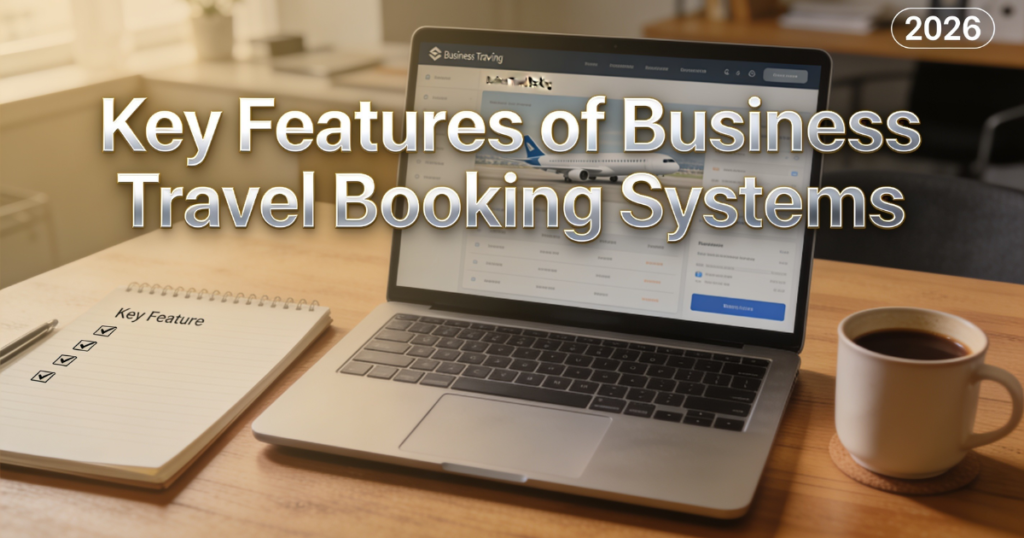
A modern Business Travel Booking platform can include several features designed specifically for corporate travel.
Centralized Travel Search
Employees can search flights, hotels, rail options, and other travel services from a centralized environment. This can reduce the need to use several unrelated booking websites.
Travel Policy Controls
Companies can configure rules around eligible travel options and spending limits. When a selected option falls outside company policy, the system may flag it or require additional approval.
Approval Workflows
Approval tools help companies decide which trips need authorization before booking. This is particularly useful when travel budgets are managed at department or project level.
Employee Travel Profiles
Traveler profiles can store relevant preferences and information, such as:
- Name
- Contact details
- Loyalty-program information
- Seating preferences
- Passport information where appropriate
- Travel preferences
Keeping this information centralized can reduce repetitive data entry.
Reporting and Analytics
Travel data can help companies understand how much they are spending and where that money goes.
Reports may cover:
- Airfare
- Hotels
- Ground transportation
- Departments
- Destinations
- Travelers
- Suppliers
- Policy compliance
Business Travel Booking for Small Businesses
Small companies may not need the same infrastructure as multinational corporations, but they can still benefit from organized travel management. For a small business, Business Travel Booking can help establish clear rules around who can book travel, what employees can spend, and how expenses should be documented.
A simple process might include:
- The employee submits the trip request.
- The manager approves the trip.
- Employee searches approved options.
- Reservation is completed.
- Confirmation is stored centrally.
- Receipts are submitted after travel.
- Finance reviews the expense.
This approach can provide structure without creating unnecessary administrative complexity.
Business Travel Booking for Large Organizations
Large companies typically have more complicated travel requirements.
They may have:
- Thousands of travelers
- Multiple offices
- International travel
- Different department budgets
- Negotiated supplier rates
- Complex approval structures
- Dedicated travel teams
For these organizations, Business Travel Booking can become part of a wider corporate travel management system. Integration with expense, HR, finance, and risk-management systems can also reduce duplicated work.
Booking Flights for Business Travel
Flights are often one of the largest components of corporate travel spending.
A corporate booking system can help employees compare eligible flight options based on:
- Price
- Schedule
- Duration
- Number of connections
- Airline
- Fare conditions
- Company policy
Companies may also establish rules for business-class travel, premium economy, or economy depending on trip length and internal policy.
Booking Hotels for Business Trips
Hotel selection is another important part of Business Travel Booking. Companies may establish preferred hotels based on location, negotiated rates, safety considerations, amenities, or proximity to offices and meeting locations. A centralized hotel search can make it easier for travelers to identify properties that meet company requirements.
Important factors can include:
- Nightly rate
- Cancellation terms
- Location
- Taxes and fees
- Room type
- Business facilities
- Company-negotiated rates
Rail and Ground Transportation
Business travel does not always involve flying. For shorter journeys, rail may be a practical option. Ground transportation can also include rental cars, taxis, ride services, airport transfers, and other local transportation. A complete Business Travel Booking strategy considers the entire journey rather than focusing only on airfare.
Expense Management and Business Travel
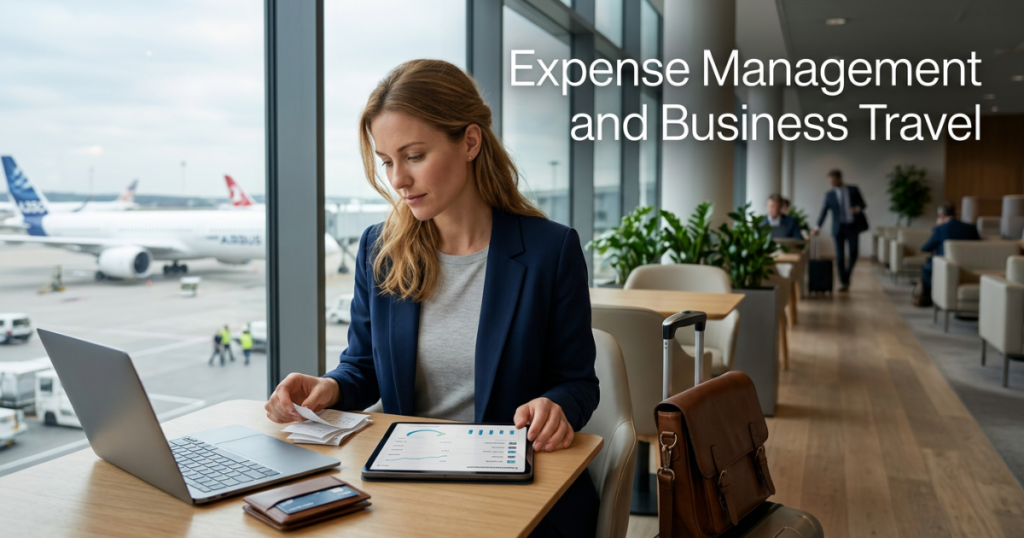
Travel reservations and expenses are closely connected.
After a trip, employees may need to submit receipts for:
- Hotels
- Meals
- Transportation
- Parking
- Business-related incidentals
When booking and expense systems work together, companies can more easily connect travel reservations with actual spending. This can reduce manual reconciliation and provide finance teams with better visibility.
Duty of Care and Traveler Support
Corporate travel programs also have a responsibility to support employees during business trips. A centralized Business Travel Booking system can give companies better visibility into where employees are traveling and when those trips are scheduled.
This information may be useful during:
- Severe weather
- Transportation disruptions
- Natural disasters
- Political or security events
- Major travel interruptions
Traveler support can include notifications, itinerary access, assistance with changes, and communication during disruptions.
Business Travel Booking vs Consumer Travel Booking
Consumer travel websites are generally designed for individual travelers.
Corporate systems have additional requirements.
| Consumer Booking | Corporate Booking |
| Individual purchase | Company-managed process |
| Personal payment | Corporate payment options |
| Limited policy controls | Travel policy integration |
| Personal itinerary | Centralized company records |
| Individual support | Traveler and company support |
| Personal expense tracking | Corporate expense management |
| Limited reporting | Business reporting and analytics |
The right approach depends on the size and requirements of the organization.
How to Choose a Business Travel Booking System
Companies evaluating a Business Travel Booking platform should consider more than the appearance of the booking interface.
Check Travel Inventory
Make sure the system provides access to the travel options employees actually need.
Review Policy Controls
Look for flexible rules that can support different departments, employee groups, destinations, and spending limits.
Examine Approval Tools
Approval workflows should match the company’s internal structure without making simple trips unnecessarily difficult.
Consider Expense Integration
If the company already uses accounting or expense software, integration can reduce duplicate data entry.
Review Reporting
Managers should be able to access useful information about travel spending, policy compliance, suppliers, and booking activity.
Evaluate Traveler Support
Companies should understand what support is available before, during, and after a trip.
Consider Scalability
A system that works for 20 travelers may not work the same way for 2,000 travelers. Companies should consider future growth before choosing a platform.
Common Business Travel Booking Problems
Even a modern travel system cannot eliminate every challenge.
Common problems include:
Employees Booking Outside the System
Travelers may use consumer websites when they believe they can find better prices or more convenient options. Clear policies and easy-to-use corporate booking tools can help improve adoption.
Complicated Approval Processes
If approvals take too long, employees may delay booking or bypass the process. Companies should keep approval requirements appropriate to the level of risk and spending involved.
Incomplete Traveler Information
Incorrect names, missing preferences, or outdated contact information can create problems during travel. Regularly maintaining employee profiles can reduce these issues.
Poor Expense Integration
When booking data and expense information are separated, finance teams may need to reconcile records manually. Integration can make the process more efficient.
Business Travel Booking Trends in 2026
Corporate travel continues to move toward connected digital workflows.
Several developments are particularly relevant in 2026.
Greater Automation
Automation can help with approvals, policy checks, itinerary management, notifications, and expense processes.
More Connected Travel Data
Companies increasingly want booking, expense, traveler, and reporting data to work together.
Mobile-Friendly Travel Management
Employees expect to manage travel from mobile devices, particularly when they need to make changes while traveling.
Focus on Traveler Experience
Corporate travel systems are increasingly expected to combine company controls with a simple booking experience.
Stronger Data Visibility
Travel managers need accurate information to understand spending patterns, supplier use, and policy compliance.
How to Build an Efficient Corporate Travel Process
A successful Business Travel Booking program starts with clear company rules.
Companies should:
- Define who can book business travel.
- Establish realistic travel policies.
- Set approval thresholds.
- Select preferred suppliers where appropriate.
- Give employees easy access to approved options.
- Connect travel and expense processes.
- Monitor policy compliance.
- Review travel data regularly.
- Provide traveler support.
- Update policies as business needs change.
The objective should be a process that employees can actually follow without unnecessary complexity.
Frequently Asked Questions
What is Business Travel Booking?
Business Travel Booking is the process of arranging corporate flights, hotels, rail travel, ground transportation, and related services through a company-managed travel process or platform.
Why do companies use corporate travel booking systems?
Companies use these systems to manage travel policies, approvals, reservations, expenses, reporting, and traveler support in a more centralized way.
Can small businesses use Business Travel Booking systems?
Yes. Small businesses can use corporate booking tools to create clearer travel rules, simplify reservations, and improve visibility into employee travel spending.
Does Business Travel Booking include hotels?
Yes. Corporate travel platforms can include hotel search and reservation features alongside flights, rail, rental cars, and other travel services.
How does Business Travel Booking help with expenses?
A connected system can link reservation information with expense processes, making it easier to track travel costs and reconcile receipts.
Can employees book travel from a phone?
Many modern corporate travel platforms provide mobile-friendly or mobile-app experiences, allowing travelers to access itineraries and manage trips while away from the office.
What should companies look for in a corporate travel platform?
Companies should consider inventory, policy controls, approvals, expense integration, reporting, traveler support, usability, security, and scalability.
Conclusion
A well-structured Business Travel Booking system can turn corporate travel from a collection of separate reservations into a connected business process. The most useful approach combines employee convenience with company controls. Employees need simple ways to search and manage trips, while businesses need visibility into policies, costs, approvals, expenses, and traveler support.
For 2026, companies evaluating corporate travel technology should focus on practical integration, clear workflows, useful reporting, and a booking experience employees are willing to use consistently.