

The best vacation spots in California are San Francisco, Yosemite, San Diego, Los Angeles, Big Sur, Napa and Sonoma, Lake Tahoe, Palm Springs with Joshua Tree, Santa Barbara and the Redwood parks. California is huge, so a single trip should focus on one or two regions, not all ten.
Three 2026 updates affect planning. Highway 1 through Big Sur reopened fully in January 2026 after about three years of repairs. Yosemite dropped its entry reservation system for 2026. International visitors now pay an extra fee at Yosemite and Sequoia & Kings Canyon.
Best Vacation Spots in California at a Glance
| Spot | Best for | Typical best time | Time needed |
| San Francisco | Sights, food, first-timers | Sep–Oct | 3–4 days |
| Yosemite | Waterfalls, hiking | May–Jun, Sep–Oct | 2–3 days |
| San Diego | Beaches, families | Spring and fall | 3–4 days |
| Los Angeles | Culture, theme parks | Spring and fall | 3–5 days |
| Big Sur | Coastal drives | Spring to fall | 1–2 days |
| Napa and Sonoma | Wine, food | Apr–Oct | 2–3 days |
| Lake Tahoe | Skiing, lake days | Dec–Mar, Jun–Sep | 2–4 days |
| Palm Springs and Joshua Tree | Desert, winter sun | Oct–May | 2–4 days |
| Santa Barbara | Relaxed coastal stay | Spring to fall | 2 days |
| Redwood parks | Giant trees | Late spring to early fall | 1–2 days |
These times are editorial estimates, not official figures.
How to Pick Your Spots
Driving distances decide most California trips. Pairing nearby places keeps your vacation from turning into a long road journey.
- Northern California: San Francisco, Yosemite, Napa and Lake Tahoe fit one trip of 7 to 10 days.
- Southern California: Los Angeles, San Diego, Palm Springs and Joshua Tree form a second logical trip.
- Central coast: Big Sur, Monterey and Santa Barbara work as a slow coastal drive.
San Francisco and the Bay Area
San Francisco suits first-time visitors who want sights, food and walkable neighborhoods in one place. Summer fog can make the city cool, so pack layers.
Two attractions need advance planning. The National Park Service requires a reservation to visit Alcatraz Island. Muir Woods also needs a parking or shuttle reservation, plus a $15 entrance fee for visitors 16 and older. Both details come from the Golden Gate National Recreation Area fee page. Alcatraz tickets often sell out weeks ahead in busy months, so book as soon as your dates are firm.
Yosemite National Park
Yosemite is the strongest pick for waterfalls, granite cliffs and big-view hiking. Spring brings the heaviest waterfall flow. Autumn brings thinner crowds.
Yosemite will not use a timed entry reservation in 2026. Visitors still pay the entrance fee, which sources list at $35 per vehicle for seven days. Non-US residents aged 16 and older pay an extra $100 each unless they hold an annual pass. Glacier Point Road closes for winter. From San Francisco, plan on roughly four hours of driving each way.
San Diego
San Diego works for families and beach lovers. It has mild weather across most of the year, long beaches and major attractions like the San Diego Zoo. Mission Beach suits surfing, La Jolla suits sunbathing and Coronado suits easy strolling. Travel guides also highlight the Gaslamp Quarter for nightlife.
For more beach options across the country, see our guide to good beaches to visit in the US, which includes La Jolla Cove. San Diego is a good base if you prefer one hotel over a road trip.
Los Angeles
Los Angeles rewards visitors who group sights by area. Hollywood, Santa Monica, Venice, Griffith Observatory and the museums sit far apart, and traffic can eat hours. Pick one or two zones per day.
Disneyland Resort in Anaheim lies about 30 miles from downtown Los Angeles. Allow a full day, or two for both parks. Los Angeles gives you the most variety, but it asks the most planning for getting around.
Big Sur and the Central Coast
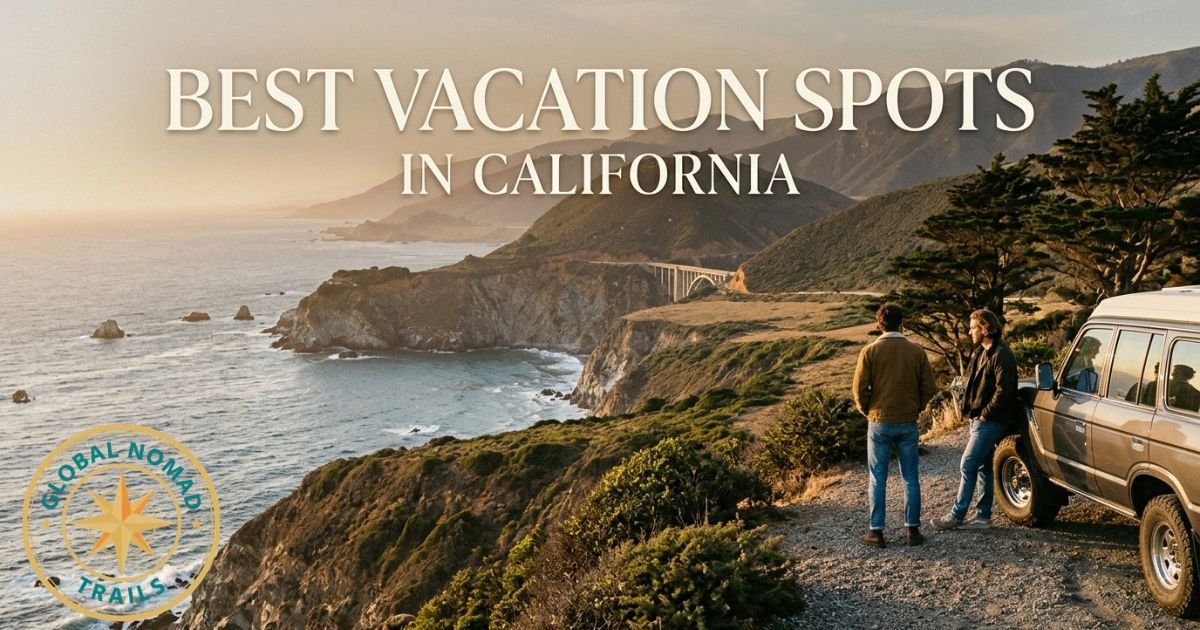
Big Sur is the best vacation spot in California for a scenic drive. Popular stops include Bixby Creek Bridge, McWay Falls, Pfeiffer Beach and Garrapata State Park. Monterey and Carmel sit at the northern end.
Highway 1 reopened fully on January 14, 2026, but closures still happen. Caltrans closed a ten-mile stretch in August 2026 for fire operations. It also scheduled overnight repair closures this fall. Check Caltrans District 5 notices before you drive. Traveling with a young child? Our toddler travel tips cover car seats and nap timing for long drives.
Napa Valley and Sonoma
Napa and Sonoma suit couples and food lovers. Tastings, vineyard lunches and small-town restaurants fill the days. The region lies roughly one to one and a half hours from San Francisco by car.
Spring through fall is the popular window. Harvest season in late summer and autumn is busy, so reserve tastings early. Choose a driver or a tour, because most visits involve alcohol and winding roads.
Lake Tahoe
Lake Tahoe sits in the Sierra Nevada on the California–Nevada border. It is the second-deepest lake in the United States, according to AAA’s travel guide. Winter brings skiing and snowboarding. Summer brings swimming, paddling and lakeside hiking.
Mountain roads can need chains in winter, so check conditions before you leave. Plan about two to four days, and book lodging early for ski weekends and summer holidays.
Palm Springs and Joshua Tree

This desert pair works best from October through May. Summer highs often pass 100°F, which makes hiking unsafe in the afternoon. Palm Springs offers pools, mid-century architecture and spa stays. Joshua Tree adds boulder landscapes and sunset viewpoints like Keys View.
Joshua Tree does not require timed entry. Visitors pay a per-vehicle fee, valid for seven days, so check the National Park Service for the current rate. The nonresident surcharge does not apply here.
Santa Barbara
Santa Barbara is a calm, compact stop on the coast, roughly an hour and a half to two hours north of Los Angeles. Expect Spanish-style buildings, beaches, wine tasting rooms and good walking streets. It works well as a two-day break between Los Angeles and Big Sur. Choose it if you want relaxation over big attractions.
Redwood National and State Parks
The Redwood parks suit travelers who want old-growth forest without a hard hike. Redwood National Park itself charges no entrance fee, but some state park areas do. The state fee at Prairie Creek Redwoods covers the drive to Gold Bluffs Beach and Fern Canyon, according to the National Park Service.
Lady Bird Johnson Grove is an easy loop of about 1.5 miles. The Newton B. Drury Scenic Parkway is a 10-mile forest drive. Tall Trees Grove needs a free permit. The parks lie far north, so combine them with a northern road trip.
FAQ,s
What is the best place to vacation in California for first-timers?
San Francisco plus Yosemite suits most first-timers who like sights and nature. San Diego suits beach and family trips.
How many days do you need to vacation in California?
Plan 7 to 10 days for one region pair, such as San Francisco, Yosemite and Napa. Trying to cover the whole state creates long driving days.
What is the best time to visit California?
Spring and fall work for most spots. Desert areas shine from October to May, and Tahoe peaks in winter and summer.
Do you need a car to vacation in California?
Yes, for most trips. San Francisco and central San Diego work without one, but parks, wine country and the coast need a car or tour.
Do international visitors pay extra at California’s national parks?
Yes, at Yosemite and Sequoia & Kings Canyon. Non-US residents aged 16 and older pay $100 each unless they hold an annual pass. Joshua Tree and Redwood are not on the list.
Conclusion
The best vacation spots in California share one rule: choose by region, not by list. Pair San Francisco, Yosemite and Napa for a northern trip. Pair Los Angeles, San Diego and Palm Springs for a southern one. Add Big Sur and Santa Barbara when you want a slow coastal drive.
Confirm time-sensitive details before you leave. Park fees, Alcatraz tickets, Muir Woods reservations and Highway 1 closures can all change. A flexible plan and early bookings for the busiest places will do more for your trip than a packed itinerary.