
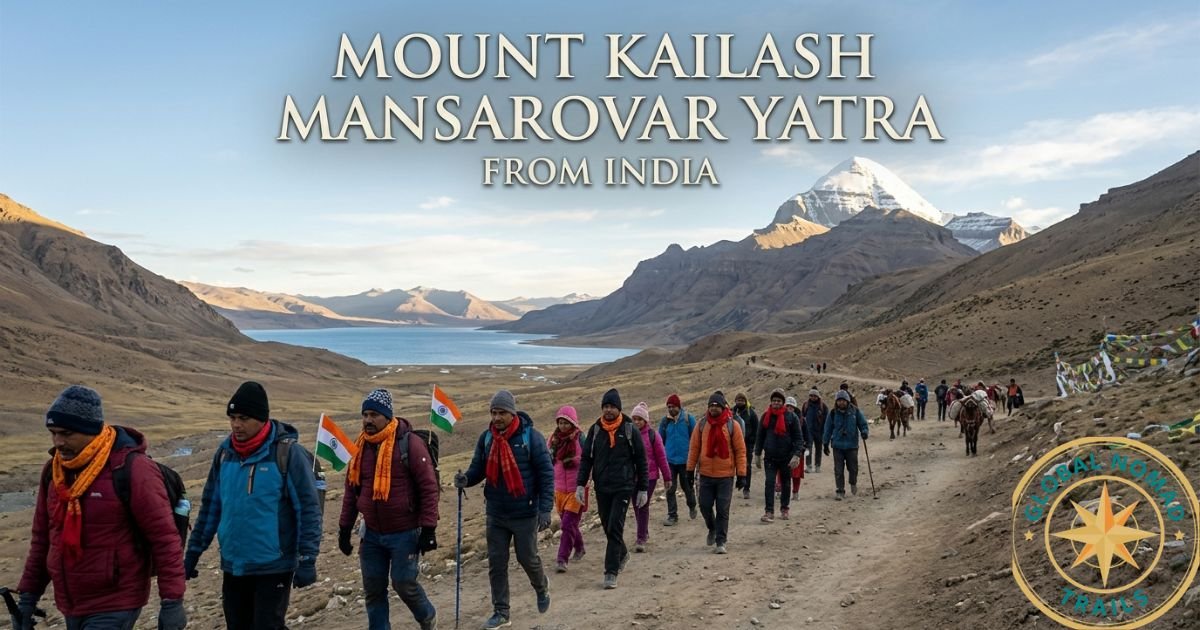
The Mount Kailash Mansarovar Yatra from India runs in two ways: the government yatra run by the Ministry of External Affairs (MEA), and private tours through Nepal and Tibet. As of 7 November 2026, neither is taking pilgrims. The MEA’s 2026 season ended in August. The main private overland route, through Rasuwagadhi and Kerung, has been shut since a deadly flood on 26 August 2026. No official 2027 dates were published when this guide was written.
That makes winter the right time to plan. Passport checks, medical tests, Chinese visa paperwork and operator checks all take weeks, and they decide whether a 2027 departure actually happens. This guide covers what is open, what is closed, how each route works, what it costs and what to ask any operator before paying, Himalayan Asia Treks included.
Is the Kailash Mansarovar Yatra Open Right Now?
No. Both the government and private routes are closed for the 2026 season.
- Government yatra: The MEA ran its 2026 yatra between June and August, with 10 batches via Lipulekh Pass in Uttarakhand and 10 via Nathu La in Sikkim. Each batch had 50 pilgrims. The season is over.
- Private route via Kerung: A glacial flood hit Rasuwa district in Nepal on 26 August 2026. It destroyed the border crossing that most overland pilgrims use. NPR reported that China and Nepal listed 853 foreigners as missing. Many were Kailash pilgrims, and India reported 287 Indian nationals missing as of 29 August.
- Reopening: Operators tracking the border reported the crossing still closed at the end of September. Nepal had not given a reopening date. Some operators say Tibet permits for the kora may resume around April 2027. Treat that as unconfirmed until Chinese or Nepali authorities say so.
- Other routes: The Simikot–Hilsa route from western Nepal and the Lhasa fly-in route sit outside the flood area. Both are slower, costlier and more weather-dependent.
If any operator sells you a Kerung departure with a firm 2027 date, ask for written confirmation from the authorities.
Two Ways to Do the Yatra from India
| Government yatra (MEA) | Private yatra via Nepal | |
| Who runs it | Ministry of External Affairs | Registered tour operators |
| Entry points | Lipulekh Pass, Nathu La | Kerung, Simikot–Hilsa, or Lhasa |
| Selection | Computerised draw | First come, first booked |
| Age | 18 to 70 on 1 January | Set by operator after a medical check |
| Group size | About 50 per batch | Usually small groups |
| Time away | Roughly three weeks | About 9 to 15 days |
| Estimated cost (2026) | About ₹2.09 lakh (Lipulekh), ₹3.31 lakh (Nathu La) | Roughly $1,800 to $5,500 by route |
The Government Yatra
The MEA picked 1,000 pilgrims for 2026 through a computerised draw on 21 May. Applications go through the official Kailash Manasarovar Yatra portal. You apply online only, never through an agent.
- Eligibility: Indian citizen, aged 18 to 70 on 1 January of the yatra year, with a passport valid for at least six months. A BMI limit applies, so check the current figure on the portal.
- Medical tests: The MEA accepts tests only at its designated hospitals in New Delhi. Reports from other hospitals do not count.
- Subsidy: The MEA pays none. Some state governments offer partial support, and the rules differ by state.
- Route choice: Lipulekh involves much more walking. Nathu La is motorable for most of the way and suits older pilgrims better.
The draw is the catch. Demand far exceeds 1,000 places, and a medically fit 71-year-old cannot even enter.
The Private Yatra
Private tours exist for pilgrims who miss the draw, cross the age limit or want more flexibility. Himalayan Asia Treks organizes private Kailash Mansarovar departures, and the questions below apply to it as they would to any operator.
Private does not mean cheaper or easier. You still need a Chinese visa, Tibet permits and a medical fitness certificate. Every foreign traveller needs a registered agency to file Tibet permits, because individuals cannot apply.
Visa and Permits: Get Them Before You Leave India
This is where private pilgrims get stranded. In June 2026, the MEA warned pilgrims not to leave India until they hold every Chinese visa and entry permit. Around 52 Indians were stuck in Kathmandu at that time. The Embassy of India in Kathmandu advises that Indian passport holders get their Chinese visa through the Chinese Embassy in New Delhi, not in Kathmandu.
Four documents matter:
- Chinese group visa, arranged through your operator
- Tibet Travel Permit for entering Tibet
- Alien’s Travel Permit for restricted areas in western Tibet
- Nepal restricted-area permit, if your route needs one
Your operator files all of them. Ask to see the visa and permit status in writing before you board a train or flight to Kathmandu. If you travel via Delhi, allow a few days there. Our Delhi weekend guide helps you use the waiting time.
Private Routes Compared
| Route | Typical length | Best for | Status (Nov 2026) |
| Kathmandu to Kerung (overland) | 10 to 14 days | Gradual acclimatisation | Closed after the August flood |
| Nepalgunj–Simikot–Hilsa (helicopter) | 9 to 11 days | Short leave, avoiding long drives | Outside the flood area; delays of days are common |
| Lhasa fly-in, then west overland | 12 to 15 days | Combining Lhasa with Kailash | Outside the flood area; permit rules apply |
Overland routes usually acclimatise you better because altitude builds across several days. Helicopter routes save time but drop you at height quickly.
How Much Does the Yatra Cost?
Costs vary a lot by route and season. Use these ranges as a guide, not a quote.
- Government yatra: About ₹2.09 lakh via Lipulekh and ₹3.31 lakh via Nathu La, per the 2026 estimates.
- Private overland: Roughly $1,800 to $3,000 per person, depending on comfort level.
- Private helicopter: Roughly $3,800 to $5,500 per person.
At recent exchange rates, the private range works out to about ₹1.6 lakh to ₹4.8 lakh. Helicopter fuel costs have risen, so operators may re-quote prices for 2027.
Check what the price excludes. Chinese visa fees, travel insurance, personal expenses, and pony or porter hire on the kora are often extra. Cards and UPI may not work in western Tibet, so ask how much cash to carry.
Best Time to Go
The season runs from roughly May to early October, because mountain passes stay snowbound in winter. Within that window:
- Late May and early June: Clear skies and cool days. Crowds rise around the Saga Dawa festival, which falls on the full moon of the fourth Tibetan month.
- September and early October: Stable weather and fewer people.
- July and August: Monsoon rain affects the Nepal side, and flood and landslide risk is highest then. The 2026 disaster struck on 26 August.
For 2027, book flexible dates and buy insurance that covers route closures.
How Hard Is the Yatra?
Hard enough that fitness matters. The kora, the walk around Mount Kailash, covers about 52 km over three days. Mount Kailash stands at 6,638 m and nobody climbs it. Lake Mansarovar sits at about 4,590 m. The highest point on the circuit, Dolma La, is roughly 5,600 m, though published figures vary a little.
Altitude, not distance, makes this difficult. Oxygen is thin, nights are cold, and long drives at 4,500 m tire people before the walk starts. The MEA calls the yatra arduous and warns that people with heart, lung or blood pressure problems should not go. Ponies and porters are available on the kora, but you still need medical clearance.
Prepare for months, not weeks:
- Walk four to six long distances in the boots you will wear.
- Get a full medical check, including blood pressure and heart health.
- Ask your doctor about altitude medication before you travel.
- Try a Himalayan stay at moderate height first. Our Shoja travel guide covers forest walks and slow travel in Himachal.
What a Typical Itinerary Looks Like

Plans differ by route, but most private departures follow the same pattern:
- Arrival and briefing: Meet your group in Kathmandu, check documents and get the briefing.
- Drive or fly to the border: Move toward Tibet over several days to build altitude.
- Acclimatisation stop: Rest at a lower town before climbing higher.
- Lake Mansarovar: Spend time at the shore for prayer and ritual.
- Darchen and the kora: Walk three days around Mount Kailash, with the hardest day over Dolma La.
- Return: Head back the same way, with buffer days for weather.
Buffer days matter. Helicopter schedules slip, roads close, and a tight itinerary leaves no room for either.
Questions to Ask Himalayan Asia Treks or Any Operator
Put these questions in writing and keep the answers.
- Who files the Chinese visa and Tibet permits, and when will I hold them?
- Which entry route do you use, and what is your plan if it stays closed?
- What happens to my money if the route or permits change?
- How many acclimatisation nights are built in, and where?
- What is the evacuation plan, and who pays?
- Are guides trained in altitude illness, and do groups carry oxygen?
- Which items are excluded from the price?
Under-documented operators cause more trouble than expensive ones. The MEA also advises pilgrims to verify operator credentials before booking.
What to Pack
- Broken-in waterproof hiking boots
- Layered clothing, down jacket and windproof shell
- Sleeping bag rated for sub-zero nights
- Sunglasses, high-SPF sunscreen and lip balm
- Personal medicines and a basic first-aid kit
- Headtorch, power bank and trekking poles
- Passport, visa copies and insurance papers
Ask your operator about Chinese customs rules before you pack. Drones, satellite devices and some printed material can be restricted.
FAQ,s
Is the Kailash Mansarovar Yatra open in 2026?
No. The government yatra ended in August, and the main private route via Kerung closed after the 26 August flood. Check for 2027 announcements.
Who can apply for the government yatra?
Indian citizens aged 18 to 70 on 1 January, with a valid passport and a pass in the MEA medical tests. Applications run online at the official portal.
How much does the Kailash Mansarovar Yatra cost from India?
The 2026 government estimates were about ₹2.09 lakh via Lipulekh and ₹3.31 lakh via Nathu La. Private tours range from roughly $1,800 to $5,500 by route.
Do Indians need a Chinese visa for Kailash Mansarovar?
Yes. Private-tour pilgrims should hold the Chinese visa and Tibet permits before leaving India. The Embassy of India in Kathmandu points to the Chinese Embassy in New Delhi for the visa.
Which route is easiest for senior pilgrims?
Nathu La in Sikkim is the least walking-heavy government route. Among private options, overland routes acclimatise better than helicopter ones, but any route needs medical clearance.
Conclusion
The Mount Kailash Mansarovar Yatra from India is one of the toughest pilgrimages in the Himalaya. In late 2026 it is also uncertain. The government season has closed, and the main private overland route is still damaged after a deadly flood. Pilgrims who plan well will watch for official 2027 announcements, keep flexible dates and refuse any operator who will not show visa and permit status in writing.
Use the months ahead to get a medical check, build walking fitness and compare operators properly. Himalayan Asia Treks or any other organizer should answer your questions about routes, permits and evacuation clearly before you pay a rupee. Faith carries you far on this journey, but paperwork and preparation decide whether you reach the mountain.