


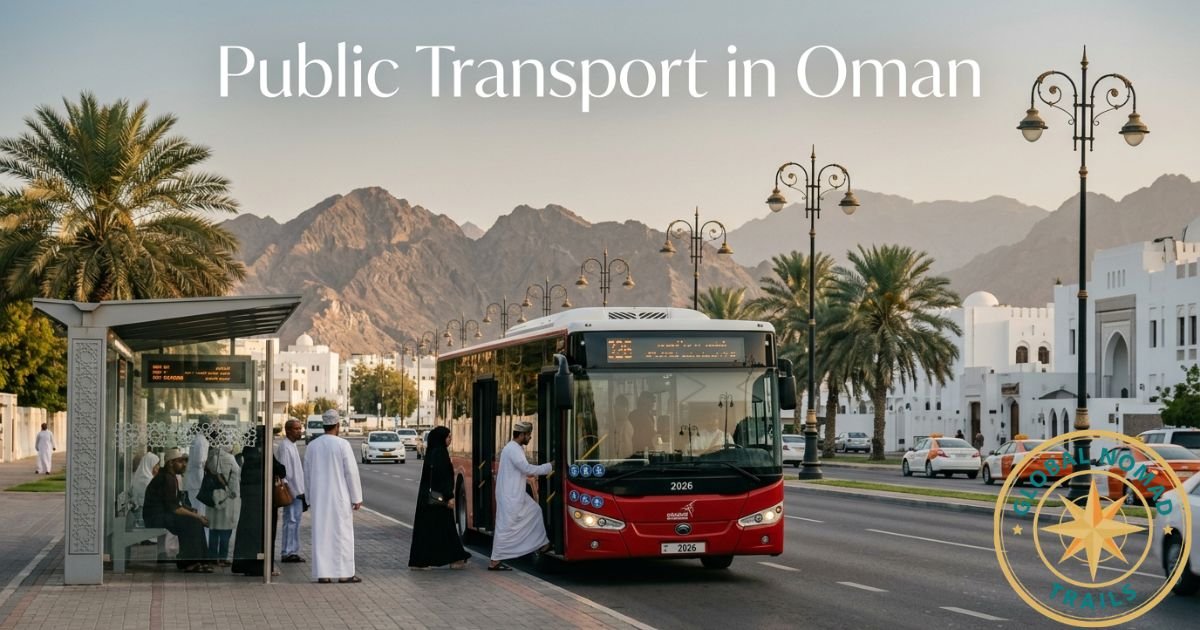
Public transport in Oman works well in Muscat and along a few main roads. It does not cover the whole country. Travelers rely on three things: Mowasalat buses, licensed taxi apps and National Ferries Company boats. Oman has no metro and no passenger trains yet. This guide covers what each option costs, where it goes and when you should rent a car instead.
Fares and timetables change often. Check the latest details on Mowasalat’s official website before you travel.
How Public Transport in Oman Works
Oman’s transport is road-based. Mwasalat, the national bus company, runs city buses in Muscat, Salalah and Sohar, plus intercity routes. Taxis book through approved apps. Ferries link the mainland with Masirah Island and the Musandam coast.
| Option | Best for | Typical cost | Main limit |
| Mwasalat city bus | Muscat sights, airport | About OMR 0.2–0.5 per ride | Infrequent, mostly cash |
| Intercity bus | Muscat to Salalah, Nizwa, Sur | A few rials to about OMR 10 | Few daily trips, book ahead |
| Taxi apps | Short city trips, airport | About OMR 1.5 flag-fall plus per-km | Costly for long distances |
| Ferry | Masirah, Musandam | Varies by route | Weather and season delays |
Omani currency uses rials (OMR) and baisa. One rial equals 1,000 baisa, so a 300 baisa bus ride costs OMR 0.3.
Mwasalat City Buses in Muscat
City buses are the cheapest way to get around Muscat. Fares depend on zones, and most rides cost roughly 200 to 500 basis. Buses stop only at official stops, and many routes run every 20 to 30 minutes. Plan extra time, especially outside rush hours.
The Airport Bus
Route A1 links Muscat International Airport with Ruwi Bus Station. The trip takes about 45 minutes. Guides report that it runs every 30 minutes, day and night.
The fare is about 500 baisa. Some older guides list OMR 1, so carry a one-rial note just in case. Ruwi works as a transfer hub for most other city routes.
Routes Visitors Use Most
- Route 4 runs from Ruwi to Muttrah Souq, the Corniche, Old Muscat and Al Alam Palace. A one-way ride costs about 300 baise.
- Route 1 runs from Ruwi to Al Mabelah and passes the Sultan Qaboos Grand Mosque. Expect to pay around 400 baisa.
Both routes cover the city’s main sights, so you can see most of Muscat without a car.
How to Pay
Carry small Omani rial notes and coins. Cash is the safe choice, and daily passes have not been common. Some newer buses may accept cards, but don’t count on it.
Intercity Buses
Mwasalat is the only company that runs buses between Omani cities. Muscat’s intercity buses leave from Azaiba station. Routes reach Nizwa, Sur, Sohar, Buraimi, Rustaq, Duqm and Salalah. Services are less frequent than in neighboring countries, so check the timetable the day before.
The Muscat to Salalah bus is the longest popular route. Reports put the trip at 10 to 13 hours, with one-way fares around OMR 8 to 10. Mwasalat adds trips and discounts during the khareef (monsoon) season in summer, so prices change throughout the year. Short routes cost much less. Muscat to Nizwa has been about two trials.
Mwasalat also runs international services. Route 203 connects Sharjah with Sohar and Muscat, and a shuttle links Khasab, Bukha and Sohar for travelers without UAE visas. Confirm timetables on the official site before you book.
Taxis and Ride-Hailing Apps
Oman’s taxis are orange and white. Uber does not operate in the country. The government requires taxis to join licensed local apps, including OTaxi, OmanTaxi, Marhaba, Tasleem and Hala. Some apps, such as Sayidati, offer female-only rides.
Fares start with a flag-fall of about OMR 1.5, plus roughly OMR 0.30–0.60 per kilometer. Apps show the price before you ride, which helps you avoid haggling. Outside Muscat, you may need to arrange a driver through your hotel or negotiate at a taxi stand.
If you also plan to visit Egypt, our Cairo Travel Guide explains how ride-hailing works there.
Taxis from Muscat Airport
OTaxi and OmanTaxi hold the licenses for airport pickups. The transport ministry cut airport taxi fares by about 45 percent for app bookings in 2023. A ride to central Muscat has been reported at about OMR 9–10. Book through the app and confirm the price first.
Shared Minivans
Shared minivans also run on some roads. They have no official stops, and you flag one down. A small circular sticker on the door marks them. The driver sets the fare, which stays low. Ask the price before you board, and expect these to suit confident travelers better than first-time visitors.
Ferries in Oman
The National Ferries Company links Muscat, Khasab, Shinas, Dibba, Shannah and Masirah. Its boats carried more than 250,000 passengers in 2025, according to Oman Observer.
The Shannah to Masirah crossing takes about one hour. Mwasalat also runs a combined bus and ferry route from Muscat to Masirah. The Muscat to Khasab ferry has been a long crossing of around six hours, and schedules for that route have been limited.
Demand peaks in two periods. Musandam gets busy from November to February. Masirah fills up from April to October during camping and turtle-nesting season. Book early in these months. Ferries can stop running in rough weather, including cyclone warnings.
Trains, Metro and Domestic Flights

Oman has no metro, tram or passenger train today. The Hafeet Rail line will link Sohar with Abu Dhabi, and Gulf News reports that trial operations are planned for late 2027. Don’t build a 2026 trip around it.
For long distances, Oman Air and SalamAir fly between Muscat, Salalah and Khasab. Flying saves a full day on the Muscat to Salalah trip.
Which Option Fits Your Trip
- Short Muscat visit: Use the A1 bus and Route 4, with taxi apps for late nights.
- Budget traveler: Mix city buses and intercity buses. Allow extra time.
- Salalah in khareef season: Fly one way or book the bus early.
- Wadis, deserts and mountain roads: Rent a car or join a guided tour. Public transport rarely reaches these places.
- Masirah or Musandam: Book ferry seats before you fix hotel dates.
This is an editorial recommendation, not an official rule. A car gives the most freedom outside Muscat.
FAQ,s
Does Oman have trains or a metro?
No. Oman has no metro, tram or passenger trains today. The Hafeet Rail link to the UAE is still under construction, with trial operations planned for late 2027.
Is Uber available in Oman?
No. Uber does not operate in Oman. Use licensed local apps such as OTaxi, OmanTaxi or Marhaba.
How do I get from Muscat airport to the city by public transport?
Take the Mwasalat A1 bus to Ruwi Bus Station. It takes about 45 minutes and costs about 500 baisa. Carry cash.
Can I take a bus from Muscat to Salalah?
Yes. Mwasalat runs the route from Muscat, and the trip takes roughly 10 to 13 hours. Book early in the khareef season.
Do I need to rent a car in Oman?
Not for Muscat. For wadis, deserts, forts and mountain roads, a car or tour is much easier.
Conclusion
Public transport in Oman suits travelers who stay near Muscat or follow main intercity routes. The A1 airport bus, Route 4 and licensed taxi apps cover the capital at low cost. Intercity buses and ferries add useful options, but they need advance planning.
For the rest of the country, expect to mix transport types. Fly or take a bus for long distances, then book a driver or rent a car for nature sites. Check Mwasalat and ferry schedules a day before each trip.