

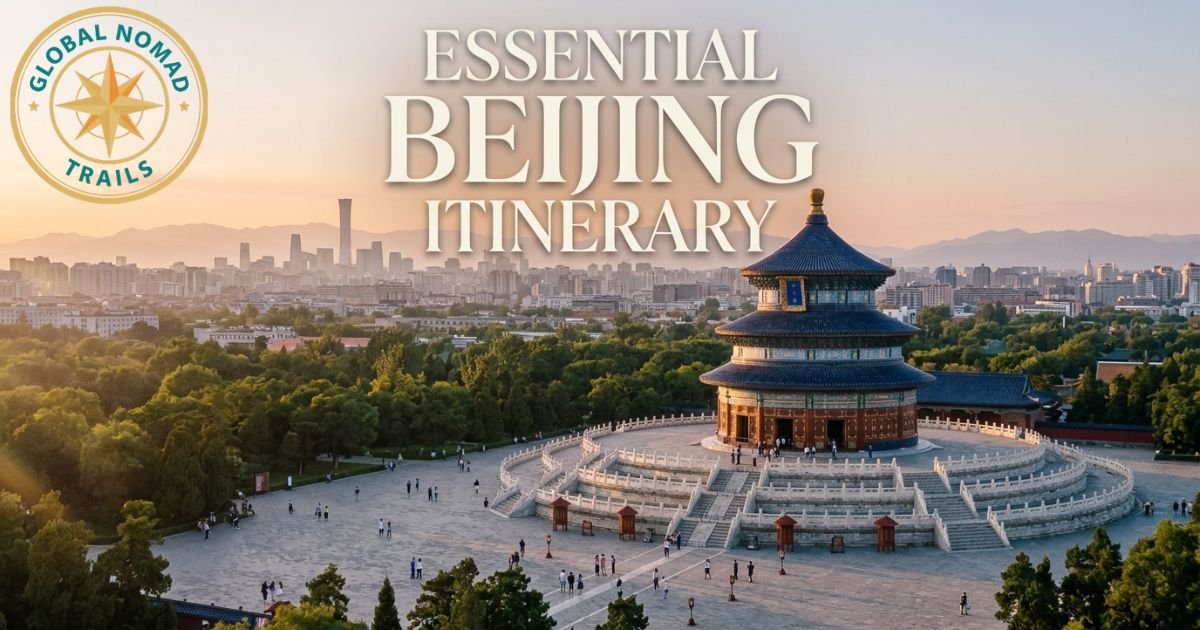
An essential Beijing itinerary for four days covers the Forbidden City, the Mutianyu section of the Great Wall, the Summer Palace, the Temple of Heaven, and the old hutongs. Beijing is spread out, so this plan groups sights by area to cut travel time. It also flags the booking rules that catch many first-time visitors off guard.
Beijing now runs on advance reservations. The Forbidden City and Tiananmen Square both require real-name tickets booked with your passport, and neither sells entry on the spot. The Forbidden City is also closed on Mondays. This guide builds those limits into each day, so you do not turn up at a locked gate.
| Day | Focus | Main sights | Book ahead? |
| 1 | Imperial core | Tiananmen Square, Forbidden City, Jingshan Park, Wangfujing | Yes, both main sights |
| 2 | Great Wall | Mutianyu, then Sanlitun | Recommended |
| 3 | Zoo and royal garden | Beijing Zoo, Summer Palace, Starry Street | Check Summer Palace tickets |
| 4 | Old Beijing | Temple of Heaven, Lama Temple, Bell and Drum Towers, hutongs, Beihai Park | Check Lama Temple slots |
Arrival to Beijing: Details to Sort
Beijing has two main airports. Capital Airport (PEK) sits northeast of the city, and Daxing Airport (PKX) sits to the south. The Capital Airport Express train runs to the city center. A separate Daxing Airport Express train links to the subway network. Taxis and ride-hailing apps also serve both airports, but traffic can slow them down.
Sort these four things before you fly:
- Entry rules. China offers visa-free entry to citizens of many countries. It also offers a 240-hour transit option for travelers on a trip to a third country. These lists change, so check the Chinese embassy website for your passport before you book flights.
- Payments. Many shops and taxis expect Alipay or WeChat Pay. Link your foreign card to one of them before you arrive. Keep a little cash as a backup.
- Phone and maps. Download an offline map and set up an eSIM or roaming plan. Some Western apps work poorly in China, so test your key apps before departure.
- Where to stay. A base near Wangfujing or the Dongcheng district keeps you close to Day 1 and Day 4 sights. Make sure your hotel sits near a subway line.
Plan your Monday. The Forbidden City is closed on Mondays except on public holidays. The inner halls of the Temple of Heaven are also closed on Mondays. Place Monday on Day 2 or Day 3, because the Great Wall and the Summer Palace stay open.
Season note. Spring and autumn bring the most comfortable weather. Winter is cold and dry, and summer is hot and humid. Opening hours also shift in November, so this plan uses the winter schedule where it matters.
Beijing Day 1 Itinerary
Day 1 follows Beijing’s north-south axis. Start early, because the Forbidden City needs about three hours.
Tiananmen Square
Tiananmen Square is free, but you cannot simply walk in. Visitors must reserve a time slot with their passport details. The slots usually include flag-raising, morning, afternoon, and flag-lowering. The flag-raising slot is separate from the morning slot, and a morning ticket will not get you in for sunrise.
Bring the original passport you used for the booking. Security checks can take a while, so arrive early. Enter from the south side, near Qianmen, and walk north toward the Gate of Heavenly Peace, which faces the square.
Forbidden City
The Forbidden City is the former imperial palace, built in the early 15th century and listed by UNESCO. It is Beijing’s most important sight and its hardest ticket.
- Booking: Tickets go on sale at 20:00 Beijing time, seven days before the visit. Peak dates can sell out within minutes. Foreign visitors can book on the Palace Museum’s official English booking site with a passport.
- Entry: Bring the original passport. You enter through the Meridian Gate, the south gate.
- Price and hours: Standard tickets cost about CNY 60 in peak season and CNY 40 in off-peak months. The site generally opens at 8:30. It closes at 17:00 from April to October and at 16:30 from November to March. The last entry comes about an hour earlier.
- Route: Walk the central axis from south to north, then exit through the north gate. Allow about three hours.
If tickets are sold out, check again on the evening they release returned slots. Use only the official site or a trusted travel service.
Jingshan Park
Jingshan Park lies directly across the road from the Forbidden City’s north gate. A short climb leads to a pavilion on top of the hill. From there you can see the palace roofs laid out in rows. The view works well in late afternoon, once the palace crowds have thinned.
Wangfujing Road
Wangfujing is a pedestrian shopping street east of the palace. It mixes malls, department stores, and snack stalls. It suits an easy dinner after a long day on your feet. Be careful with strangers who invite you to a tea tasting or an art show. That is a well-known tourist scam in central Beijing.
Beijing Day 2 Itinerary
Day 2 takes you out of the city and back for a lively dinner.
Great Wall of China: Mutianyu Section
Mutianyu is one of the most popular Great Wall sections for first-time visitors. It has restored walls, forested hills, and several ways up to the wall. It is also less rough than wilder sections, so most fit visitors can manage it.
Getting there. The trip usually takes between 1.5 and 2 hours each way, depending on traffic. You can book a tour, hire a private driver, or take a tourist bus from central Beijing. A private driver offers the most flexibility.
Tickets and rides. Entry typically costs around CNY 40. A shuttle bus to the base of the wall costs extra. You can then walk up, take a cable car, or ride the chairlift. The toboggan carries you down. Operating hours shift with the season. The cable car generally runs from about 7:30 to 17:30 until mid-November. After that, it runs from about 8:00 to 17:00. The toboggan can close in bad weather, so keep a backup plan for the descent.
Time needed. Plan five to six hours from arrival at the base to departure. Leave early to beat the crowds. Wear shoes with good grip, because the steps are steep and uneven.
Sanlitun Area
Sanlitun is in Chaoyang district, near the Workers’ Stadium. It is a modern area with restaurants, bars, cafes, and shops. It makes a good contrast with Day 1’s imperial sights. Pick a restaurant when you arrive, because places change often. If you return late from the wall, a ride-hailing app is the easiest way back to your hotel.
Beijing Day 3 Itinerary
Day 3 pairs a quick animal stop with a long, slow garden day. The Beijing Zoo and the Summer Palace both sit on Subway Line 4, so the transfer is easy.
Beijing Zoo
The Beijing Zoo is best known for its giant pandas. Visit in the morning, when the animals are more active and the crowds are smaller. Check the zoo’s current hours and any panda house rules before you go. If you travel with children, this stop makes the day more varied. If you have no interest in zoos, skip it and give the Summer Palace more time.
Summer Palace
The Summer Palace is a former imperial retreat built around Kunming Lake and Longevity Hill. It is a calmer, greener contrast to the Forbidden City’s stone courtyards.
- Gate: Enter through the East Palace Gate and plan about four to five hours.
- Tickets: Buy your ticket with your original passport. Prices and rules change, so check the official channels before you go.
- Route: Walk the Long Corridor, visit the Marble Boat, and climb toward the Tower of Buddhist Incense. If your legs are tired, take a boat on the lake instead.
- Exit: Leaving through the North Gate puts you near Beigongmen Station on Line 4.
For a full walking route, read our step-by-step guide to visiting the Summer Palace in Beijing.
Starry Street
Starry Street is your evening stop after the Summer Palace. Treat it as a relaxed place to eat and stroll. Shops and restaurants change often, so confirm the location in your map app and choose a place on the day. If you feel tired after the palace, go straight to dinner near your hotel instead.
Beijing Day 4 Itinerary
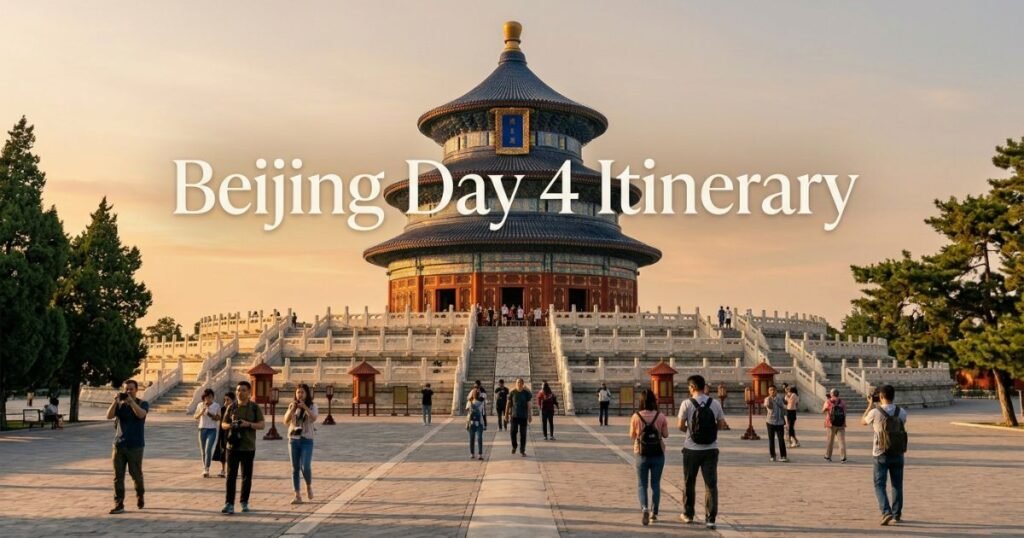
Day 4 covers old Beijing and has five stops. It works best if you keep the pace steady and drop Beihai Park when time runs short.
Temple of Heaven
The Temple of Heaven is where emperors prayed for good harvests. The surrounding park is large and open daily from early morning. In the morning, you will see locals practicing tai chi and playing music under the old trees.
The main halls, including the Hall of Prayer for Good Harvests, the Echo Wall, and the Circular Mound Altar, usually open from 8:00 and close around 17:00 or 18:00, depending on the season. They are closed on Mondays. The Beijing municipal government lists Temple of Heaven ticket types and hours. A combination ticket covers the park and its main buildings. Prices have been around CNY 34 in the high season, but check before you go.
Lama (Yonghe) Temple
The Lama Temple is a major Tibetan Buddhist temple in the north of the old city. You will see incense, prayer halls, and a very large wooden Buddha statue. Many visitors report that entry now uses timed, pre-booked tickets. Check the official booking channel a few days before your visit, because morning slots can fill early. Dress modestly and keep your voice low inside the halls.
Bell and Drum Towers
The Bell Tower and Drum Tower face each other at the northern end of Beijing’s central axis. They once told the time for the whole city. The Drum Tower has a steep staircase, so climb it only if your knees feel good. The open square between the two towers is a pleasant place to rest.
Hutongs
Hutongs are the narrow lanes of old Beijing, lined with courtyard homes. The area around Nanluoguxiang and Houhai is the best-known stretch for a walk. Nanluoguxiang is busy and touristy. Quieter side lanes give a better sense of daily life. A rickshaw ride is an option, but agree on the price first.
Beihai Park
Beihai Park is a former imperial garden built around a large lake, with the White Dagoba on a hill above it. It suits a slow end to the day. Check the park’s closing time before you plan to arrive late. If you feel worn out after the hutongs, drop this stop and keep it for a later trip.
Additional Days in Beijing
Extra days let you slow down or add one of these options.
- National Museum of China: It is next to Tiananmen Square. Reservations are required, and the museum is closed on Mondays.
- Old Summer Palace (Yuanmingyuan): The ruins of a grand imperial garden destroyed in the 19th century. It suits history lovers.
- 798 Art District: A former factory area turned into galleries and cafes. It is a good rainy-day choice.
- Olympic Park: Home of the Bird’s Nest stadium. It works well in the evening when the buildings are lit.
- A second Great Wall section: Jinshanling is farther away and more rugged than Mutianyu. It needs a full day and a driver.
Frequently Asked Questions
Is 4 days enough for Beijing?
Four days cover the main sights at a steady pace. You will miss some museums and neighborhoods, but the key landmarks fit.
What is the best time to visit Beijing?
Spring and autumn are generally the most comfortable. Summer is hot and crowded, and winter is cold but quieter.
Do I need to book tickets in advance?
Yes, for the main sights. The Forbidden City and Tiananmen Square both require passport-based reservations. Book the Forbidden City seven days ahead.
Which Great Wall section is best for first-time visitors?
Mutianyu is a strong choice. It has restored walls, a cable car, and a toboggan, and it is easier than wilder sections.
How do I get around Beijing?
The subway is fast and cheap, and ride-hailing apps work well for longer trips. Use a private driver for the Great Wall.
Final Thoughts on Your Essential Beijing Itinerary
This essential Beijing itinerary gives each day a clear theme: imperial core, Great Wall, royal garden, and old Beijing. Book your Forbidden City and Tiananmen Square slots first, because those two decide whether the rest of the plan works. Then place your Monday on a day when the Great Wall or the Summer Palace is on the schedule.
Rules, prices, and opening hours in China change often, so confirm time-sensitive details before you leave. For more trip ideas and planning guides, browse the Travel Tips section of Global Nomad Trails.