



The cutest cafes in the Japanese Alps sit in three towns: Kanazawa’s Higashi Chaya teahouse district, Takayama’s Sanmachi Suji old town, and the thatched-roof village of Shirakawa-go. Each town has a different style. Kanazawa serves gold-leaf desserts in restored teahouses. Takayama puts coffee shops inside old storehouses. Shirakawa-go lets you drink tea beside a hearth under a gassho-zukuri roof.
This guide covers the best cafe stops in each town and what to order. It also explains how to link the three towns by bus and how to plan around early closing times. If you are building a longer trip, our guide to public transport in Japan covers trains, buses and IC cards.
Quick Answer: Which Cafes Should You Not Miss?
| Town | Cafe or stop | Why go | Best for |
| Kanazawa | Hakuichi (Higashi Chaya) | Gold-leaf soft serve | A quick, photogenic treat |
| Kanazawa | Sabo Yanagian | Parfaits above a craft gallery | A slow, quiet sit-down |
| Takayama | Ranka Coffee | Coffee inside an Edo-period storehouse | Old-town atmosphere |
| Takayama | Baren | Cafe filled with woodblock-print crafts | Art lovers |
| Shirakawa-go | Ochudo | Zenzai in a thatched farmhouse | The village’s signature cafe stop |
| Shirakawa-go | Tenbodai Cafe | Snacks beside the viewing deck | Views of the whole valley |
Kanazawa: Gold Leaf, Teahouses and Quiet Corners
Kanazawa is the easiest place to start. It has a Shinkansen station, and its cafes cluster around a few walkable areas. The city is famous for gold leaf, and almost all of Japan’s supply comes from here. That detail shapes the menus.
Higashi Chaya District
Higashi Chaya is a preserved geisha quarter with wooden lattice facades. Many former teahouses now serve sweets and tea. Stroll the main lane first, then pick one or two stops. Cafes fill quickly on weekends, and some visitors rent kimonos for photos.
Hakuichi sells gold-leaf soft serve, where a sheet of real gold covers the ice cream. One listing prices it near ¥900, but confirmed on the day. Eat it outside, since the lane is the whole point.
Sabo Yanagian sits on the second floor of a craft gallery in the district. It serves parfaits, gold-leaf rice dishes and coffee in a restored townhouse. Reviewers describe it as calmer than the busier sweets shops nearby. It suits a weekday afternoon.
Cafe Tamon specializes in rice-flour pancakes and is a good option if you want something more filling than ice cream.
Cafes Beyond the Tourist Lanes
If Higashi Chaya feels too busy, try the quieter side of the city. Monochro CHAYA uses an all black-and-white interior that looks like a manga panel. Kobashi cafe OTABA sits beside a small bridge on the Asano River and suits a calm afternoon break.
Plan a cafe between sights rather than after them. Omicho Market, Kenrokuen Garden and the Higashi Chaya district are all in the same part of the city, so a cafe stop fits naturally between them.
Takayama: Coffee in Old Merchant Houses
Takayama’s old town, Sanmachi Suji, is made up of three narrow streets lined with sake breweries, craft shops and small cafes. Many of the buildings are Edo-period merchant houses and storehouses. The old town is compact, so you can visit several cafes on foot.
Ranka Coffee operates inside a white-walled kura (storehouse) from the Edo period. It serves coffee, tea and sweets in a retro setting, and it is the cafe most visitors mention first.
Baren combines a cafe with woodblock-print crafts. Opening hours have been listed as roughly 8:30 a.m. to 5:00 p.m., with shorter hours in winter, so check before you go.
Cafe Soeur (doughnuts), JIRO Coffee (hand-drip coffee) and Cafe DON (coffee and cake) are also popular with travelers. They are better for a quick, casual stop than for a long photo session.
Crowds peak late morning, when tour groups arrive. Go early for quiet streets, but note that many shops and cafes do not open until about 10 a.m. Several also close in the late afternoon. Visit the cafes you care about before 4 p.m. If you plan to stay overnight, see our guide to Japanese business hotels for budget options near stations.
Shirakawa-go: Cafes Under Thatched Roofs
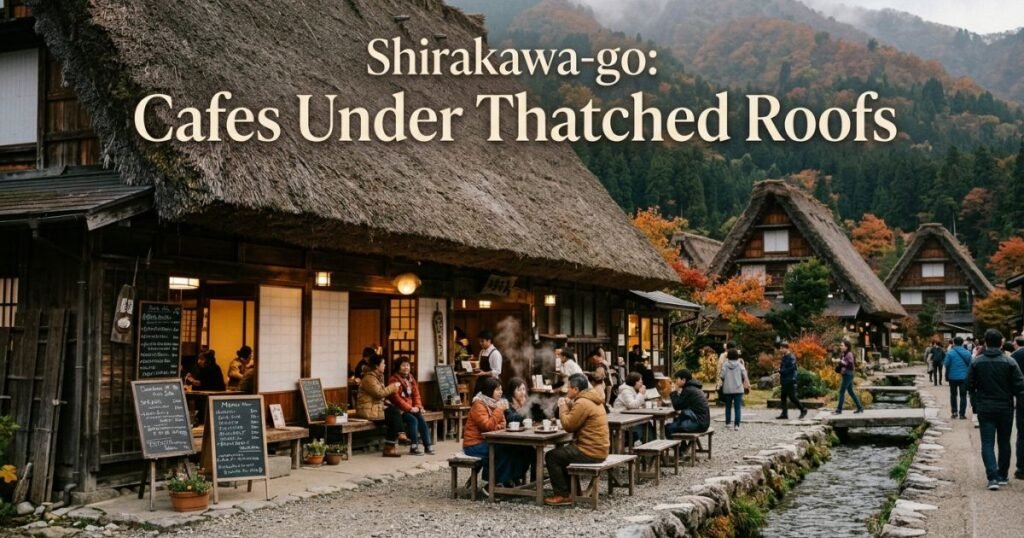
Shirakawa-go is a UNESCO World Heritage village known for gassho-zukuri farmhouses, with steep roofs that resemble hands pressed together. The village is small, and most cafes are within walking distance of each other in Ogimachi.
Ochudo is the best-known stop. It occupies a thatched house a short walk from the bus terminal and keeps the original layout. The menu includes zenzai (sweet red bean soup) with free refills, red-bean toast, coffee and yuzu juice.
Coffee Shop Hina is a small kissaten about four minutes from Wada House. It serves coffee, tea, toast, cakes and sandwiches. It works well as a quiet stop before or after visiting the house.
Purin no Ie specializes in pudding. It is a simple, sweet snack stop for children and dessert fans.
Tenbodai Cafe sits next to the observation deck above the village. Its menu includes burgers, gohei-mochi and rice-flour churros. Come here for the view as much as the food.
Shirakawa-go has fewer dining options than Takayama or Kanazawa, so do not count on a long list of cafes. Plan one or two stops and check that they are open. Hours vary by season, and some places close early after tour buses leave. The Shirakawa-go Tourist Association lists local shops and current information.
How to Link Kanazawa, Takayama and Shirakawa-go
No train reaches Shirakawa-go, so you travel by highway bus. A natural route runs Kanazawa → Shirakawa-go → Takayama, or the reverse.
| Leg | Typical time | Notes |
| Kanazawa → Shirakawa-go | About 1 hr 15 min | Reservation needed |
| Shirakawa-go → Takayama | About 50 min | Some departures need a reservation |
| Kanazawa ↔ Takayama (direct) | About 2 hr 5 min–2 hr 20 min | Reservation required on the Kanazawa line |
Recent listings show an adult fare of about ¥2,800 each way on the Takayama–Shirakawa-go and Kanazawa–Shirakawa-go routes. One source reports a small increase from December 2026. Confirm current fares, timetables and reservation rules with Nohi Bus before you travel. Seats can sell out, especially in busy seasons and winter.
Store your luggage in a coin locker at the bus center in Takayama or at Kanazawa Station. Then carry only a small bag into the villages. Check your return bus time before you order a second coffee, because a missed bus can cost you the rest of the day.
A Simple Three-Day Cafe Route
- Day 1, Kanazawa: Start at Omicho Market, then walk to Higashi Chaya for Hakuichi and Sabo Yanagian. Spent the late afternoon at Kenrokuen.
- Day 2, Shirakawa-go: Take a morning bus. Visit Ochudo, walk through Ogimachi, and see the village from the observation deck. Continue to Takayama on a later bus.
- Day 3, Takayama: Walk Sanmachi Suji early. Visit Ranka Coffee and Baren before the afternoon crowds. Add Miyagawa Morning Market if your timing allows.
If you only have two days, skip Kanazawa or use the direct Kanazawa–Takayama bus, then add Shirakawa-go as a half-day stop on the way.
Best Time to Visit for Cafe Hopping
Each season changes the experience:
- Winter: Snow on the thatched roofs makes Shirakawa-go especially photogenic, and a warm cafe feels welcome. Allow extra travel time because snow can delay buses.
- Spring and autumn: Mild weather makes outdoor walking between cafes easier, but these are busy periods. Book buses early.
- Summer: Cold desserts such as soft serve and shaved ice suit the heat. Villages are green and quiet in the mornings.
FAQ,s
Which town has the cutest cafes in the Japanese Alps?
Takayama has the most atmospheric old-town cafes, while Kanazawa has the most photogenic dessert stops. Shirakawa-go has fewer cafes but the most distinctive settings.
Is Shirakawa-go worth visiting for cafes?
Yes, but treat the cafes as part of the village visit, not the main reason. Plan one stop at Ochudo or Coffee Shop Hina.
How many days do you need for Kanazawa, Takayama and Shirakawa-go?
Three days works well. One day for each town gives you time for sights and cafe stops.
Do I need to reserve the bus to Shirakawa-go?
Often yes. The Kanazawa routes require reservations, and some Takayama departures do too. Check the operator’s timetable.
Are cafes in Takayama open early?
Not usually. Many shops and cafes open around 10 a.m., and some close in the late afternoon, so confirm hours before you go.
Conclusion
The best cafe trip through the Japanese Alps combines three different moods. Kanazawa gives you gold-leaf sweets and elegant teahouse interiors. Takayama gives you coffee in old storehouses, and Shirakawa-go lets you warm up under a thatched roof. Pick one or two cafes per town, and you will leave time for the sights themselves.
Book your buses early, check opening hours, and start mornings in the old towns before the tour groups arrive. A relaxed pace is what makes these cafes worth the trip.