


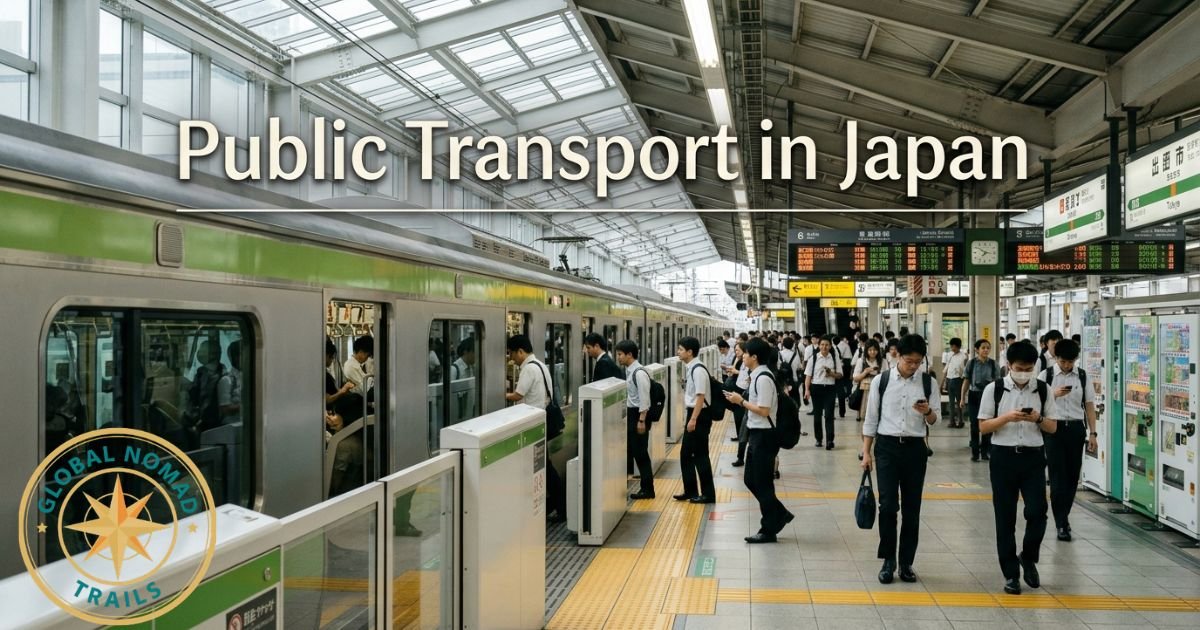
Public transport in Japan is fast, clean and reliable, and most visitors never need a car. For a typical trip, you need three things. First, an IC card such as Suica or a contactless card for local rides. Second, a Shinkansen ticket for each long-distance leg. Third, a clear idea of whether a rail pass will save you money. In 2026, it often won’t.
This guide explains how the system works, what each option costs, and which tickets suit which kind of trip. Prices were checked in October 2026. Fares change, so confirm any figure with the operator before you buy.
Which Ticket Should You Use? A Quick Decision Table
| Your situation | Best choice | Why |
| A few local rides a day in one city | IC card or contactless card | You skip ticket machines |
| Heavy subway sightseeing in Tokyo | Tokyo Subway Ticket | Flat price, 13 lines |
| Tokyo → Kyoto → Osaka → Tokyo | Individual Shinkansen tickets | Usually cheaper than a 7-day pass |
| Long loop through several regions | Compare against a JR Pass | Savings depend on the exact route |
| Arriving at Narita or Haneda | Airport train plus IC card | Fast, and you can pay by tap |
How Japan’s Rail System Is Organized
Japan has no single national transport operator. Several companies run the network, and this is the main source of confusion for first-time visitors.
- JR Group: Six regional companies run most long-distance trains and the Shinkansen. JR East also runs the Yamanote Line, which loops around central Tokyo.
- Private railways: Companies such as Keikyu, Odakyu, Hankyu and Kintetsu connect cities to suburbs, airports and sightseeing areas.
- City subways: Tokyo Metro and Toei in Tokyo, Osaka Metro in Osaka, and the Kyoto Municipal Subway.
- Buses: City buses, tourist loop buses and long-distance highway coaches.
Each operator sets its own fares. That is why a transfer between two companies can mean two separate charges, even on one journey. An IC card hides this by adding up the fares automatically.
Trains in Japan
Train types, from slowest to fastest
Most lines run several service levels on the same track. Look for these English labels:
- Local: Stops at every station.
- Rapid or Express: Skips some stops at no extra cost.
- Limited Express: Skips many stops and needs a separate surcharge ticket.
- Shinkansen: The high-speed bullet train, with its own platforms and tickets.
Check the train type before you board. A rapid service can save 15 minutes over a local train on the same line.
The Shinkansen
The Shinkansen is the fastest way between major cities. On the Tokaido line, the Nozomi runs between Tokyo and Kyoto in about two hours and 15 minutes. The slower Hikari takes about 2 hours 40 minutes, and the all-stops Kodama takes roughly 3 hours 40 minutes. A reserved seat from Tokyo to Kyoto costs roughly ¥14,000 to ¥14,500 one way, depending on the source and train type.
Reserved seats cost a little more than unreserved ones. In peak seasons such as cherry blossom time, Golden Week and mid-August, reserve ahead.
The luggage rule that catches visitors
On the Tokaido, Sanyo and Kyushu Shinkansen lines, bags with a combined height, width and depth of 160 to 250 cm need a seat with an oversized baggage area. The reservation is free, but boarding without one can bring a fee of about ¥1,000 per bag. The rule does not apply on the Tohoku, Joetsu or Hokuriku lines, where larger bags fit in overhead racks or deck space.
Add up your suitcase’s three dimensions before you book. Many standard carry-on bags fall under the limit, and many large checked bags do not.
Subways and City Rail
Tokyo
Tokyo’s subway has two systems: nine Tokyo Metro lines and four Toei lines. They cover most major sightseeing areas. JR lines such as the Yamanote Line fill the gaps, but a subway pass does not cover them.
The Tokyo Subway Ticket offers unlimited rides on all 13 lines. It costs ¥1,000 for 24 hours, ¥1,500 for 48 hours and ¥2,000 for 72 hours. Tokyo Metro says the 24-hour ticket pays off after about six rides in a day. If your plan relies on the Yamanote Line or other JR routes, an IC card is usually the better choice. Details are on the official Tokyo Metro ticket page.
Osaka and Kyoto
Osaka’s Osaka Metro covers the main districts, and private lines such as Hankyu and Kintetsu link the city to Kyoto, Kobe and Nara. Kyoto’s subway has only two lines, so buses and JR trains matter more there. Plan Kyoto routes around train stations and bus stops rather than assuming a subway stop will be closed.
Buses
Buses fill the gaps where trains don’t reach, especially in Kyoto, Kamakura and rural areas.
- City buses: Many Japanese city buses use a rear-door boarding system. On distance-based routes, you take a ticket or tap your IC card when you get on. You then pay when you get off, and the fare depends on the number of stops.
- Flat-fare buses: Some systems charge one fare for any ride. Toei’s English guide lists a flat 210 yen fare on its buses.
- Highway buses: Overnight and daytime coaches between big cities usually cost less than the Shinkansen but take much longer. Fares vary widely by season and seat type.
- Rural buses: These can run only a few times a day. Check the timetable before you plan a day trip.
Keep a few coins handy for buses that don’t accept IC cards. Rural lines are the most likely to be cash-only.
How to Pay: IC Cards, Contactless Cards and Passes
IC cards
Suica, Pasmo and ICOCA are rechargeable tap cards that work on trains, subways and many buses across the country. They also work in vending machines and convenience stores. For tourists, the brand matters less than where you can get one.
- Welcome Suica Mobile (iPhone): The app issues a Suica on an iPhone without registration, and its balance expires 180 days after issue.
- Physical Welcome Suica: This tourist card has 28-day validity and needs no deposit.
- Android phones: Support depends on whether your phone has the FeliCa chip. Many phones bought outside Japan lack it, so a physical card from an airport machine is safer. Check before you fly.
Spend any leftover balance before you leave, because tourist cards may not be refundable.
Contactless credit cards
Tap-to-ride has expanded fast. Contactless payment now works across the full Tokyo Metro and Toei Subway networks, and Osaka Metro and several private railways also accept it. However, JR lines still generally need an IC card, and Kyoto’s subway had no announced start date as of August 2026. Tap payments also cover adult fares only, with no child fare.
No operator guarantees that a foreign-issued card will work. Carry an IC card as backup on days when you can’t afford a failed gate.
Does Suica work on the Shinkansen?
Not on its own. A Suica balance pays for ordinary rides, but Shinkansen travel needs a reserved ticket, a pass, or a booking through an app such as SmartEX. JR East’s Welcome Suica Mobile can also book JR East Shinkansen seats.
Is the Japan Rail Pass Worth It in 2026?
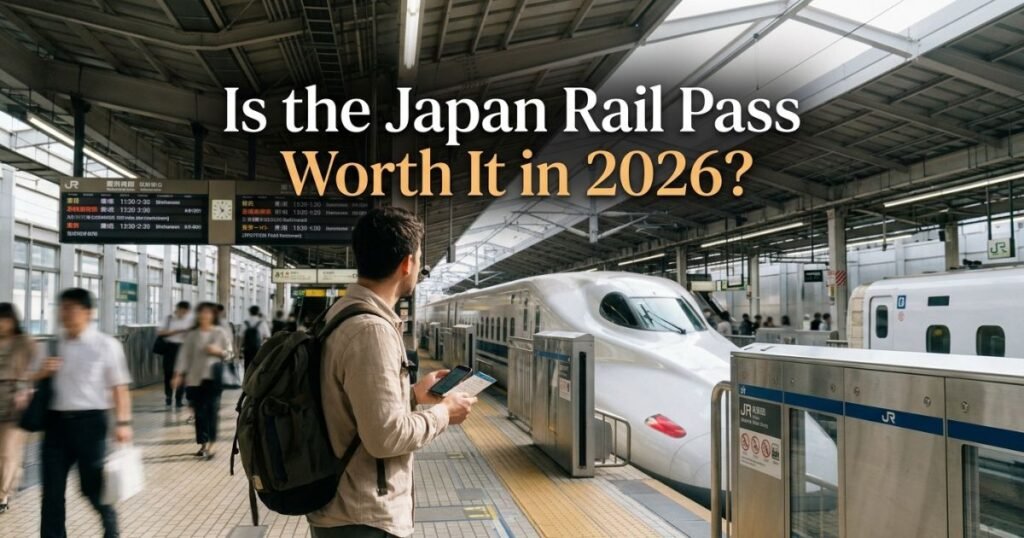
For most visitors who stay in one region, no. It makes sense only if you cover a lot of ground in a short window.
The prices changed this year. JR Group announced the revision on April 9, 2026. According to JR Central’s notice, prices at overseas agencies rose, while the online purchasing service kept its prices for a limited time. The agency prices for an Ordinary Car pass are ¥53,000 for 7 days, ¥84,000 for 14 days and ¥105,000 for 21 days. The online service still lists the old figures of ¥50,000, ¥80,000 and ¥100,000. JR calls the freeze temporary, so check the official Japan Rail Pass website on the day you buy.
Run the numbers on your own route:
- Tokyo → Kyoto → Osaka → Tokyo: Individual tickets cost roughly ¥30,000 in total, well below any pass.
- Add a Hiroshima round trip from Osaka: Each leg costs roughly ¥10,000, so the total approaches the pass price.
- Add Nagano, Kanazawa or Tohoku day trips: The pass starts to win.
Two catches matter. First, the pass does not cover Nozomi and Mizuho trains unless you buy a separate supplement, which pushes Tokyo–Kyoto trips onto the slower Hikari or Kodama. Second, the pass covers JR trains only, not the Tokyo Metro or most private lines.
From the Airport to the City
Haneda sits close to central Tokyo. Narita is about 60 km out, so train choice matters more there. Fares below are approximate and vary by source.
| Route | Time to central Tokyo | Approx. fare | Best for |
| Narita Express (N’EX) | About 60 min | ¥3,000–3,200 | West Tokyo hotels, no transfers |
| Keisei Skyliner | About 40 min to Ueno/Nippori | About ¥2,500 | East Tokyo, fastest |
| Keisei Access Express | 55–65 min | About ¥1,300 | Budget travelers |
| Keikyu Line (Haneda) | About 30 min | Under ¥600 | Shinagawa, east and south Tokyo |
| Tokyo Monorail (Haneda) | 13–20 min to Hamamatsucho | About ¥500 | Yamanote Line connections |
Large suitcases are hard to manage on crowded commuter lines, so N’EX is the most comfortable option with heavy bags. Haneda’s Keikyu and Monorail trains have luggage racks that fill up fast at rush hour.
Planning Your Day: Apps, Timing and Hotels
Google Maps and Japan Travel by NAVITIME both give accurate train and bus routes. They show platform numbers, transfer times and fares, which saves a lot of guessing in large stations like Shinjuku and Tokyo Station.
Trains do not run all night. Last departures are usually around midnight, so check the final train before you head out for dinner. Weekday rush hours, roughly 7:30 to 9:30 a.m. and 5 to 7 p.m., are the busiest. Avoid them with large luggage if you can.
Hotel location matters more in Japan than in many countries. A room near a major station saves time on every transfer. Our guide to Japanese business hotels explains why these station-side rooms suit travelers who rely on trains.
Etiquette and Common Mistakes
- Keep quiet. Phone calls are not acceptable on trains and buses, so set your phone to silent mode.
- Queue at the marked lines. Let passengers exit before you board.
- Remove your backpack in crowded cars. Hold it in front of you or place it on the rack.
- Respect priority seats. Offer them to older, pregnant and disabled passengers.
- Know your operator. Boarding a limited express without a surcharge ticket means paying extra at the other end.
- Don’t assume the pass covers everything. JR passes do not cover subway lines.
- Book luggage seats early. Peak-season Tokaido trains fill up.
Luggage forwarding services, called takkyubin, can send suitcases between hotels and cut the hassle of carrying them on trains. Ask your hotel front desk to arrange it.
Frequently Asked Questions
Is public transport in Japan easy for tourists?
Yes. Signs and announcements in major cities include English, and station numbers help you follow routes without reading Japanese. The hardest parts are large interchange stations and knowing which operator runs which line. A navigation app solves most problems.
Should I use a Suica card or a credit card to ride?
Use a Suica or similar IC card if you will ride JR lines, buses or the Shinkansen network, because those usually need an IC card or ticket. A contactless credit card works well on Tokyo Metro, Toei and Osaka Metro. Carrying both gives you a backup.
Is the JR Pass worth buying in 2026?
Only for long, multi-region itineraries. A simple Tokyo–Kyoto–Osaka trip costs less with individual tickets. Add up your real route before buying, and check the official Japan Rail Pass site for current prices.
Can I use Suica on the Shinkansen?
Not alone. You still need a Shinkansen ticket or a pass. Booking through SmartEX, or through Welcome Suica Mobile for JR East lines, lets you pay by app or card.
Do trains in Japan run late at night?
Mostly no. Most lines stop near midnight, and only a few run later on special occasions. If you miss the last train, expect to pay for a taxi or book a business hotel near the station.
The Simplest Plan for Most Trips
Get an IC card or set up a digital Suica before you land. Use a subway pass only if you will ride the Tokyo Metro and Toei lines heavily. Buy Shinkansen tickets for each long leg, reserve a luggage seat if your bag is big, and compare the pass cost against your real route before you pay. Planning transport in other countries? Our guide to public transport in Oman shows how different the picture can look. For more trip-planning help, browse our Travel Tips section.