


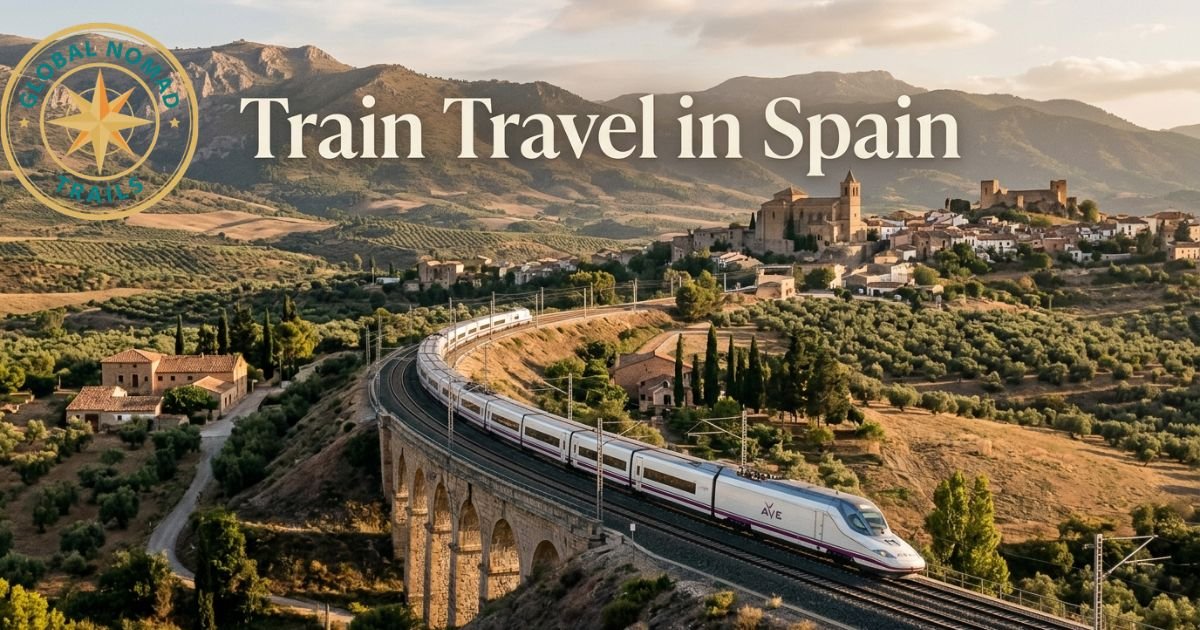
Spain has one of the best train networks in Europe. Madrid to Barcelona takes about 2.5 hours on high-speed trains, and three operators compete on that route. One warning before you plan anything: high-speed trains between Madrid and Andalusia are suspended as of 4 November 2026. A deadly collision near Urda, in Toledo province, closed the line on 28 October. The section below explains what that means for your trip.
Check This First: The Madrid–Andalusia Closure
Andalusia is in the south, with Seville, Córdoba, Málaga, Granada and Cádiz. If your plans include any of these cities, read this section before you book.
- What happened: On 28 October 2026, a Renfe high-speed train hit an Iryo train stopped near Urda station. Spanish authorities reported 69 deaths. It was the second major accident on this corridor in 2026. In January, a derailment near Adamuz killed 46 people. That line reopened on 17 February.
- Current status: Adif, Spain’s rail infrastructure manager, closed the line. Renfe stopped ticket sales on the corridor until 13 December, but it called that a precaution, not a reopening date. Iryo cancelled its Madrid–south services. Ouigo suspended its trains through at least 2 November.
- What may happen next: The transport minister said the line could reopen within about 10 days after a judge allows repairs to start. He also said services would run less often, with double-length trains to keep seat numbers similar. These are government estimates, so treat them as likely, not certain.
- What still runs: Trains between Madrid and Toledo, and between Málaga and Seville, were still operating after the crash.
For any trip to Andalusia in the next few weeks:
- Book only fully refundable or flexible fares.
- Check Renfe, Iryo, Ouigo and Adif the day before you travel.
- Keep a backup. Flights and buses filled quickly after the closure, so book those early too.
- Consider building your route around Barcelona, Valencia, Madrid and northern Spain instead.
Spain’s Train Types in Plain English
Spanish train names confuse many first-time visitors. Here is what each one means.
| Train | Operator | What it is | Best for |
| AVE | Renfe | Premium high-speed service, up to 310 km/h | Fast city-to-city trips |
| Avlo | Renfe | Renfe’s low-cost high-speed brand | Cheaper fares on main routes |
| Ouigo | SNCF (France) | Budget high-speed, online booking only | Lowest fares if you pack light |
| Iryo | Private (Trenitalia-backed) | High-speed, competes with AVE | Comparing prices, comfort |
| Alvia / Euromed | Renfe | High-speed on mixed track | Galicia, the north, the Mediterranean coast |
| Avant | Renfe | Shorter high-speed trips | Madrid–Toledo, Barcelona–Girona |
| Cercanías | Renfe | City commuter trains | Airports and suburbs |
Renfe also runs slower regional and Intercity trains. They cost less but take much longer.
Main Routes and Typical Journey Times
Times below are approximate for direct high-speed trains. Always confirm the exact timetable when you book.
| Route | Approx. time | Notes |
| Madrid – Barcelona | 2h 30m | Busiest route, with four brands competing |
| Madrid – Valencia | 1h 50m | Frequent departures |
| Madrid – Seville | 2h 40m | Closed at present (see above) |
| Madrid – Granada | 3h 35m | Affected by the Madrid–Andalusia closure |
| Madrid – Santiago de Compostela | 3h 15m | Alvia service |
| Barcelona – Valencia | 3h+ | Mediterranean line |
| Seville – Córdoba | About 45 min | Short hop within Andalusia |
Practical advice: Barcelona to Málaga by train takes nearly six hours and usually involves Madrid. Since the Madrid–Andalusia line is shut, that trip is not realistic right now. Fly it, or split the journey.
How to Buy Spanish Train Tickets
Where to buy. You can buy from Renfe’s official website, at station ticket offices, or on Iryo’s and Ouigo’s own sites. Apps such as Trainline and Omio sell Renfe, Iryo and Ouigo in one place, which makes price comparison easier. Ouigo sells online only.
When to buy. All operators use dynamic pricing. The cheapest fares sell out first, and prices rise as seats fill. Iryo and Ouigo release tickets many months ahead. Renfe’s booking window is often around two months, though it varies. For Madrid–Barcelona, booking two to three weeks ahead usually gives decent fares, and earlier is safer in holiday periods.
What it costs. Low-cost operators advertise fares from roughly €7 to €9 on key routes. A typical point-to-point ticket on a major route can run from about €40 to €120, depending on date and time. Flexible departure times often unlock the cheaper seats.
Useful extras:
- A Renfe long-distance ticket, or any Iryo ticket, includes free Cercanías commuter travel at the start and end of your journey in many Spanish cities. Check the conditions when you buy.
- E-tickets work with a QR code at the gate. You do not need to validate them.
- Buying at the station costs the same fare structure but usually more, because prices rise close to departure.
Rail Pass or Point-to-Point Tickets?
For most visitors, point-to-point tickets are cheaper and simpler. A pass makes sense only on longer multi-country trips.
- Renfe and Iryo both accept Eurail and Interrail passes. Interrail’s Spain guide explains the reservation rules.
- Seat reservations are compulsory on high-speed trains, even with a pass. Expect to pay roughly €10 to €25 per journey.
- Ouigo does not accept rail passes.
- Passholders can now reserve Renfe seats online, but success has been uneven, so reserve early.
A rough test: if you plan only three or four Spanish journeys, compare the pass price plus reservations against the cheapest advance tickets. Advance tickets usually win. If you are comparing costs for a wider Europe trip, our guide to the approximate budget for a Europe trip from India shows how transport fits into the total.
At the Station and On Board
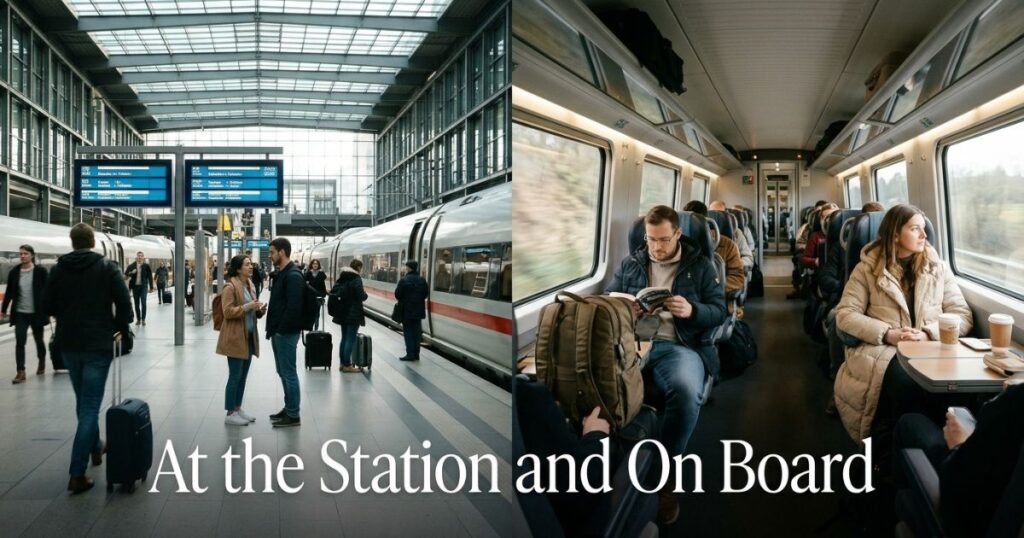
Security. Long-distance Renfe trains have airport-style bag scans at major stations. Barcelona is known for this. Plan to arrive 20 to 30 minutes early. That is a practical suggestion, not an official requirement.
Luggage. Rules differ by operator, so check yours before you travel.
- Renfe AVE: Third-party guides report up to three pieces, with the largest no bigger than 85 × 55 × 35 cm. They also list a combined limit of about 25 kg and 290 cm. Label your bags.
- Ouigo: One small bag (36 × 27 × 15 cm) and one cabin bag (55 × 35 × 25 cm) travel free. Larger bags cost extra, and the fee is cheaper if you add it when booking.
Seats. Every high-speed ticket comes with an assigned seat. Renfe lets you pick your own for a small fee, and the option appears after you choose a payment method. Standard class is fine for most trips. Renfe’s upper class (Confort) adds wider seats and meals.
Time-saver. Many Spanish city centers have a main station close to the old town, such as Madrid Atocha and Barcelona Sants. This is one reason the train often beats flying on routes under three hours.
Which Operator Should You Choose?
There is no single best option, so choose by what matters to you.
- Cheapest fare, light packer: Ouigo or Avlo. Add the bag fee before you compare prices.
- Flexibility and comfort: Renfe AVE, especially if you may change plans.
- Price comparison: Iryo often undercuts Renfe on busy routes, and it is worth checking every time.
- Connecting to France: Renfe-SNCF runs trains between Spain and France. If you are heading on to Paris, see our guide on which Paris pass is worth it.
- Wondering how Spain compares with other rail systems: Our public transport in Japan guide covers a very different network in similar detail.
FAQ,s
Is train travel in Spain safe?
Spain’s network carries millions of passengers, and most journeys run without trouble. Two serious accidents hit the Madrid–Andalusia corridor in 2026, and investigations are ongoing. Check official updates for any route you plan to use.
Can I take a train from Madrid to Seville right now?
Not by high-speed train as of 4 November 2026. The line was closed after the Urda collision. A reopening with fewer trains is expected, but no firm date is confirmed.
Is it cheaper to take the train or fly in Spain?
On routes under three hours, trains are often competitive once you add airport transfers and baggage fees. Early bookings on Ouigo, Avlo or Iryo can beat flights.
Do I need to book Spanish trains in advance?
Yes, for high-speed trains. Seats are mandatory, and cheap fares sell out. Book as early as your plans allow.
Does a Eurail or Interrail pass work in Spain?
It works on Renfe and Iryo, but you still pay for seat reservations. It does not work on Ouigo.
Conclusion
Spain’s trains are fast, comfortable and often cheaper than flying. Most of the network works well right now, including Madrid–Barcelona, Madrid–Valencia and the north. The one big exception is the Madrid–Andalusia corridor, where reopening dates and timetables are still changing.
Book early, compare all three operators, and choose flexible fares if your route touches the south. Check official sources the day before you travel. With that routine, a Spanish rail trip is one of the easiest ways to see the country.