


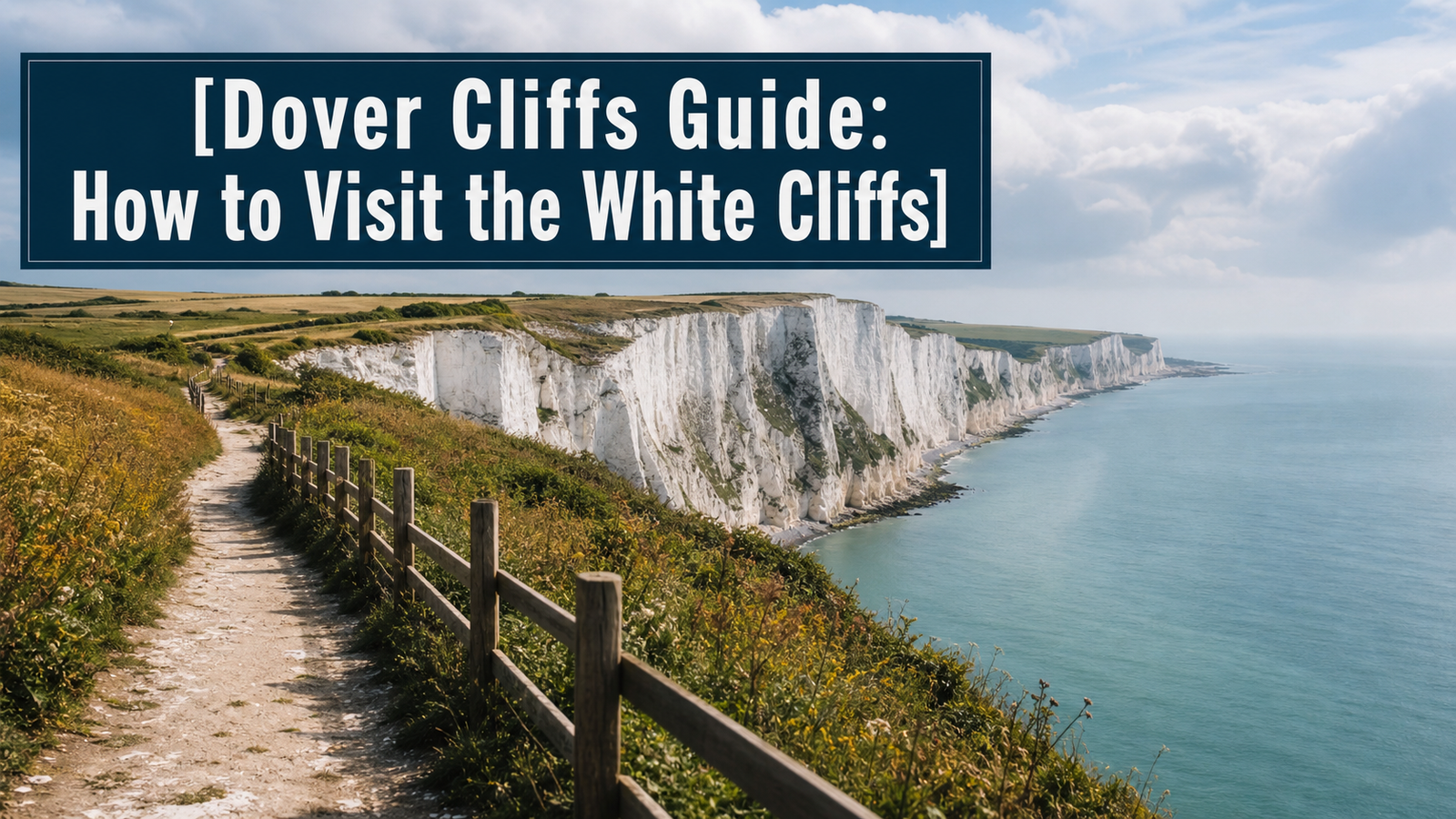
Dover Cliffs Guide helps you plan a memorable visit to one of England’s most famous coastal sights. The White Cliffs of Dover rise above the English Channel in Kent and offer stunning views across the sea. Their bright white chalk faces, green cliff tops, and dramatic coastal setting make them one of Britain’s most recognizable natural landmarks. Moreover, the cliffs have strong links with British history, wartime defense, coastal travel, and local heritage. Whether you’re visiting Dover for a few hours or planning a full day in Kent, the White Cliffs offer a beautiful outdoor experience for travelers of all ages.
This Dover Cliffs Guide covers everything you need to know before visiting the White Cliffs. You’ll learn how to get there, what to see, the best walking routes, how much time to allow, and what to bring. Furthermore, this guide includes practical advice about transportation, costs, accessibility, family visits, safety, photography, and nearby attractions. The main viewing area is only about 400 meters from the car parks, so you don’t need to complete a long hike to enjoy the famous views. Therefore, the White Cliffs of Dover can be an easy and rewarding stop for first-time visitors, families, photographers, and travelers exploring southeast England.
Why Visit the White Cliffs of Dover?
The White Cliffs of Dover offer one of England’s most famous coastal views. From the cliff top, you can look across the English Channel on a clear day. Moreover, the green grass above the white chalk creates a striking natural contrast. A Dover Cliffs Guide is useful because the site offers more than one viewpoint. You can take a short walk, follow longer coastal paths, or continue toward South Foreland Lighthouse. Therefore, the visit can suit both casual sightseers and keen walkers. The cliffs also have an important place in British history. Their position facing mainland Europe made Dover a key defensive area for centuries. During the Second World War, gun batteries were built along this coast.
What Makes the Cliffs White?
The cliffs are made from soft, white chalk. This chalk formed from tiny marine organisms that lived in ancient seas. Over millions of years, their remains built thick layers on the seabed. Eventually, geological changes lifted those layers above sea level. Erosion then helped shape the cliffs seen today. Interestingly, the cliffs stay white partly because natural erosion keeps exposing fresh chalk.
Where Are the White Cliffs of Dover?
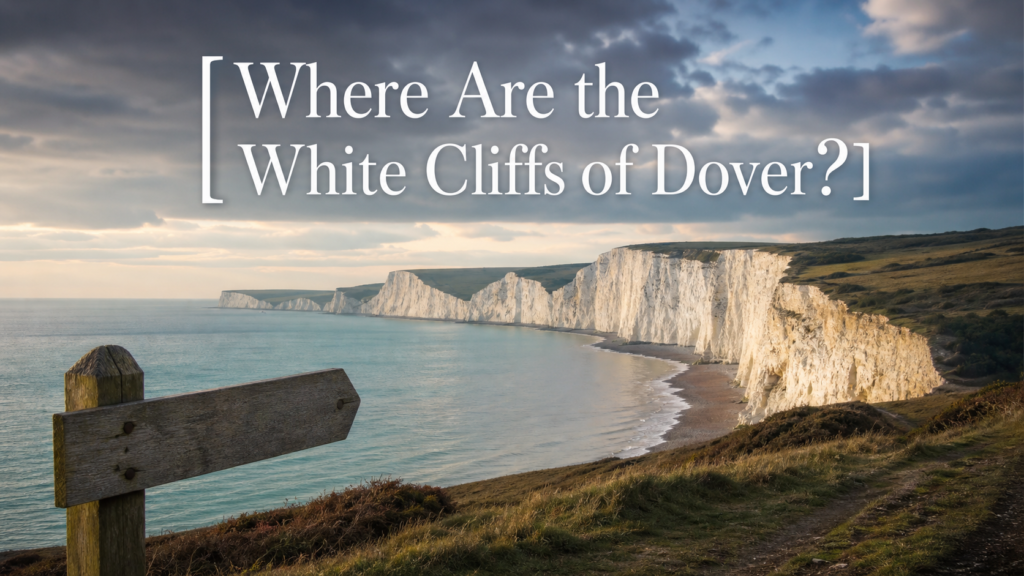
The White Cliffs are located near Dover in Kent, southeast England. The National Trust visitor site is at Langdon Cliffs, above the English Channel. For a Dover Cliffs Guide, the visitor center is the best starting point. From there, you can reach the main viewing area with a short walk. The viewpoint sits around 400 meters from the car parks. The cliffs are also close to several major attractions. Dover Castle is nearby, while Dover town and the ferry port sit below the cliffs.
| Nearby place | Why visit |
| Dover Castle | Historic castle with major coastal views |
| Dover town | Shops, restaurants, and local history |
| Dover ferry port | Cross-Channel travel and sea views |
| South Foreland Lighthouse | Historic lighthouse and coastal scenery |
| St Margaret’s Bay | Scenic coastal area nearby |
| Deal | Seaside town farther along the coast |
Therefore, you can easily combine the cliffs with other Kent attractions.
How to Get to the White Cliffs of Dover
Getting to the cliffs depends on where your trip begins. Visitors can travel to Dover by train, car, bus, or taxi. However, the final journey to the visitor center needs some planning. A Dover Cliffs Guide should always separate Dover town from the cliff visitor center. They are close, but the routes between them can involve steep paths and busy roads.
Getting There by Train
Dover Priory is the main railway station serving Dover. From the station, visitors can continue by taxi or other local transport. Walking from Dover town toward the cliffs is possible on some routes. However, some paths are steep and include steps. Therefore, check the current route before choosing to walk from the station. The National Trust specifically recommends different routes for visitors arriving by train. Its walking information provides routes from the visitor center toward the lighthouse and other attractions.
Getting There by Car
Driving can be convenient if you want to explore more of Kent. The National Trust visitor site has designated parking areas near the visitor center. However, parking arrangements and charges can change. Therefore, check the official National Trust information before leaving. Once parked, the main viewpoint is close to the visitor center. This makes driving useful for visitors who want a short and simple visit.
Getting There by Taxi
A taxi can be useful from Dover town or the railway station. It is also helpful for visitors with mobility needs. The National Trust notes taxi options for some routes involving the cliffs. However, availability can vary, especially during busy periods. Therefore, arranging your return journey in advance can be helpful.
What to See at the White Cliffs
This Dover Cliffs Guide includes several attractions beyond the famous cliff edge. You can choose a short visit or spend several hours exploring. The main viewpoint gives you the classic White Cliffs experience. From there, longer paths lead toward Fan Bay and South Foreland Lighthouse.
The Main Cliff Viewpoint
The main viewpoint is the easiest place to start. It provides a wide view across the chalk cliffs and English Channel. The National Trust describes the viewpoint as being about 400 meters from the car parks. The route includes a gentle, staggered incline that offers places to pause. Therefore, you don’t need to complete a long coastal hike to enjoy the scenery.
South Foreland Lighthouse
South Foreland Lighthouse is one of the area’s most interesting landmarks. The present lighthouse dates from the nineteenth century, although warning lights existed here much earlier. The lighthouse helped ships navigate the dangerous waters around the Goodwin Sands. It also has links with the history of wireless communication and electricity. A Dover Cliffs Guide should include this stop because it adds history to the coastal walk.
Fan Bay Deep Shelter
Fan Bay Deep Shelter adds another layer of history to your visit. The site includes a wartime underground shelter and gun emplacement. The area formed part of the coastal defenses during the Second World War. Today, visitors may be able to join guided experiences when the site is open. Opening dates and tour times can vary. Therefore, check the National Trust’s current information before planning around the shelter.
Best Walks at the White Cliffs
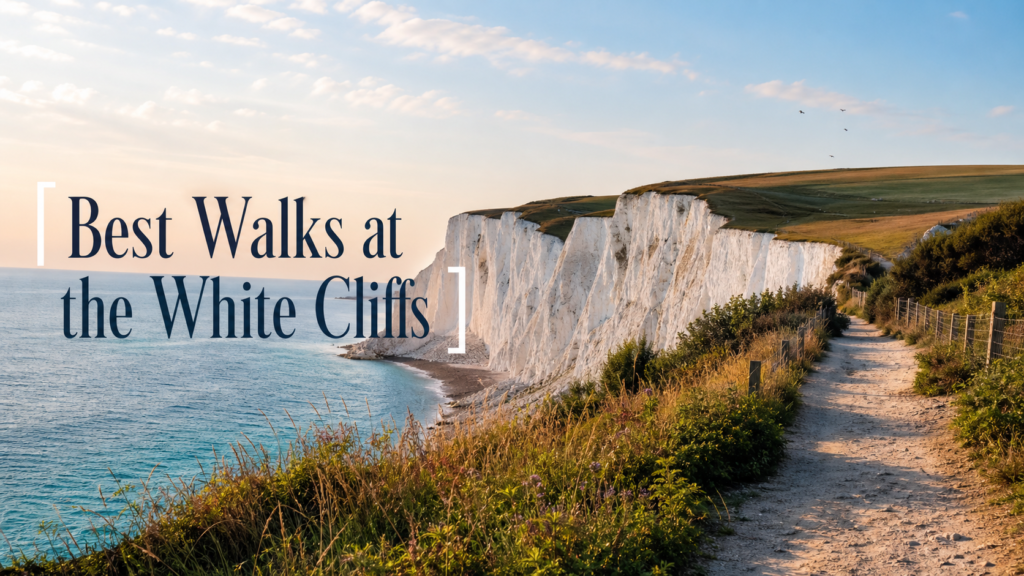
Walking is one of the best ways to enjoy the cliffs. However, routes vary in length, terrain, and difficulty. For a simple Dover Cliffs Guide, choose your route based on your time and fitness. A short viewpoint walk suits most visitors. Longer routes work better for hikers who want more coastal scenery.
Visitor Centre to South Foreland Lighthouse
This is one of the most useful walks for first-time visitors. The route takes you from the visitor center toward the lighthouse and back. The National Trust provides a detailed trail guide for this walk. The route includes surfaced sections, gates, open countryside, and shared areas. The full experience takes longer than simply visiting the viewpoint. Therefore, allow extra time if you plan to visit the lighthouse.
Walking Toward St Margaret’s
The coast path can continue beyond South Foreland Lighthouse. Walkers can continue toward St Margaret’s, Kingsdown, Wilmer, or Deal. However, these longer routes require more time and preparation. The National Trust warns that the ground can be uneven and weather conditions can change quickly. Therefore, wear strong walking shoes and carry suitable clothing.
Langdon Stairs
Langdon Stairs offers a much more challenging coastal experience. The route includes a steep descent and a near-vertical iron ladder. The National Trust warns visitors to check tide times before starting. Parts of the route can also lack mobile phone signals. This route is not a simple sightseeing walk. Therefore, beginners should choose an easier trail.
How Long Do You Need at the Cliffs?
A short visit can take around one to two hours. This allows time for the main viewpoint, photos, and a relaxed walk. However, a Dover Cliffs Guide should allow more time for visitors who want to hike. A visit to South Foreland Lighthouse can turn the trip into a longer outing.
| Visit style | Suggested time |
| Quick viewpoint visit | Around 1–2 hours |
| Viewpoint and short walk | Around 2–3 hours |
| Lighthouse and coastal walk | Around 3–5 hours |
| Longer coastal hike | Half day or longer |
These are planning estimates, not fixed visit times. Weather, walking speed, and attraction schedules can change your timing.
Best Time to Visit the White Cliffs
The best time depends on your priorities. Spring and summer often provide longer daylight and pleasant walking conditions. However, the cliffs can be beautiful throughout the year. Autumn can bring changing colors, while winter can create dramatic coastal views. For a Dover Cliffs Guide, weather matters more than the season alone. Strong wind, rain, fog, and ice can affect walking conditions.
Best Time for Clear Views
Clear weather offers the best chance of seeing far across the English Channel. However, coastal weather can change quickly. Morning visits may feel calmer on some days. Meanwhile, late afternoon can offer attractive light for photographs. Always check the local forecast before your walk. Furthermore, don’t rely on a sunny forecast alone when planning a coastal hike.
What Does It Cost to Visit?
The main outdoor White Cliffs area is generally accessible on foot without an admission charge. However, parking, food, special tours, and other services may involve costs. A Dover Cliffs Guide should avoid giving fixed prices because charges can change. The National Trust’s current visitor information should be checked before your trip. If you plan to visit Fan Bay Deep Shelter or South Foreland Lighthouse, check current opening details. Some experiences may operate only on selected dates. Therefore, your total budget depends on how much you plan to do.
Simple Budget Planning
A basic visit can cost very little beyond transportation and parking. You can walk to the main viewpoint and bring your own snacks. However, adding meals, tours, parking, or nearby attractions increases the total cost. Therefore, decide your priorities before arriving. The visitor center also has a café and shop. The National Trust trail information confirms that refreshments and toilets are available at the visitor center.
Accessibility at the White Cliffs
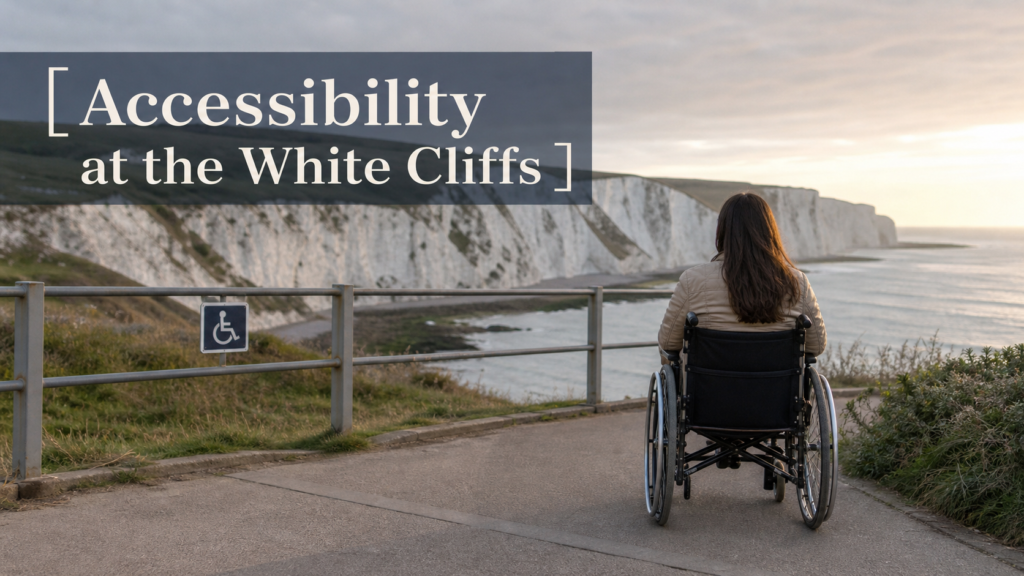
Accessibility varies by route. The main viewing area has a wheelchair-friendly path with a staggered incline.This makes the viewpoint more suitable for visitors who want to enjoy the cliffs without taking a long hike. The National Trust specifically identifies this all-weather path as wheelchair-friendly. However, longer coastal paths can include steep slopes and uneven ground. Some routes are not suitable for wheelchairs, mobility scooters, or buggies.A Dover Cliffs Guide should therefore focus on the exact route you plan to use.
Accessible Facilities
The visitor center provides accessible facilities. The National Trust also lists designated disabled parking near the visitor Centre. Accessible toilets are available at the visitor center. Level access is also available at the shop and café from the appropriate parking area. Therefore, visitors with mobility needs should start at the visitor center.
Is Dover Good for Families?
The White Cliffs can be a great family destination. Children can enjoy the open countryside, sea views, wildlife, and nearby attractions. However, the cliff edge requires careful attention. Some paths pass close to the edge and are not fenced. For families, a Dover Cliffs Guide should always include supervision advice. Keep children close to exposed sections and stay on marked paths. The National Trust specifically advises that children should be supervised near cliff-edge areas.
Family-Friendly Visit Plan
Start with the main viewpoint. Next, take a short walk along the safer inland sections. Then, return to the visitor center for refreshments. Finally, consider another nearby attraction such as Dover Castle. This plan gives children variety without requiring a long hike.
Safety Tips for the White Cliffs
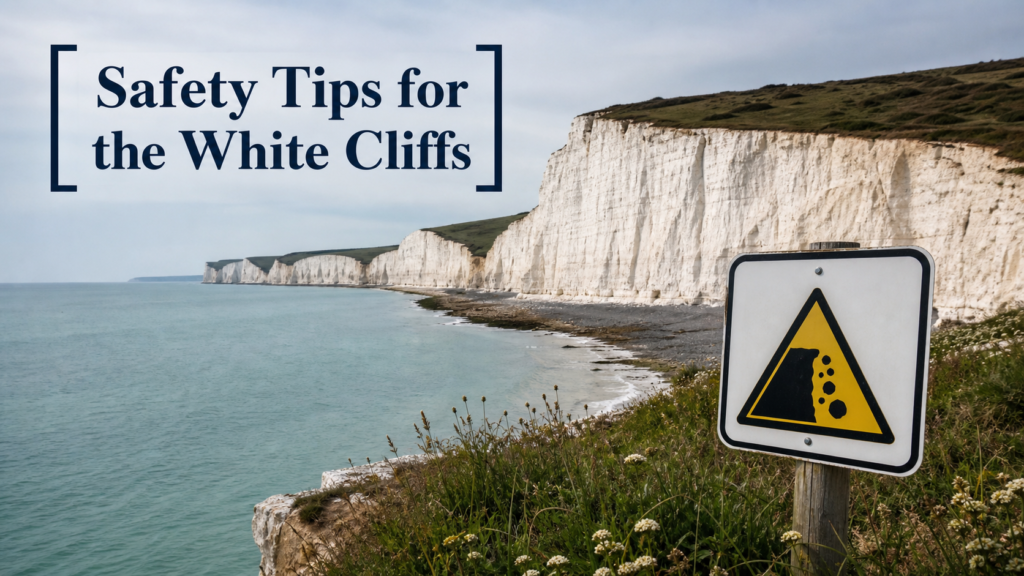
Safety matters whenever you visit high coastal cliffs. The edge can be unstable, and strong winds can make walking more difficult. Stay on marked paths and keep away from the cliff edge. Moreover, avoid climbing or sitting near exposed edges. The National Trust notes that some paths pass close to the cliff edge. It also advises visitors to choose more inland tracks during wet, icy, or windy conditions. A Dover Cliffs Guide should also remind visitors that chalk cliffs naturally erode. Never assume that a section near the edge is safe simply because others are standing there.
What Should You Wear?
Wear comfortable walking shoes with good grip. The paths can become muddy or slippery after rain. Bring a waterproof jacket because coastal weather can change quickly. Furthermore, carry water, especially during warmer months. Sunglasses and sunscreen can also help on bright days. The open cliff top provides little shelter in some areas.
What to Bring for Your Visit
A simple packing list can make your trip more comfortable.
- Comfortable walking shoes
- Waterproof jacket
- Water bottle
- Snacks
- Phone with offline maps
- Sunscreen
- Sunglasses
- Small first-aid kit
- Extra clothing for changing weather
This Dover Cliffs Guide recommends packing light for short visits. However, longer walks require more water, food, and weather protection. If you’re walking toward Deal or another distant destination, plan your transport back. Don’t assume you can easily find transport at the end of a long coastal route.
Where to Eat at the White Cliffs
The National Trust visitor center has a café serving hot and cold drinks, sandwiches, cakes, and hot food at lunchtime. Therefore, you can enjoy refreshments without leaving the site. However, opening times and food service periods may change. Dover town also offers more dining choices. You can therefore plan a meal before or after visiting the cliffs.
Should You Bring a Picnic?
Yes, a picnic can work well on a suitable day. The open landscape provides several places where visitors can stop. However, stay away from exposed cliff edges. Choose safe areas and take all rubbish with you. A picnic can also help reduce costs. Therefore, it may suit families and budget travelers.
Photography Tips for the White Cliffs

The cliffs are highly photogenic throughout the year. Wide landscape shots work well because they show the chalk face, green top, and sea together. Morning and late afternoon can provide softer light. However, cloudy weather can also create strong contrast between the white cliffs and dark sea. For a Dover Cliffs Guide, the best photography advice is simple: stay safe first. Never step toward an unsafe edge for a better photograph. Use the main viewpoint for classic landscape photos. Then, walk farther along the coast for different angles.
History of the White Cliffs
The White Cliffs have played an important role in Britain’s story. Their location beside the English Channel made them a natural lookout point. During the Second World War, the cliffs formed part of Britain’s coastal defense system. Gun batteries were built around South Foreland, Wan stone, and Fan Bay. The cliffs also have links with older industries and transport projects. The National Trust describes remains of an unfinished tramway and an aerial ropeway in the landscape. Therefore, a visit offers both natural beauty and history.
South Foreland Lighthouse History
South Foreland Lighthouse adds another historic layer to the area. Warning lights have been used around South Foreland for centuries. The present lighthouse dates from the nineteenth century. It later became linked with experiments in wireless communication and electricity. The lighthouse was finally decommissioned in 1988. The National Trust took over its care in 1989.A Dover Cliffs Guide would be incomplete without mentioning this important landmark.
Can You See France From Dover?
On a clear day, visitors may be able to see across the English Channel toward France. However, visibility depends heavily on weather conditions. Fog, cloud, rain, and haze can block distant views. Therefore, don’t visit only because you expect to see France. The cliffs themselves are the main attraction. Even without a distant view, the coastal landscape remains impressive.
Nearby Places to Visit
Dover is a useful base for exploring more of Kent. You can combine the White Cliffs with historic sites and coastal towns.
Dover Castle
Dover Castle is one of the area’s most important attractions. It sits above the town and offers views across the surrounding landscape. The National Trust provides a recommended walking route between the White Cliffs visitor center and Dover Castle. It warns against using the busy road as a shortcut. Therefore, follow the recommended route if you plan to walk between these attractions.
St Margaret’s
St Margaret’s offers another coastal setting near Dover. It can be reached along the wider coastal path from the White Cliffs area. However, longer walks require more planning. Check the route, weather, and transport before setting out.
Deal and Walmer
Deal and Wilmer lie farther along the Kent coast. They offer seaside scenery, history, and a slower pace. For travelers with extra time, they can make good additions to a Kent itinerary.
A Simple Day Trip Itinerary

A practical Dover Cliffs Guide itinerary can start early in Dover. Begin at the White Cliffs visitor center and walk to the main viewpoint. Next, continue toward South Foreland Lighthouse if weather and fitness allow. Stop for refreshments before returning to the visitor center. Afterward, visit Dover Castle or explore Dover town. Finally, return to the railway station or continue your Kent journey.
Shorter Itinerary
If you have limited time, focus on the main viewpoint. Spend time taking photos and walking a short section of the coast path. Then, return to the visitor center. This plan can work well during a busy England itinerary.
Longer Itinerary
For a longer visit, include South Foreland Lighthouse and Fan Bay. You can also continue along the coast toward nearby villages. However, check current opening times for historic sites. Weather and walking conditions should also guide your final plan.
Local Tips for a Better Visit
The best Dover Cliffs Guide advice is to check official information before leaving. Visitor services, tours, parking, and opening times can change. Arrive prepared for coastal weather. Even a warm day in Dover can feel cooler and windier on the cliffs. Also, allow more time than you think for photography. The views are often worth stopping for. Finally, keep your route flexible. If the wind or rain becomes strong, choose a shorter and safer walk.
Is the White Cliffs of Dover Worth Visiting?

The White Cliffs of Dover are worth visiting for their scenery, history, and location. They offer a famous English landscape without requiring a long hike. A Dover Cliffs Guide makes the visit easier because the area has several routes and attractions. You can enjoy a short viewpoint walk or plan a longer coastal adventure. The cliffs also work well as part of a wider Kent trip. Dover Castle, South Foreland Lighthouse, St Margaret’s, Deal, and Wilmer provide more reasons to stay longer. Therefore, the White Cliffs can suit first-time visitors, families, photographers, and walkers alike.
Frequently Asked Questions
How long should I spend at the White Cliffs of Dover?
A short visit can take around one to two hours. However, allow several hours if you want to walk toward South Foreland Lighthouse or explore nearby historic sites.
Is there an entrance fee for the White Cliffs of Dover?
The main cliffs are generally accessible on foot without an admission charge. However, parking, tours, food, and special attractions may have separate costs.
Can you walk on the White Cliffs of Dover?
Yes, several public walking routes cross the cliff-top landscape. However, some paths are steep or uneven, so choose a route that matches your ability.
Is the White Cliffs of Dover safe for children?
Families can visit, but children need close supervision. Some paths pass near unfenced cliff edges, so stay on marked routes and keep children away from the edge.
What is the best time to visit the White Cliffs?
Spring and summer often provide longer daylight for walking. However, clear weather matters more than the season if you want wide sea views.
Can wheelchair users visit the White Cliffs?
Yes, the National Trust provides a wheelchair-friendly path to a main viewing point. However, longer routes may include steep slopes and uneven ground.
Can you see France from the White Cliffs of Dover?
France may be visible across the English Channel on a clear day. However, visibility depends on weather, cloud, haze, and other conditions.
Conclusion
A Dover Cliffs Guide gives travelers an easy way to plan a visit to this famous Kent landmark. The main viewpoint is close to the visitor center, while longer paths lead toward South Foreland Lighthouse and other coastal sites. Moreover, the area combines natural beauty with important British history. Visitors can enjoy a short walk, plan a family outing, or spend several hours exploring the coast. Therefore, the White Cliffs can fit into many England travel plans.
Overall, the White Cliffs of Dover offer a memorable mix of scenery, history, and outdoor travel. This Dover Cliffs Guide shows how to plan your visit with suitable transport, clothing, walking routes, and safety advice. Furthermore, checking current National Trust information before travel helps you avoid changes in opening times or services. Whether you visit for the famous view or a longer coastal walk, the cliffs provide one of Kent’s most rewarding experiences.